
Results for 'cancer'
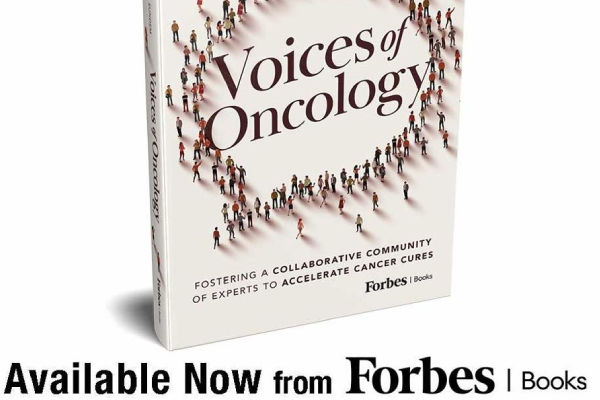
 Forbes Books Press Release Official
New Book Unites Oncology’s Brightest Minds To Innovate Cancer Cures
Voices of Oncology, Cancer cures, Oncology Voice Network, Kirk V. Shepard, Ramin Farhood, Forbes Books, Cancer treatment innovation, Oncology collaboration, Patient engagement in oncology, Precision medicine cancer
Voices of Oncology: Fostering a Collaborative Community of Experts to Accelerate Cancer Cures is a book by Kirk V. Shepard, M.D., and Ramin Farhood, PharmD, M.B.A., featuring insights from 33 contributors in the oncology field. It is available on platforms like Amazon and Barne…
Sep 9th • 5 mins read
 Charles Oo, Barbara Ameer
Revamping the ever-changing landscape of drug development processes in the midst of COVID-19 pandemic
Oncology drug class, Cancer indication, Molecularly targeted, Drug Development
Oncology is the front-line of drug development. The current pharmaceutical pipeline is disproportional focused on oncology, where about 1/3 of all phases of development is in this therapeutic area. The emphasis brings about substantial breakthroughs and has made positive impact on the quality of lif…
Apr 29th • 2 mins read
 Shubham Sharma, J Connor Wells, Wilma M Hopman, Joseph C Del Paggio, Bishal Gyawali, Nazik Hammad, Annette E Hay, Christopher M Booth
Cancer, Clinical Trials, and Canada: Our Contribution to Worldwide Randomized Controlled Trials
cancer, clinical trials, research funding, Canada, high-income countries
This document reviews Canadian involvement in oncology randomized controlled trials (RCTs) from 2014-2017, comparing them to those from other high-income countries (HICs). Canada contributed to 155 (24%) of 636 HIC-led RCTs. Canadian RCTs focused more on palliative care (72%) compared to 62% in …
Apr 13th • 10 mins read
 Emmanuelle Jacqueta, Ghania Kerouani-Lafayeb, Francoise Grudeb, Sergio Goncalvesb, Annie Lorenced, Florence Turcryb, Liora Brunelb, Laetitia Belgodereb, Adrien Monardc, Gaëlle Guyaderb, Lotfi Boudalib, Nicolas Albin
Comparative study on anticancer drug access times between FDA, EMA and the French temporary authorisation for use program over 13 years
Innovation, Expanded access, Early drug access, Cancer, FDA, EMA
Cancer incidence is increasing globally, and while medical innovation significantly impacts patient survival, the drug development process is lengthy, often exceeding 10 years for marketing authorization (MA). France has implemented the ATU (Temporary Authorization for Use) program to facil…
Apr 7th • 12 mins read
 Carrie Printz
First person profile: William Sellers, MD
William Sellers, Dana Farber Cancer Institute, Harvard, melanoma
Dr. Sellers is a prominent figure in cancer research, associated with the Broad Institute of MIT and Harvard, Dana-Farber Cancer Institute, and Harvard Medical School. He has contributed significantly to cancer genomics, particularly in identifying EGFR mutations in lung cancer a…
Nov 6th • 2 mins read
 Ioannis Tsagakis and Maria Papatriantafyllou
Safeguarding cancer research funding by European charities amidst the COVID-19 pandemic
cancer charities, cancer research, COVID‐19, funding, pandemic, policy, AECC, AIRC
The COVID-19 outbreak has had a significant impact on cancer research and cancer care. European cancer charities are required to reassess their strategies. There is a need to safeguard income and provide support to cancer researchers. It is crucial to sustain cancer research funding during thes…
Nov 22nd • 3 mins read
 Xuanyi Li, Elizabeth A. Sigworth, Adrianne H. Wu, Jess Behrens, Shervin A. Etemad, Seema Nagpal, Ronald S. Go, Kristin Wuichet, Eddy J. Chen, Samuel M. Rubinstein, Neeta K. Venepalli, Benjamin F. Tillman, Andrew J. Cowan, Martin W. Schoen, Andrew Malty, J
Seven decades of chemotherapy clinical trials: a pan-cancer social network analysis
Cancer Medical research, Randomized controlled trials, Clinical trial design
Clinical trials are crucial in establishing cancer care standards, but the social dynamics among researchers in this field have not been extensively studied. A social network analysis of authors involved in chemotherapy-based prospective trials from 1946 to 2018 reveals significant insights. The …
Oct 16th • 12 mins read
 E.M. Ray, L.A. Carey, K.E. Reeder-Hayes
Leveraging existing data to contextualize phase II clinical trial findings in oncology
HER2, phase II trials, oncology, iDFS, EBC, early stage breast cancer
In the USA, over 250,000 women are diagnosed with early-stage breast cancer (EBC) yearly, with up to 30% having HER2 amplification. The standard care for HER2-positive EBC involves chemotherapy plus HER2-directed therapy for one year. The phase II Adjuvant Paclitaxel and Trastuzumab (APT) tr…
Sep 21st • 3 mins read
 Shani Paluch-Shimon, Nathan I. Cherny, Elisabeth G.E. de Vries, Urania Dafni, Martine J. Piccart, Nicola Jane Latino, Fatima Cardoso
Application of the ESMO-Magnitude of Clinical Benefit Scale (V.1.1) to the field of early breast cancer therapies
early breast cancer, magnitude of clinical benefit scale, ESMO-MCBS
The ESMO-MCBS is a validated value scale for assessing solid tumour anticancer treatments, specifically for therapies with curative intent. This document represents the first large-scale field testing of the ESMO-MCBS in early breast cancer to assess its applicability and identify any sh…
Sep 6th • 20 mins read
 Daan Geert Knapen, Nathan I. Cherny, Panagiota Zygoura, Nicola Jane Latino, Jean-Yves Douillard, Urania Dafni, Elisabeth G.E. de Vries, Derk Jan de Groot
Lessons learnt from scoring adjuvant colon cancer trials and meta-analyses using the ESMO-Magnitude of Clinical Benefit Scale V.1.1
ESMO-MCBS, early colon cancer, toxicity, adjuvant chemotherapy, quality of life
Form 1 of the European Society for Medical Oncology-Magnitude of Clinical Benefit Scale (ESMO-MCBS) is used to grade therapies with curative intent. The study aimed to evaluate the applicability and reasonableness of the ESMO-MCBS scores in early colon cancer. Adjuvant studies were sourced f…
Sep 6th • 17 mins read
 Fei Liang, Sheng Zhang, Qin Wang, Wenfeng Li
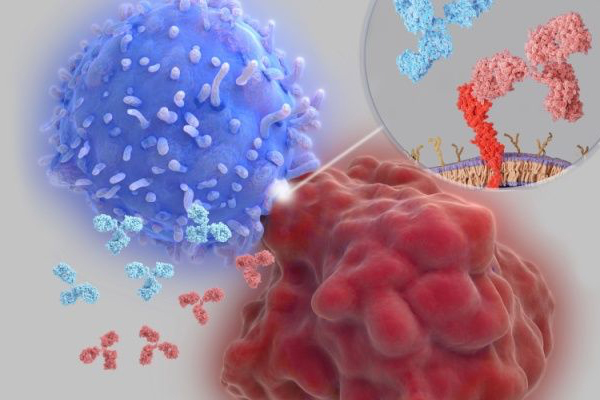
Clinical benefit of immune checkpoint inhibitors approved by US Food and Drug Administration
Randomized trials, Clinical benefits, Immune checkpoint inhibitors, Cancer, Food and drug administration agency
The study evaluates the clinical benefits of immune checkpoint inhibitors using the ESMO-MCBS and ASCO VF scales. 18 indications for these inhibitors were approved based on RCTs conducted between 2011 and 2018. All indications meet the ESMO-MCBS 1.1 threshold for meaningful bene…
Aug 31st • 16 mins read
 Stefanie Broes, Robbe Saesen, Denis Lacombe, Isabelle Huys
Past, Current, and Future Cancer Clinical Research Collaborations: The Case of the European Organisation for Research and Treatment of Cancer
European organisation for Research and Treatment of Cancer, EORTC, clinical research
Collaborations between academic institutions and industry have led to significant scientific breakthroughs in pharmaceutical research, particularly in the discovery phase. The role of multi-stakeholder partnerships in the clinical development of anticancer medicines requires further clarification…
Aug 16th • 8 mins read
 Cornelius F Waller & Adriano Friganovi´c
Biosimilars in oncology: key role of nurses in patient education
biologics, biosimilars, cancer care, nurse
Biosimilars can reduce costs and improve access to cancer therapies, but unfamiliarity may hinder their adoption. Nurses, as trusted healthcare providers, are crucial in educating patients about biosimilars. Biosimilars are highly regulated and offer benefits comparable to existing biologic…
Jun 15th • 10 mins read
 Sean X Zhang, MSc , Dean Fergusson, PhD , Jonathan Kimmelman, PhD
Proportion of Patients in Phase I Oncology Trials Receiving Treatments That Are Ultimately Approved
cancer, biological markers, phase 1 clinical trials, drug approval, medical oncology, united states food and drug administration guidelines, adverse event, national comprehensive cancer network, American society of clinical oncology
Phase I oncology trials are often considered a therapeutic option, but this claim is primarily based on surrogate measures like objective response rates. A systematic search was conducted to evaluate the therapeutic value of phase I cancer trial participation, focusing on the likelihood of patien…
Apr 1st • 14 mins read
 Tanja Cufer, Tudor E. Ciuleanu, Peter Berzinec, Gabriela Galffy, Marko Jakopovic, Jacek Jassem, Dragana Jovanovic, Zhasmina Mihaylova, Gyula Ostoros, Christiane Thallinger, Milada Zemanova, Christoph Zielinski
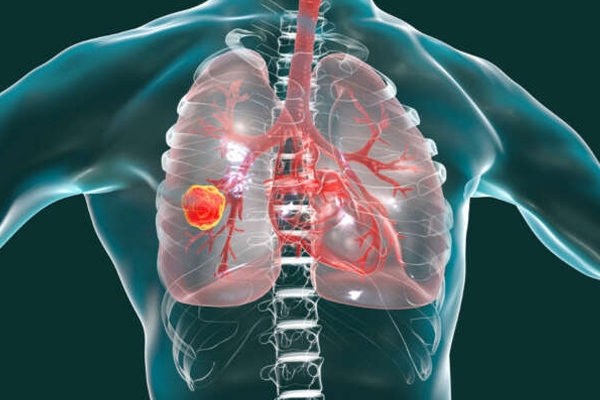
Access to Novel Drugs for Non-Small Cell Lung Cancer in Central and Southeastern Europe: A Central European Cooperative Oncology Group Analysis
Health Outcomes and Economics of Cancer Care, Lung Cancer, NSCLC, EMA
Treatment for non-small cell lung cancer (NSCLC) has significantly improved with the introduction of targeted and immune-oncologic drugs. Despite rapid development and European Medicinal Agency (EMA) registration, these novel drugs are not easily accessible in Central and Eastern European (CEE) c…
Nov 24th • 10 mins read
 Benjamin Gregory Carlisle, Adélaïde Doussau, Jonathan Kimmelman
Patient burden and clinical advances associated with post approval monotherapy cancer drug trials: a retrospective cohort study
clinical advances, monotherapy cancer drug trials, FDA
Objective: The study investigates the efforts to extend the uses of new drugs by testing them for new, non-approved indications and examines the patient burden and clinical impact. Design and Setting: A retrospective cohort study focused on post-approval trials of anticancer drugs approved betwee…
Feb 17th • 7 mins read
 Kelvin Chan, Seungree Nam, Bill Evans, Claire de Oliveira Alexandra Chambers, Scott Gavura, Jeffrey Hoch, Rebecca E Mercer, Wei Fang Dai, Jaclyn Beca, Mina Tadrous, Wanrudee Isaranuwatchai
Developing a framework to incorporate real-world evidence in cancer drug funding decisions: the Canadian Real-world Evidence for Value of Cancer Drugs (CanREValue) collaboration
RWD, Canadian Real World Evidence, cancer drug, funding, framework
Oncology therapy is becoming more expensive, challenging the affordability and sustainability of drug programs globally. Health technology assessment organizations use clinical trials for drug funding decisions, which may not reflect real-world outcomes. The Canadian Real-world Evidence for Valu…
Jan 7th • 8 mins read

 iNIZIO
Transforming oncology: Five frontiers driving progress in cancer care
From biomarker-driven breakthroughs to AI-powered early detection and a renewed commitment to equity and patient centricity, the past 12 months have seen major strides across cancer research, treatment, and communication. At Inizio, we’ve had a front-row seat to this transformation, supporting…
May 16th • 5 mins read
 A. Haslam, M.S. Kim, V. Prasad
Updated estimates of eligibility for and response to genome-targeted oncology drugs among US cancer patients, 2006-2020
genome-targeted therapy, eligibility, response
Recent studies have been conducted to update the estimates of eligibility and response rates to genome-targeted therapies among US cancer patients, reflecting data up to 2020. The number of FDA-approved drugs targeting genetic indications has increased significantly since prior assessments. …
Apr 20th • 7 mins read
Avi Cherla, MSc; Huseyin Naci, MHS, PhD; Aaron S. Kesselheim, MD, JD, MPH; Bishal Gyawali, MD, PhD; Elias Mossialos, MD, PhD
Assessment of Coverage in England of Cancer Drugs Qualifying for US Food and Drug Administration Accelerated Approval
FDA, NHS, accelerated approval, NICE, clinical trial findings
The study evaluates the acceptance and coverage of FDA-accelerated approved cancer drugs by the National Health Service (NHS) in England, focusing on decisions made by the National Institute for Health and Care Excellence (NICE). A total of 93 cancer drug indications received accelerated approval…
Feb 22nd • 10 mins read