
Results for 'cancer treatment outcomes'

 E.M. Ray, L.A. Carey, K.E. Reeder-Hayes
Leveraging existing data to contextualize phase II clinical trial findings in oncology
HER2, phase II trials, oncology, iDFS, EBC, early stage breast cancer
In the USA, over 250,000 women are diagnosed with early-stage breast cancer (EBC) yearly, with up to 30% having HER2 amplification. The standard care for HER2-positive EBC involves chemotherapy plus HER2-directed therapy for one year. The phase II Adjuvant Paclitaxel and Trastuzumab (APT) tr…
Sep 21st • 3 mins read
 Fei Liang, Sheng Zhang, Qin Wang, Wenfeng Li
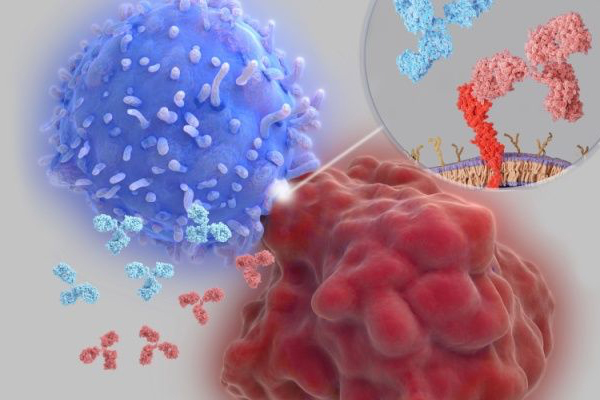
Clinical benefit of immune checkpoint inhibitors approved by US Food and Drug Administration
Randomized trials, Clinical benefits, Immune checkpoint inhibitors, Cancer, Food and drug administration agency
The study evaluates the clinical benefits of immune checkpoint inhibitors using the ESMO-MCBS and ASCO VF scales. 18 indications for these inhibitors were approved based on RCTs conducted between 2011 and 2018. All indications meet the ESMO-MCBS 1.1 threshold for meaningful bene…
Aug 31st • 16 mins read
 Tanja Cufer, Tudor E. Ciuleanu, Peter Berzinec, Gabriela Galffy, Marko Jakopovic, Jacek Jassem, Dragana Jovanovic, Zhasmina Mihaylova, Gyula Ostoros, Christiane Thallinger, Milada Zemanova, Christoph Zielinski
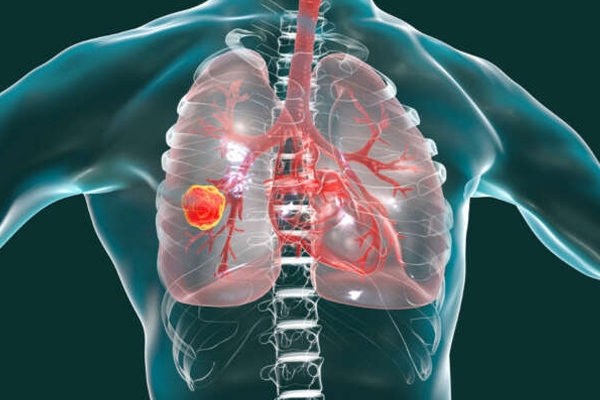
Access to Novel Drugs for Non-Small Cell Lung Cancer in Central and Southeastern Europe: A Central European Cooperative Oncology Group Analysis
Health Outcomes and Economics of Cancer Care, Lung Cancer, NSCLC, EMA
Treatment for non-small cell lung cancer (NSCLC) has significantly improved with the introduction of targeted and immune-oncologic drugs. Despite rapid development and European Medicinal Agency (EMA) registration, these novel drugs are not easily accessible in Central and Eastern European (CEE) c…
Nov 24th • 10 mins read
 Nicole Grossmann, Martin Robausch, Eleen Rothschedl, Claudia Wild, Judit Simon
Publicly accessible evidence of health-related quality of life benefits associated with cancer drugs approved by the European Medicines Agency between 2009 and 2015
Antineoplastic agents, Health-related quality of life, Clinical efficacy, Drug approvals, Patient-relevant outcomes
The study investigates cancer drugs approved by the European Medicines Agency (EMA) that initially lack Health-related Quality of Life (HRQoL) information. Data was collected for cancer indications approved between January 2009 and October 2015, using sources like the EMA website, clinical…
Feb 23rd • 12 mins read
 Massimo Di Maio, Francesco Perrone, Pierfranco Conte
Real-World Evidence in Oncology: Opportunities and Limitations
Real‐world evidence, Clinical trials, Cancer treatments
Randomized controlled trials (RCTs) are traditionally viewed as the gold standard for evaluating treatment efficacy, but real-world evidence (RWE) is gaining traction in oncology for addressing questions not fully answered by RCTs. RWE is derived from health records, cancer registries, and other …
Dec 24th • 8 mins read
 Jonathan H. Cheng, Justin W. Tiulim, Sheng Zhou, Anthony El-Khoueiry and Jorge Nieva
Mandatory Research Biopsy Requirements Delay Initiation of Clinical Trials
biomarker, clinical trial, targeted therapy, immunotherapy, mandatory research biopsy, oncology, lung cancer, head and neck cancer
The study investigates the impact of requiring fresh tumor tissue biopsies for enrollment in clinical trials. Key findings include: Requiring biopsies significantly increases screening duration, with a median of 30 days compared to 14 days for trials without biopsy requirements (p < 0.0001). …
Oct 18th • 10 mins read
 Roman Adam, Ariadna Tibau, Consolación Molto Valiente, Boštjan Šeruga, Alberto Ocaña, Eitan Amir, Arnoud J. Templeton
Clinical benefit of cancer drugs approved in Switzerland 2010–2019
cancer drug approval, clinical benefit criteria, ESMO-MCBS, ASCO-VF, OLUtool, Switzerland oncology drugs
The study evaluates the clinical benefit of cancer drugs approved in Switzerland between 2010 and 2019 using three different frameworks: ESMO-MCBS, ASCO-VF, and OLUtool. A total of 48 drugs for 92 indications were assessed based on 100 studies, with each study evaluated according to the criteria …
Jun 10th • 35 mins read
 Robbe Saesen, Georgios Kantidakis, Ann Marinus, Denis Lacombe, Isabelle Huys
How do cancer clinicians perceive real-world data and the evidence derived therefrom? Findings from an international survey of the European Organisation for Research and Treatment of Cancer
real-world evidence, real-world data, oncology, cancer, survey, clinicians, randomized controlled trials, Europe
Real-world evidence (RWE) is increasingly being used in the development and decision-making processes for anticancer therapies, but clinician views on its use are unclear. A survey conducted between May and July 2021 involved 557 clinicians from 30 countries and 13 cancer domains. Most clinician…
Aug 1st • 45 mins read
 Shen Lin, Yaping Huang, Liangliang Dong, Meiyue Li, Yahong Wang, Dian Gu, Wei Wu, Dongni Nian, Shaohong Luo, Xiaoting Huang, Xiongwei Xu and Xiuhua Weng
The correlation between the costs and clinical benefits of PD-1/PD-L1 inhibitors in malignant tumors: An evaluation based on ASCO and ESMO frameworks
PD-1/PD-L1 inhibitors, malignant tumors, ASCO, ESMO, Immune Checkpoint Inhibitors, Gastrointestinal Cancers
Cancer drug innovation has significantly accelerated in the 21st century, with novel drug approvals and expenditures increasing notably. Assessment frameworks ASCO-VF and ESMO-MCBS were used to evaluate the clinical benefit of PD-1/PD-L1 inhibitors, finding that nearly half of the trials met "mea…
Feb 23rd • 9 mins read
 Rajat Thawani, Neha Agrawal, Nicholas F Taflin, Adel Kardosh, Emerson Y Chen
Application of Value Framework to Phase III Trials of Immune Checkpoint Inhibitors in Esophageal and Gastric Cancer
esophageal cancer, gastric cancer, comparative effectiveness research, outcome assessment, antineoplastic agents, immunotherapy
Immunotherapy checkpoint inhibitors are FDA-approved for first-line metastatic esophageal and gastric cancer, but not all scenarios benefit from non-selective chemo-immunotherapy application. ASCO Net Health scores were consistently higher in esophageal cancer trials compared to gastric cancer tr…
Jan 13th • 8 mins read
 Meena N Murugappan, PharmD, MPH, PhD(c), Bellinda L King-Kallimanis, PhD, Gregory H Reaman, MD, Vishal Bhatnagar, MD, Erica G Horodniceanu, MPH, Najat Bouchkouj, MD, Paul G Kluetz, MD
Patient-Reported Outcomes in Pediatric Cancer Registration Trials: A US Food and Drug Administration Perspective
cancer, pediatrics, product labeling, united states food and drug administration, childhood cancer, denosumab, surrogate endpoints, adverse event, patient self-report, pediatric oncology, selumetinib, benefit-risk assessment, tisagenlecleucel, statistica
PROs have been feasible to collect from patients as young as 7 years old and were included in trials from 2013 onward. PROs were used as exploratory endpoints in four product applications but not included in product labeling. To include PRO data in FDA labeling, early interaction with the FDA, c…
Apr 30th • 12 mins read
 Aviv Ladanie, PhD, Andreas M. Schmitt, MD, Benjamin Speich, PhD, Florian Naudet, PhD, Arnav Agarwal, MD, Tiago V. Pereira, PhD, Francesco Sclafani, PhD, Amanda K. Herbrand, MD, Matthias Briel, MD, MSc, Juan Martin-Liberal, PhD, Thomas Schmid, MD, Hannah E
Clinical Trial Evidence Supporting US Food and Drug Administration Approval of Novel Cancer Therapies Between 2000 and 2016
cancer treatment outcomes, outcomes, drug approval, clinical data, FDA
Data from 17 years of studies on novel cancer drugs show limited information available at market entry. Randomized Controlled Trials (RCTs) data are available for only half of the drug indications. Lack of data is particularly problematic for patients with hematological cancers. Novel therapies…
Nov 10th • 6 mins read
 Dylan V. Neel, MPhil, David S. Shulman, MD, and Steven G. DuBois, MD
Timing of first-in-child trials of FDA-approved oncology drugs
pediatric cancer; phase 1 trials; drug development; targeted therapy; disparity
Aim: To define the lag time between initial human studies and first-in-child clinical trials of oncology agents. Methods: Systematic analysis of time from first-in-human trials to first-in-child trials for agents approved by the FDA from 1997 to 2017. Dat…
Mar 18th • 10 mins read
 Emerson Y. Chen, MD, Sunil K. Joshi, BA, Audrey Tran, BA
Estimation of Study Time Reduction Using Surrogate End Points Rather Than Overall Survival in Oncology Clinical Trials
bevacizumab, metastatic breast cancer, RR, PFS, FDA, oncology clinical trials
The use of Response Rate (RR), Progression-Free Survival (PFS), and Overall Survival (OS) in clinical trials leading to FDA approval is associated with different study durations: RR: Median study duration of 25 months (range, 11-54 months). PFS: Median study duration of 31 months (range, 10-…
Apr 1st • 10 mins read
 Hagop M. Kantarjian MD, Ferran Prat PhD, JD, David P. Steensma MD, Razelle Kurzrock MD, David J. Stewart MD, Mikkael A. Sekeres MD, Joseph Leveque MD
Cancer research in the United States: A critical review of current status and proposal for alternative models
cancer research, research, NCI, Drug industry-driven research model, development in research, 2018 cancer model
Early research focused on tissue histology and animal models, with surgery and radiotherapy as primary treatments. 1950s: Introduction of cell lines (e.g., HeLa cells) and first anticancer drugs (antifolates, thiopurines), leading to the establishment of the Cancer Chemotherapy National Service C…
May 14th • 10 mins read

 iNIZIO
Transforming oncology: Five frontiers driving progress in cancer care
From biomarker-driven breakthroughs to AI-powered early detection and a renewed commitment to equity and patient centricity, the past 12 months have seen major strides across cancer research, treatment, and communication. At Inizio, we’ve had a front-row seat to this transformation, supporting…
May 16th • 5 mins read
 Avi Cherla, MSc; Huseyin Naci, MHS, PhD; Aaron S. Kesselheim, MD, JD, MPH; Bishal Gyawali, MD, PhD; Elias Mossialos, MD, PhD
Assessment of Coverage in England of Cancer Drugs Qualifying for US Food and Drug Administration Accelerated Approval
FDA, NHS, accelerated approval, NICE, clinical trial findings
The study evaluates the acceptance and coverage of FDA-accelerated approved cancer drugs by the National Health Service (NHS) in England, focusing on decisions made by the National Institute for Health and Care Excellence (NICE). A total of 93 cancer drug indications received accelerated approval…
Feb 22nd • 10 mins read
 Consolacion Molto, Ariadna Tibau, Aida Bujosa, Jose Carlos Tapia, Abhenil Mittal, Faris Tamimi & Eitan Amir
Association between control group therapy and magnitude of clinical benefit of cancer drugs
control group therapy, clinical benefit scales, ESMO-MCBS, ASCO-VF, randomized trials
The study investigated the impact of control group therapy on various clinical benefit scales like ASCO-VF, ESMO-MCBS, NCCN Evidence Blocks, and ASCO-CRC. Researchers analyzed cancer drugs approved between 2012 and 2021 using data from randomized controlled trials (RCTs) listed on Drugs@FDA. Sig…
Dec 9th • 20 mins read
 Emerson Y. Chen, MD, Vikram Raghunathan, MD, Vinay Prasad, MD, MPH
An Overview of Cancer Drugs Approved by the US Food and Drug Administration Based on the Surrogate End Point of Response Rate
FDA, RR, drug approvels, OS
Many cancer drugs come to market based on single-arm studies with modest RRs. Most of these drugs are tested in studies of over 100 patients prior to approval. Most (60%) of these approvals lack randomized clinical trials during the life cycle of the product. Our findings suggest greater room for th…
May 28th • 5 mins read
 Vanessa Arciero, BS, Seanthel Delos Santos, Liza Koshy
Assessment of Food and Drug Administration- and European Medicines Agency-Approved Systemic Oncology Therapies and Clinically Meaningful Improvements in Quality of Life: A Systematic Review
ESMO, MCBS, FDA, ASCO-VF, EMA, QOL
Recent oncology therapies approved by the FDA and EMA often lack evidence of clinically meaningful improvements in quality of life (QOL). Only 40% of FDA-approved and 58% of EMA-approved oncology therapies had published QOL evidence. Clinically meaningful QOL improvements beyond minimal dif…
Feb 11th • 4 mins read