
Results for 'analysis'

 Tom Caravela
MSL Retention – What Matters Most
digital marketing, search engine optimization, keyword analysis, content strategy, online visibility
As the Medical Science Liaison job market continues to become more and more competitive, attrition rates continue to increase as a result. One of the most common questions I receive from MSL Directors and Medical Affairs leaders is, “What can we do to keep our MSLs loyal and motivated?” …
Mar 15th • 2 mins read
 B. Gyawali, E. G. E. de Vries, U. Dafni, T. Amaral, J. Barriuso, J. Bogaerts, A. Calles, G. Curigliano, C. Gomez-Roca, B. Kiesewetter, S. Oosting, A. Passaro, G. Pentheroudakis, M. Piccart, F. Roitberg, J. Tabernero, N. Tarazona, D. Trapani, R. Wester, G.
Biases in study design, implementation, and data analysis that distort the appraisal of clinical benefit and ESMO-Magnitude of Clinical Benefit Scale (ESMO-MCBS) scoring
ESMO-MCBS, bias, clinical trial design, clinical trial implementation, clinical trial reporting, clinical trial analysis
The ESMO-MCBS is a tool used for scoring the clinical benefit of cancer medicines as reported in clinical trials, assuming valid research methodologies and quality implementation. The tool's effectiveness is compromised by studies with flawed design, implementation, or data analysis, w…
Apr 20th • 8 mins read
 Jayson L. Parker, Sebnem S. Kuzulugil, Kirill Pereverzev, Stephen Mac, Gilberto Lopes, Zain Shah, Ashini Weerasinghe, Daniel Rubinger, Adam Falconi, Ayse Bener, Bora Caglayan, Rohan Tangri, Nicholas Mitsakakis
Does biomarker use in oncology improve clinical trial failure risk? A large-scale analysis
biomarker, clinical trial, failure, analysis, NSCLC, oncology
Data from clinical trials across four oncology indications (breast cancer, NSCLC, melanoma, and colorectal cancer) from 1998 to 2017 were analyzed to assess drug approval likelihood based on biomarker status. Using multi-state Markov models, which describe stochastic processes, the study…
Feb 23rd • 8 mins read
 Doreen A. Ezeife MD, Francois Dionne PhD, Aline Fusco Fares MD, Ellen Laura Rose Cusano MD, Rouhi Fazelzad BSc, MISt, Wenzie Ng BSc, MPharm, RPh, Don Husereau BSc Pharm, MSc, Farzad Ali BPharm, MSc, Christina Sit MSc, Barry Stein B.Com BCL, LLB, Jennifer
Value assessment of oncology drugs using a weighted criterion-based approach
anticancer therapy, multicriteria decision analysis, value assessment, value assessment framework
The rising cost of anticancer therapy has led to efforts to quantify the overall value of new cancer treatments. Multicriteria decision analysis is used to incorporate multiple criteria and perspectives into value assessment. A diverse, multistakeholder group developed a drug assessment framewor…
Dec 20th • 15 mins read
 Anushka Walia, Alyson Haslam, Vinay Prasad
FDA validation of surrogate endpoints in oncology: 2005–2022
FDA drug approval, surrogate endpoints, oncology drugs, overall survival correlation, clinical trials analysis, drug approval guidelines
ere are summary bullets based on the provided text: The FDA has increasingly approved oncologic drugs based on surrogate endpoints, which often lack a demonstrated correlation with clinically meaningful outcomes like overall survival. A review of FDA analyses from 2005 to 2022 examined the valid…
Dec 1st • 20 mins read
 Francesco Cerisoli, PhD, Farzad Ali, MSc, Tamás Bereczky, MA, PhD, Natacha Bolaños, BS, Lars Bullinger, MD, Sujith Dhanasiri, MPhil, MSc, James Gallagher, PhD, Sonia García Pérez, MSc, Jan Geissler, MiBA, Yann Guillevic, DEA, Kathryn Harrison, PhD, Anasta
Building a Healthcare Alliance for Resourceful Medicine Offensive Against Neoplasms in Hematology Added Value Framework for Hematologic Malignancies: A Comparative Analysis of Existing Tools
clinical value framework, hematology, Healthcare Alliance for Resourceful Medicine, Offensive Against Neoplasms in hematology, patient-reported outcomes, HARMONY, analysis
Current Value Frameworks (VFs) have limitations and do not meet HARMONY's ambitions for assessing the therapeutic/clinical value of innovative health technologies. There is a need for a cross-stakeholder agreement on the definition of "value," which varies among patients, clinicians, and payers. …
May 17th • 12 mins read
 Alfredo Addeo, MD; Glen J. Weiss, MD, MBA; Bishal Gyawali, MD, PhD
Association of Industry and Academic Sponsorship With Negative Phase 3 Oncology Trials and Reported Outcomes on Participant Survival: A Pooled Analysis
pooled analysis, FDA, negative phase 3 trials, phase 3 trial, RCT, PRISMA, RCT's
In this study of trials published in 2016 through 2018, approximately 40% of negative phase 3 RCTs in oncology were conducted without supporting phase 2 trials, and such phase 3 trials were sponsored by both academia and industry. On the basis of our results, proactive steps from regulators and ethi…
May 10th • 8 mins read
 Xuanyi Li, Elizabeth A. Sigworth, Adrianne H. Wu, Jess Behrens, Shervin A. Etemad, Seema Nagpal, Ronald S. Go, Kristin Wuichet, Eddy J. Chen, Samuel M. Rubinstein, Neeta K. Venepalli, Benjamin F. Tillman, Andrew J. Cowan, Martin W. Schoen, Andrew Malty, J
Seven decades of chemotherapy clinical trials: a pan-cancer social network analysis
Cancer Medical research, Randomized controlled trials, Clinical trial design
Clinical trials are crucial in establishing cancer care standards, but the social dynamics among researchers in this field have not been extensively studied. A social network analysis of authors involved in chemotherapy-based prospective trials from 1946 to 2018 reveals significant insights. The …
Oct 16th • 12 mins read
 Tanja Cufer, Tudor E. Ciuleanu, Peter Berzinec, Gabriela Galffy, Marko Jakopovic, Jacek Jassem, Dragana Jovanovic, Zhasmina Mihaylova, Gyula Ostoros, Christiane Thallinger, Milada Zemanova, Christoph Zielinski
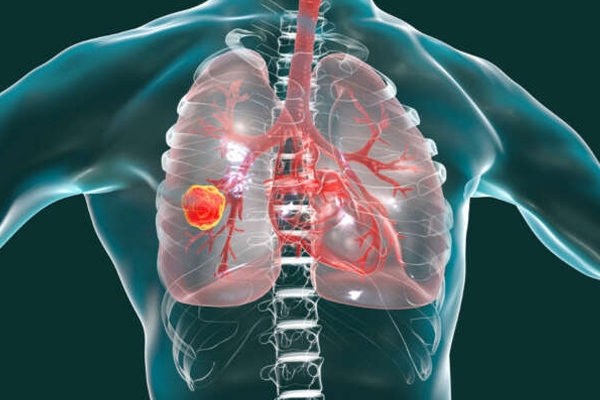
Access to Novel Drugs for Non-Small Cell Lung Cancer in Central and Southeastern Europe: A Central European Cooperative Oncology Group Analysis
Health Outcomes and Economics of Cancer Care, Lung Cancer, NSCLC, EMA
Treatment for non-small cell lung cancer (NSCLC) has significantly improved with the introduction of targeted and immune-oncologic drugs. Despite rapid development and European Medicinal Agency (EMA) registration, these novel drugs are not easily accessible in Central and Eastern European (CEE) c…
Nov 24th • 10 mins read
 Talal Hilal, MD; Mohamad Bassam Sonbol, MD; Vinay Prasad, MD, MPH
Analysis of Control Arm Quality in Randomized Clinical Trials Leading to Anticancer Drug Approval by the US Food and Drug Administration
RCTs, FDA, clinical trials, anticancer, suboptimal control arms
The aim of our analysis was to evaluate the quality of control arms in RCTs leading to anticancer drug approvals by the FDA. We found that, between January 1, 2013, and July 31, 2018, FDA approval of 16 (17%) of 95 anticancer drugs for the market were based on RCTs with sub-optim…
May 2nd • 15 mins read
 Tom Caravela
MSL Hiring and Recruitment: 5 Ways to Support Diversity and Inclusion
Medical Science Liaison hiring, diversity and inclusion recruitment, diverse interview panel, employee referral program, diversity sourcing strategies
While the COVID-19 pandemic wreaked havoc on many industries, Medical Science Liaison hiring was steady throughout 2020 and continues to remain strong in 2021. The one change in hiring that has become evident is the increase in recruitment practices that support diversity and inclusion. While we may…
May 19th • 2 mins read
 Pai, Rekha
Advances in basic research in oncology in 2020: Bridging basic science and clinical care
advances, research, oncology, PCAWG, 2020
Cancer research is advancing with an understanding of the disease at the genetic level, facilitated by massive parallel sequencing. The pan-cancer analysis of the whole genome (PCAWG) in 2020 documented genomic changes across 38 cancer types, involving 2658 cancer genomes. An average of four to …
Mar 24th • 1 min read
 Adela Rodriguez, Francis Esposito, Helena Oliveres, Ferran Torres and Joan Maurel
Are Quality of Randomized Clinical Trials and ESMO-Magnitude of Clinical Benefit Scale Two Sides of the Same Coin, to Grade Recommendations for Drug Approval?
quality randomized studies, ESMO-MCBS, drug approval
The approval of new cancer drugs by the FDA and EMA is primarily based on positive results from well-designed randomized phase III clinical trials (RCTs). Not all RCTs are analyzed to support drug approval recommendations, highlighting the need for scales to evaluate RCT quality and clinical…
Feb 11th • 3 mins read
 Sonoko Kawakatsu, René Bruno, Matts Kågedal, Chunze Li, Sandhya Girish, Amita Joshi, Benjamin Wu
Confounding factors in exposure–response analyses and mitigation strategies for monoclonal antibodies in oncology
monoclonal antibodies, E-R analyses, tumour growth inhibition, drug development
Dose selection and optimization is crucial in drug development to maximize benefits for all patients. Exposure–response (E-R) analysis is useful for dose-selection strategy, but in oncology, prognostic factors can confound the analysis, especially for monoclonal antibodies. The review addr…
Nov 20th • 12 mins read
 Stefanie Broes, Robbe Saesen, Denis Lacombe, Isabelle Huys
Past, Current, and Future Cancer Clinical Research Collaborations: The Case of the European Organisation for Research and Treatment of Cancer
European organisation for Research and Treatment of Cancer, EORTC, clinical research
Collaborations between academic institutions and industry have led to significant scientific breakthroughs in pharmaceutical research, particularly in the discovery phase. The role of multi-stakeholder partnerships in the clinical development of anticancer medicines requires further clarification…
Aug 16th • 8 mins read
 Mateusz T. Wasylewski, Karolina Strzebonska, Magdalena Koperny, Maciej Polak, Jonathan Kimmelman, Marcin Waligora
Clinical development success rates and social value of pediatric Phase 1 trials in oncology
pediatric oncology, clinical development, trials, success rates
Pediatric Phase 1 trials in oncology aim to assess social value, focusing on rates of approval, transition to further phases, and citation in research. The study analyzed trials from 2004 to 2013, utilizing data from FDA, EMA, ClinicalTrials.gov, EU Clinical Trials Register, and Google Scholar. …
Jun 21st • 28 mins read
 Haiqing Isaac Dai, Yulia Vugmeyster, Naveen Mangal
Characterizing Exposure–Response Relationship for Therapeutic Monoclonal Antibodies in Immuno-Oncology and Beyond: Challenges, Perspectives, and Prospects
Complex E–R relationship, immuno-oncology, single-dose PK model, therapeutic monoclonal antibodies
Recent data from immuno-oncology clinical studies show that the exposure–response (E–R) relationship for therapeutic monoclonal antibodies (mAbs) is often confounded by various factors. The complex interplay involves patient characteristics, disease, drug exposure, clearance, and…
Jun 18th • 30 mins read
 Melissa H. Roberts & Gary T. Ferguson
Real-World Evidence: Bridging Gaps in Evidence to Guide Payer Decisions
Real world evidence, RWE, payer decisions, RWD
Randomized controlled trials (RCTs) are preferred by payers for health technology assessments and coverage decisions, but they may not reflect real-world clinical practice. Real-world evidence (RWE) from observational studies can fill evidence gaps not addressed by RCTs and is valuable for payer …
Jun 18th • 6 mins read
 Dylan V Neel, David S Shulman, Clement Ma, Florence Bourgeois, Steven G DuBois
Sponsorship of oncology clinical trials in the United States according to age of eligibility
clinical trials, industry, oncology, pediatric, sponsorship
The sponsorship mix of trials relevant to young people with cancer has not been well-documented, which may impact policies and regulations in pediatric cancer drug development. An analysis of interventional trials in the U.S. from 2007 to 2018 was conducted using the ClinicalTrials.gov registry, …
Apr 29th • 8 mins read
 Ruben Van Paemel, Roos Vlug, Katleen De Preter, Nadine Van Roy, Frank Speleman, Leen Willems, Tim Lammens, Geneviève Laureys, Gudrun Schleiermacher, Godelieve A. M. Tytgat, Kathy Astrahantseff, Hedwig Deubzer, Bram De Wilde
The pitfalls and promise of liquid biopsies for diagnosing and treating solid tumors in children: a review
Liquid biopsies, Pediatric solid tumors, Cell-free DNA profiling
Cell-free DNA profiling via blood samples is emerging as a non-invasive method for cancer genomic characterization. Liquid biopsies are set to be integrated into pediatric cancer clinical trials, offering benefits such as earlier therapy response monitoring and detection of residual disease.…
Jan 3rd • 10 mins read