
Results for 'drug indications'

 Benjamin Gregory Carlisle, Adélaïde Doussau, Jonathan Kimmelman
Patient burden and clinical advances associated with post approval monotherapy cancer drug trials: a retrospective cohort study
clinical advances, monotherapy cancer drug trials, FDA
Objective: The study investigates the efforts to extend the uses of new drugs by testing them for new, non-approved indications and examines the patient burden and clinical impact. Design and Setting: A retrospective cohort study focused on post-approval trials of anticancer drugs approved betwee…
Feb 17th • 7 mins read
 Joseph M. Unger, PhD, MS, Van T. Nghiem, PhD, Dawn L. Hershman, MD, MS
Association of National Cancer Institute-Sponsored Clinical Trial Network Group Studies With Guideline Care and New Drug Indications
NCIS, clinical trials, NCTN, drug indications
Importance: NCTN groups are vital in identifying effective new antineoplastic regimens, but their clinical impact has not been systematically evaluated until now. Objective: To determine the association of NCTN trials with guideline care and new drug indications. Design, Setting, and Participant…
Sep 4th • 17 mins read
 Ravi B. Parikh, MD, MPP Rebecca A. Hubbard, PhD Erkuan Wang, MA Trevor J. Royce, MD, MPH Aaron B. Cohen, MD, MSCE Amy S. Clark, MD, MSCE Ronac Mamtani, MD, MSCE
Exposure to US Cancer Drugs With Lack of Confirmed Benefit After US Food and Drug Administration Accelerated Approval
US, FDA, approval, drugs, benefits, cancer
Among 5 oncology indications, 26.1% of eligible treatment initiations involved an Accelerated Approval (AA) indication that was later withdrawn due to lack of benefit. There is an inherent trade-off between expediting access to promising cancer drugs and the potential withdrawal of some indicatio…
Dec 8th • 2 mins read
 Yafang Huanga, Weiyi Xiongb, Jingwei Zhaoa, Wentao Lia, Li Mac, Hao Wua
Early phase clinical trial played a critical role in the Food and Drug Administration-approved indications for targeted anticancer drugs: a cross-sectional study from 2012 to 2021
Early phase clinical trial, Dose-expansion cohort, Single-arm trial, Pivotal trial, FDA approved indications, Targeted anticancer drugs
Analysis of 188 FDA-approved indications for 95 molecular targeted anticancer drugs between 2012 and 2021. 59.6% of indications were approved based on Early Phase Clinical Trials (EPCTs). There was a notable annual increase of 22.2% in approvals based on EPCTs, compared to a 5.0% increase for ph…
Mar 9th • 10 mins read
 Mahnum Shahzad, BA, Huseyin Naci, MHS, PhD, Anita K. Wagner, PharmD, MPH, DrPH
Estimated Medicare Spending on Cancer Drug Indications With a Confirmed Lack of Clinical Benefit After US Food and Drug Administration Accelerated
medicare spending, drug indications, AA, FDA, medicare, ODAC
Medicare Parts B and D spent at least $569 million between 2017 and 2019 on 10 cancer drug indications without confirmed overall survival (OS) benefit after accelerated approval (AA). Approximately $224 million was spent on drug indications that were either voluntarily withdrawn or recommended fo…
Oct 18th • 5 mins read
 Bruce A. Feinberg, DO Ajeet Gajra, MBBS, MD Marjorie E. Zettler, PhD, MPH Todd D. Phillips, PharmD Eli G. Phillips Jr., PharmD, JD Jonathan K. Kish, PhD, MPH
Use of Real-World Evidence to Support FDA Approval of Oncology Drugs
Food and Drug Administration, oncology drug approval, real-world data, real-world evidence
Real-world evidence (RWE) has gained increased attention in recent years as a complement to traditional clinical trials. The use of RWE to establish the efficacy of oncology drugs for Food and Drug Administration (FDA) approval has not been described. In this paper, we review 5 recent examples whe…
Sep 14th • 16 mins read
 Thomas J. Hwang, Liat Orenstein, Steven G. DuBois, Katherine A. Janeway, Florence T. Bourgeois
Pediatric Trials for Cancer Therapies With Targets Potentially Relevant to Pediatric Cancers
antineoplastic agents, adult, child, pediatrics, continental population groups, united states food and drug administration, statutes and laws, cancer therapy, childhood cancer, molecular target
The Research to Accelerate Cures and Equity (RACE) for Children Act was enacted in 2017. The Act authorizes the US FDA to require pediatric studies for new cancer drugs with molecular targets relevant to pediatric cancers. An examination of 78 adult cancer drugs approved by the FDA from 2007 to …
Oct 29th • 10 mins read
 Yassine Kamal Lyauk, Daniël Martijn Jonker, Trine Meldgaard Lund
Dose Finding in the Clinical Development of 60 US Food and Drug Administration-Approved Drugs Compared With Learning vs. Confirming Recommendations
FDA, sequential clinical development, drug approvals, clinical trials, dosages
This review evaluates the current practice of dose finding in the pharmaceutical industry and assesses the clinical evidence supporting the optimality of the label dose. Previous work has focused on dose-ranging trial design, while clinical development paths and dose–exposure–res…
Jun 29th • 15 mins read
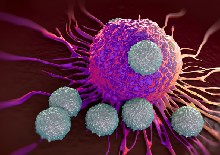 Alyson Haslam, PhD; Vinay Prasad, MD, MPH
Estimation of the Percentage of US Patients With Cancer Who Are Eligible for and Respond to Checkpoint Inhibitor Immunotherapy Drugs
checkpoint inhibitor drugs, immunotherapy drugs, FDA, checkpoint, inhibitor, drugs
If FDA-approved checkpoint inhibitor drugs are universally available, we estimated that the proportion of US patients with cancer who could be eligible for such drugs is approximately 44%, while approximately 13% have a response to these drugs. These estimates, although modest, are better than estim…
May 3rd • 10 mins read
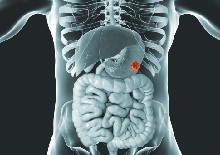 Di Maria Jiang, Kelvin K. W. Chan, Raymond W. Jang, Christopher Booth, Geoffrey Liu, Eitan Amir, Robert Mason, Louis Everest, Elena Elimova
Anticancer drugs approved by the Food and Drug Administration for gastrointestinal malignancies: Clinical benefit and price considerations
ASCO VF, ESMO MCBS, gastrointestinal malignancies, anticancer drugs
Drugs approved between 2006 and 2017 were analyzed. Clinical benefit was measured using ESMO Magnitude of Clinical Benefit Scale and ASCO Value Framework. 16 GI cancer drugs received FDA approval for 24 indications, including various drug classes such as monoclonal antibodies, oral targeted …
Mar 7th • 8 mins read
 A. Haslam, M.S. Kim, V. Prasad
Updated estimates of eligibility for and response to genome-targeted oncology drugs among US cancer patients, 2006-2020
genome-targeted therapy, eligibility, response
Recent studies have been conducted to update the estimates of eligibility and response rates to genome-targeted therapies among US cancer patients, reflecting data up to 2020. The number of FDA-approved drugs targeting genetic indications has increased significantly since prior assessments. …
Apr 20th • 7 mins read
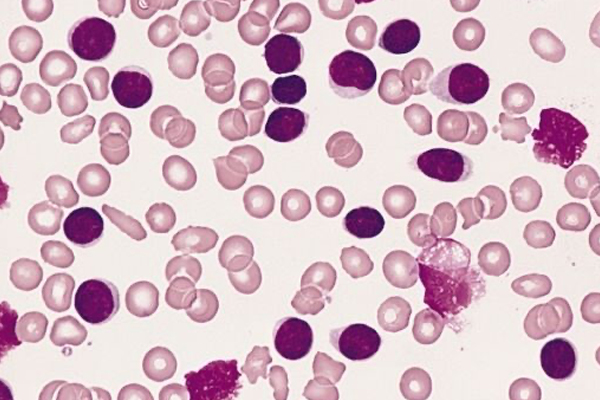 Vishwanath Sathyanarayanan, MD, DM, Christopher R. Flowers, MD, MSc, and Swaminathan P. Iyer, MD, MBBS
Comparison of Access to Novel Drugs for Lymphoma and Chronic Lymphocytic Leukemia Between India and the United States
lymphoma, leukemia, India, United States, biosimiliars
The review examines the costs and access to novel drugs for treating chronic lymphocytic leukemia (CLL) and lymphoma in the United States and India over the last 5 years. Clinical outcomes for patients with hematologic malignancies have improved significantly due to immunotherapeutic and tar…
Jul 21st • 12 mins read
 Bhakti Arondekar, Mei Sheng Duh, Rachel H. Bhak, Maral DerSarkissian, Lynn Huynh, Kelsey Wang, John Wojciehowski, Melody Wu, Bryon Wornson, Alexander Niyazov, George D. Demetri
Real-World Evidence in Support of Oncology Product Registration: A Systematic Review of New Drug Application and Biologics License Application
RWE, Biologics License, FDA, BLA, suplements
The FDA emphasizes early engagement and transparent protocols in Real-World Evidence (RWE) studies. Aligning RWE populations with pivotal trial populations is crucial, often achieved through criteria matching and propensity score methodologies. Major critiques include differences in tumor asse…
Jan 1st • 12 mins read
 Cheryl Ho, MD, Howard J. Lim, MD, Dean A. Regier, PhD
Canadian Regulatory and Health Technology Assessment for Malignant Hematology and Oncology Indications Compared With the US Food and Drug Administration Accelerated Approval Program
canada, oncology, malignant, hematology, HTC
Canadian regulatory approvals align with FDA decisions, but submission numbers to Health Canada (HC) and Health Technology Assessment (HTA) processes are lower in Canada. There is a nearly 3-year delay between Accelerated Approval (AA) and funded access to treatment for Canadians. HTA in Canada …
Jun 5th • 6 mins read
 Ali Raza Khaki
Loose Regulatory Standards Portend a New Era of Imprecision Oncology
precision oncology, TMB-high, homologous recombination deficiency, Olaparib, pembrolizumab
Precision oncology aims to tailor cancer treatment based on genetic understanding, revolutionizing oncology. The FDA has been approving drugs under precision oncology with broad indications that may not align with studied populations. Examples include the approval of pembrolizumab for a wide ran…
Dec 1st • 4 mins read
 Timothy Qi, Tyler Dunlap, Yanguang Cao1
Embracing Project Optimus: Can we Leverage Evolutionary Theory to Optimize Dosing in Oncology?
oncology, precision medicine, tumor evolution, dosing, FDA
Focus on tumor evolution, which leads to therapeutic failure and disease relapse. Emphasis on the effect of tumor evolution on the exposure-response (E-R) relationships of oncology drugs. Advocacy for prioritizing tumor evolution during clinical development to select optimal doses for targeted t…
Sep 2nd • 10 mins read
 Alfredo Addeo, MD; Glen J. Weiss, MD, MBA; Bishal Gyawali, MD, PhD
Association of Industry and Academic Sponsorship With Negative Phase 3 Oncology Trials and Reported Outcomes on Participant Survival: A Pooled Analysis
pooled analysis, FDA, negative phase 3 trials, phase 3 trial, RCT, PRISMA, RCT's
In this study of trials published in 2016 through 2018, approximately 40% of negative phase 3 RCTs in oncology were conducted without supporting phase 2 trials, and such phase 3 trials were sponsored by both academia and industry. On the basis of our results, proactive steps from regulators and ethi…
May 10th • 8 mins read