
Results for 'patient survival'
 Nicole Grossmann, Martin Robausch, Eleen Rothschedl, Claudia Wild, Judit Simon
Publicly accessible evidence of health-related quality of life benefits associated with cancer drugs approved by the European Medicines Agency between 2009 and 2015
Antineoplastic agents, Health-related quality of life, Clinical efficacy, Drug approvals, Patient-relevant outcomes
The study investigates cancer drugs approved by the European Medicines Agency (EMA) that initially lack Health-related Quality of Life (HRQoL) information. Data was collected for cancer indications approved between January 2009 and October 2015, using sources like the EMA website, clinical…
Feb 23rd • 12 mins read
 Omer Ben‐Aharon, Racheli Magnezi, Moshe Leshno, and Daniel A. Goldstein
Median Survival or Mean Survival: Which Measure Is the Most Appropriate for Patients, Physicians, and Policymakers?
Immunotherapies, Median survival, Mean survival, Weibull
The average Restricted Mean Survival Time (RMST) for modern oncology agents approved by the FDA from 2013 to 2017 is 3.6 months, which is lower than the average median Overall Survival (OS) or Progression-Free Survival (PFS) of 4.6 months. When assuming a Weibull distribution post-trial, t…
Jul 18th • 15 mins read
 Anushka Walia, Alyson Haslam, Vinay Prasad
FDA validation of surrogate endpoints in oncology: 2005–2022
FDA drug approval, surrogate endpoints, oncology drugs, overall survival correlation, clinical trials analysis, drug approval guidelines
ere are summary bullets based on the provided text: The FDA has increasingly approved oncologic drugs based on surrogate endpoints, which often lack a demonstrated correlation with clinically meaningful outcomes like overall survival. A review of FDA analyses from 2005 to 2022 examined the valid…
Dec 1st • 20 mins read
 K. Ribi, N. Kalbermatten, M. Eicher, F. Strasser
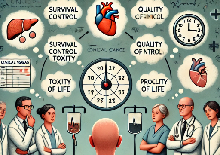
Towards a novel approach guiding the decision-making process for anticancer treatment in patients with advanced cancer: framework for systemic anticancer treatment with palliative intent
Patient-centered cancer care, Advanced cancer decision-making, Stepwise decisional process, Palliative care domains, Illness understanding in oncology, Symptom control in cancer, End-of-life preparation, Patient-physician interaction, SACT-PI Decision Fra
Patient-centered decisions in advanced cancer care demand a step-wise decisional process, not a single decision act. The decision process includes key palliative care domains, e.g. illness understanding, symptom control, or end-of-life preparation. Patients' attitudes, beliefs, hopes, patient-ph…
Jun 1st • 25 mins read
 Meena N Murugappan, PharmD, MPH, PhD(c), Bellinda L King-Kallimanis, PhD, Gregory H Reaman, MD, Vishal Bhatnagar, MD, Erica G Horodniceanu, MPH, Najat Bouchkouj, MD, Paul G Kluetz, MD
Patient-Reported Outcomes in Pediatric Cancer Registration Trials: A US Food and Drug Administration Perspective
cancer, pediatrics, product labeling, united states food and drug administration, childhood cancer, denosumab, surrogate endpoints, adverse event, patient self-report, pediatric oncology, selumetinib, benefit-risk assessment, tisagenlecleucel, statistica
PROs have been feasible to collect from patients as young as 7 years old and were included in trials from 2013 onward. PROs were used as exploratory endpoints in four product applications but not included in product labeling. To include PRO data in FDA labeling, early interaction with the FDA, c…
Apr 30th • 12 mins read
 Pan Pantziarka, Ciska Verbaanderd & Lydie Meheus
Biased by design? Clinical trials and patient benefit in oncology
clinical trial design, drug development, drug registration, patient benefit, risks of bias
The study by Naci et al. raises numerous questions relating to the design characteristics, risks of bias and reporting of pivotal clinical trials in oncology. These findings add to the existing body of evidence that suggests drug development in oncology is not delivering the clinical benef…
Nov 27th • 3 mins read
 Ajaikumar B Kunnumakkara [email protected], Devivasha Bordoloi, Bethsebie Lalduhsaki Sailo, Nand Kishor Roy, Krishan Kumar Thakur, Kishore Banik, Mehdi Shakibaei, Subash C Gupta, and Bharat B Aggarwal
Cancer drug development: The missing links
Cancer, drugs, patient survival, pre-clinical, clinical, cost
Despite advanced science and technology, cancer incidence is highest in America and Europe. Science and technology alone are not sufficient for treating diseases like cancer. Over 95% of drugs/compounds that show promise in pre-clinical trials fail in phase I clinical trials in humans. Most pre…
Apr 18th • 20 mins read
 Louis Everest, BSc; Monica Shah, BSc; Kelvin K.W. Chan, MD, MSc, PhD
Comparison of Long-term Survival Benefits in Trials of Immune Checkpoint Inhibitor vs Non-Immune Checkpoint Inhibitor Anticancer Agents Using ASCO Value Framework and ESMO Magnitude of Clinical Benefit Scale
immunotherapy-triggered LTP, RCTs, FDA, ICI
Importance: Anticancer agents, especially immune checkpoint inhibitors (ICIs), have shown potential for long-term durable survival in some patients. However, traditional clinical benefit measures may not accurately capture this, leading to proposed amendments in valuation frameworks. Objectives: …
Jul 10th • 12 mins read
 Dominic H. Moon, Ronald C. Chen
Defining a Clinically Meaningful Benefit in Cancer Clinical Trials: From the Perspectives of the Clinical Trialist, Patient, and Society
cancer clinical trials, benefit of clinical trials, clinically meaningful, ASCO
In value-based medicine, clinical trials must show both statistically significant and clinically meaningful improvements, such as ASCO's recommendation of a 20% relative improvement in overall survival for metastatic solid tumors. Lawrence et al. found that while many phase III trials met statistica…
Jun 27th • 2 mins read
 Alfredo Addeo, MD; Glen J. Weiss, MD, MBA; Bishal Gyawali, MD, PhD
Association of Industry and Academic Sponsorship With Negative Phase 3 Oncology Trials and Reported Outcomes on Participant Survival: A Pooled Analysis
pooled analysis, FDA, negative phase 3 trials, phase 3 trial, RCT, PRISMA, RCT's
In this study of trials published in 2016 through 2018, approximately 40% of negative phase 3 RCTs in oncology were conducted without supporting phase 2 trials, and such phase 3 trials were sponsored by both academia and industry. On the basis of our results, proactive steps from regulators and ethi…
May 10th • 8 mins read
 Alyson Haslam, PhD; Vinay Prasad, MD, MPH
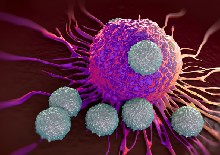
Estimation of the Percentage of US Patients With Cancer Who Are Eligible for and Respond to Checkpoint Inhibitor Immunotherapy Drugs
checkpoint inhibitor drugs, immunotherapy drugs, FDA, checkpoint, inhibitor, drugs
If FDA-approved checkpoint inhibitor drugs are universally available, we estimated that the proportion of US patients with cancer who could be eligible for such drugs is approximately 44%, while approximately 13% have a response to these drugs. These estimates, although modest, are better than estim…
May 3rd • 10 mins read
 Emerson Y. Chen, MD, Sunil K. Joshi, BA, Audrey Tran, BA
Estimation of Study Time Reduction Using Surrogate End Points Rather Than Overall Survival in Oncology Clinical Trials
bevacizumab, metastatic breast cancer, RR, PFS, FDA, oncology clinical trials
The use of Response Rate (RR), Progression-Free Survival (PFS), and Overall Survival (OS) in clinical trials leading to FDA approval is associated with different study durations: RR: Median study duration of 25 months (range, 11-54 months). PFS: Median study duration of 31 months (range, 10-…
Apr 1st • 10 mins read

 iNIZIO
Transforming oncology: Five frontiers driving progress in cancer care
From biomarker-driven breakthroughs to AI-powered early detection and a renewed commitment to equity and patient centricity, the past 12 months have seen major strides across cancer research, treatment, and communication. At Inizio, we’ve had a front-row seat to this transformation, supporting…
May 16th • 5 mins read
 Emmanuelle Jacqueta, Ghania Kerouani-Lafayeb, Francoise Grudeb, Sergio Goncalvesb, Annie Lorenced, Florence Turcryb, Liora Brunelb, Laetitia Belgodereb, Adrien Monardc, Gaëlle Guyaderb, Lotfi Boudalib, Nicolas Albin
Comparative study on anticancer drug access times between FDA, EMA and the French temporary authorisation for use program over 13 years
Innovation, Expanded access, Early drug access, Cancer, FDA, EMA
Cancer incidence is increasing globally, and while medical innovation significantly impacts patient survival, the drug development process is lengthy, often exceeding 10 years for marketing authorization (MA). France has implemented the ATU (Temporary Authorization for Use) program to facil…
Apr 7th • 12 mins read
 Avi Cherla, MSc; Huseyin Naci, MHS, PhD; Aaron S. Kesselheim, MD, JD, MPH; Bishal Gyawali, MD, PhD; Elias Mossialos, MD, PhD
Assessment of Coverage in England of Cancer Drugs Qualifying for US Food and Drug Administration Accelerated Approval
FDA, NHS, accelerated approval, NICE, clinical trial findings
The study evaluates the acceptance and coverage of FDA-accelerated approved cancer drugs by the National Health Service (NHS) in England, focusing on decisions made by the National Institute for Health and Care Excellence (NICE). A total of 93 cancer drug indications received accelerated approval…
Feb 22nd • 10 mins read
 Vanessa Arciero, BS, Seanthel Delos Santos, Liza Koshy
Assessment of Food and Drug Administration- and European Medicines Agency-Approved Systemic Oncology Therapies and Clinically Meaningful Improvements in Quality of Life: A Systematic Review
ESMO, MCBS, FDA, ASCO-VF, EMA, QOL
Recent oncology therapies approved by the FDA and EMA often lack evidence of clinically meaningful improvements in quality of life (QOL). Only 40% of FDA-approved and 58% of EMA-approved oncology therapies had published QOL evidence. Clinically meaningful QOL improvements beyond minimal dif…
Feb 11th • 4 mins read
 Sonoko Kawakatsu, René Bruno, Matts Kågedal, Chunze Li, Sandhya Girish, Amita Joshi, Benjamin Wu
Confounding factors in exposure–response analyses and mitigation strategies for monoclonal antibodies in oncology
monoclonal antibodies, E-R analyses, tumour growth inhibition, drug development
Dose selection and optimization is crucial in drug development to maximize benefits for all patients. Exposure–response (E-R) analysis is useful for dose-selection strategy, but in oncology, prognostic factors can confound the analysis, especially for monoclonal antibodies. The review addr…
Nov 20th • 12 mins read
 J. Remon, R. García-Campelo, E. de Álava, R. Vera, J. L. Rodríguez-Peralto, Á. Rodríguez-Lescure, B. Bellosillo, P. Garrido, F. Rojo & R. Álvarez-Alegret
Liquid biopsy in oncology: a consensus statement of the Spanish Society of Pathology and the Spanish Society of Medical Oncology
Liquid biopsy, ctDNA, Oncology, Genomic profling, Precision medicine
The proportion of cancer patients with tumors having potentially targetable genomic alterations is increasing. Diagnosing these alterations can lead to tailored treatments and provide additional predictive information on immunotherapy efficacy. In many cases, initial tissue biopsies are ina…
Sep 26th • 17 mins read
 Daan Geert Knapen, Nathan I. Cherny, Panagiota Zygoura, Nicola Jane Latino, Jean-Yves Douillard, Urania Dafni, Elisabeth G.E. de Vries, Derk Jan de Groot
Lessons learnt from scoring adjuvant colon cancer trials and meta-analyses using the ESMO-Magnitude of Clinical Benefit Scale V.1.1
ESMO-MCBS, early colon cancer, toxicity, adjuvant chemotherapy, quality of life
Form 1 of the European Society for Medical Oncology-Magnitude of Clinical Benefit Scale (ESMO-MCBS) is used to grade therapies with curative intent. The study aimed to evaluate the applicability and reasonableness of the ESMO-MCBS scores in early colon cancer. Adjuvant studies were sourced f…
Sep 6th • 17 mins read
 Fei Liang, Sheng Zhang, Qin Wang, Wenfeng Li
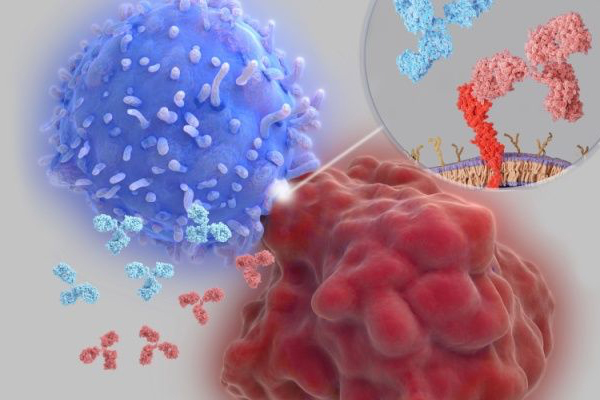
Clinical benefit of immune checkpoint inhibitors approved by US Food and Drug Administration
Randomized trials, Clinical benefits, Immune checkpoint inhibitors, Cancer, Food and drug administration agency
The study evaluates the clinical benefits of immune checkpoint inhibitors using the ESMO-MCBS and ASCO VF scales. 18 indications for these inhibitors were approved based on RCTs conducted between 2011 and 2018. All indications meet the ESMO-MCBS 1.1 threshold for meaningful bene…
Aug 31st • 16 mins read