
Results for 'US Food and Drug Administration'

 Aaron S. Long, BS; Audrey D. Zhang, MD; Caitlin E. Meyer, MLIS; Alexander C. Egilman, BS; Joseph S. Ross, MD, MHS; Joshua D. Wallach, PhD, MS
Evaluation of Trials Comparing Single-Enantiomer Drugs to Their Racemic Precursors: A Systematic Review
single-enantiomer racemic drug pairs, single-enantiomer, FDA, RCTs, generic drugs
Chiral Switching: A strategy where drug manufacturers develop a single-enantiomer formulation from a racemic one to extend market exclusivity, often without proving enhanced efficacy or safety. Objective: To evaluate randomized clinical trials (RCTs) comparing FDA-approved single-enantiomer drugs…
May 6th • 18 mins read
 Adela Rodriguez, Francis Esposito, Helena Oliveres, Ferran Torres and Joan Maurel
Are Quality of Randomized Clinical Trials and ESMO-Magnitude of Clinical Benefit Scale Two Sides of the Same Coin, to Grade Recommendations for Drug Approval?
quality randomized studies, ESMO-MCBS, drug approval
The approval of new cancer drugs by the FDA and EMA is primarily based on positive results from well-designed randomized phase III clinical trials (RCTs). Not all RCTs are analyzed to support drug approval recommendations, highlighting the need for scales to evaluate RCT quality and clinical…
Feb 11th • 3 mins read
 Thakur, Sayanta & Lahiry, Sandeep
Accelerated drug approvals in oncology: Pros and cons
Clinical study, drug approval, medical oncology
The summary of the content highlights the success of the accelerated approval process, especially for oncology drugs. Key points include: The rise of accelerated approval processes is significant, particularly in oncology. The use of surrogate endpoints and their validation has been debated. Th…
Sep 14th • 4 mins read
 Karen Geary
Finding the Right Drug at the Right Dose the First Time: Has the Era of Personalized Formularies Finally Arrived?
drug dose, dose, pharmacogenomics, Personalized medicine
Many Americans take medications that are ineffective or cause adverse reactions due to genetic differences in drug metabolism. Pharmacogenomics, the study of how genes affect drug response, can help tailor medications to individual genetic profiles, reducing trial and error in prescriptions. A s…
Sep 27th • 1 min read
 Ali Raza Khaki
Loose Regulatory Standards Portend a New Era of Imprecision Oncology
precision oncology, TMB-high, homologous recombination deficiency, Olaparib, pembrolizumab
Precision oncology aims to tailor cancer treatment based on genetic understanding, revolutionizing oncology. The FDA has been approving drugs under precision oncology with broad indications that may not align with studied populations. Examples include the approval of pembrolizumab for a wide ran…
Dec 1st • 4 mins read
 Fei Liang, Sheng Zhang, Qin Wang, Wenfeng Li
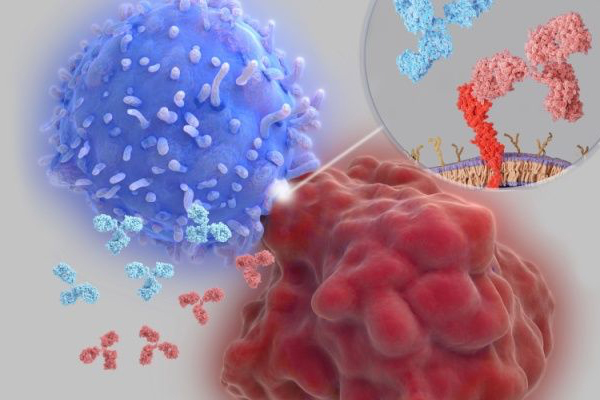
Clinical benefit of immune checkpoint inhibitors approved by US Food and Drug Administration
Randomized trials, Clinical benefits, Immune checkpoint inhibitors, Cancer, Food and drug administration agency
The study evaluates the clinical benefits of immune checkpoint inhibitors using the ESMO-MCBS and ASCO VF scales. 18 indications for these inhibitors were approved based on RCTs conducted between 2011 and 2018. All indications meet the ESMO-MCBS 1.1 threshold for meaningful bene…
Aug 31st • 16 mins read
Consolación Molto MD, Thomas J. Hwang AB, Maria Borrell MD, Marta Andres MD, Ignasi Gich MD, PhD, Agustí Barnadas MD, PhD, Eitan Amir MD, PhD, Aaron S. Kesselheim MD, JD, MPH, Ariadna Tibau MD, PhD
Clinical benefit and cost of breakthrough cancer drugs approved by the US Food and Drug Administration
USFDA, ESMO-MCBS, NCCN, ASCO-CRC, clinical, drug aroval
The study evaluates the clinical benefit and pricing of breakthrough-designated versus non-breakthrough-designated cancer drugs. The analysis covers approvals from July 2012 to December 2017, using frameworks like ASCO-VF, ASCO-CRC, ESMO-MCBS, and NCCN Evidence Blocks. High clinical benef…
Jul 22nd • 12 mins read
 Sean X Zhang, MSc , Dean Fergusson, PhD , Jonathan Kimmelman, PhD
Proportion of Patients in Phase I Oncology Trials Receiving Treatments That Are Ultimately Approved
cancer, biological markers, phase 1 clinical trials, drug approval, medical oncology, united states food and drug administration guidelines, adverse event, national comprehensive cancer network, American society of clinical oncology
Phase I oncology trials are often considered a therapeutic option, but this claim is primarily based on surrogate measures like objective response rates. A systematic search was conducted to evaluate the therapeutic value of phase I cancer trial participation, focusing on the likelihood of patien…
Apr 1st • 14 mins read
 Benjamin Gregory Carlisle, Adélaïde Doussau, Jonathan Kimmelman
Patient burden and clinical advances associated with post approval monotherapy cancer drug trials: a retrospective cohort study
clinical advances, monotherapy cancer drug trials, FDA
Objective: The study investigates the efforts to extend the uses of new drugs by testing them for new, non-approved indications and examines the patient burden and clinical impact. Design and Setting: A retrospective cohort study focused on post-approval trials of anticancer drugs approved betwee…
Feb 17th • 7 mins read
 Jingjing Yu, Isabelle Ragueneau-Majlessi
In Vitro-to-In Vivo Extrapolation of Transporter Inhibition Data for Drugs Approved by the US Food and Drug Administration in 2018
In Vitro-to-In Vivo, Transporter Inhibition Data, Drug Approval, FDA, 2018
The analysis focuses on inhibition transporter data from New Drug Applications approved by the FDA in 2018, involving 42 drugs. Key points include: In vitro-to-in vivo predictions were available for nine recommended transporters. 29 parent drugs and 16 metabolites inhibited at least one transpor…
Jan 25th • 12 mins read
 Kenji Omae, Yuki Kataoka, Yasushi Tsujimoto, Yusuke Tsutsumi, Yosuke Yamamoto, Shunichi Fukuhara, Toshi A Furukawa
Publication statuses of clinical trials supporting FDA-approved immune checkpoint inhibitors: a meta-epidemiological investigation
Anticancer drugs, Clinical trials, Drug approval, Immune checkpoint inhibitors, Publications, United states food and drug administration
The study investigates the publication status of clinical trials for anticancer drugs approved by the FDA, focusing on immune checkpoint inhibitors (ICPis). Data from ICPis approved between 2011 and 2014 was analyzed, revealing that 58% of ICPis trials were published within two years …
Oct 24th • 18 mins read
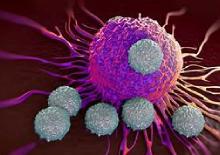 M. Ochoa de Olza, M. Oliva, C. Hierro I. Matos, J. Martin-Liberal, E. Garralda
Early-drug development in the era of immuno-oncology: are we ready to face the challenges?
immunotherapy, early-drug development, toxicology studies, dose determination
The classical development of drugs is being replaced by a seamless drug-development process. First-in-human trials now often include large expansion cohorts to quickly identify early signs of activity and achieve rapid regulatory approval. Intense competition among pharmaceutical companies and t…
Jun 26th • 26 mins read
 R. Kurzrock, L.A. Gurski, R.W. Carlson, D.S. Ettinger, S.M. Horwitz, S.K. Kumar, L. Million, M. von Mehren, A.B. Benson III
Level of evidence used in recommendations by the National Comprehensive Cancer Network (NCCN) guidelines beyond Food and Drug Administration approvals
oncology, guidelines, off-label drug use
The analysis reviewed 113 NCCN recommendations, focusing on 44 off-label uses of drugs. 14 of these off-label recommendations were later FDA-approved or backed by RCT data. 13 recommendations were minor extrapolations from the FDA label or actually on-label. Of the remaining 17 extrapolations…
Aug 2nd • 8 mins read
 Roman Adam, Ariadna Tibau, Consolación Molto Valiente, Boštjan Šeruga, Alberto Ocaña, Eitan Amir, Arnoud J. Templeton
Clinical benefit of cancer drugs approved in Switzerland 2010–2019
cancer drug approval, clinical benefit criteria, ESMO-MCBS, ASCO-VF, OLUtool, Switzerland oncology drugs
The study evaluates the clinical benefit of cancer drugs approved in Switzerland between 2010 and 2019 using three different frameworks: ESMO-MCBS, ASCO-VF, and OLUtool. A total of 48 drugs for 92 indications were assessed based on 100 studies, with each study evaluated according to the criteria …
Jun 10th • 35 mins read
 Natansh D. Modi, BPharm; Ahmad Y. Abuhelwa, PhD; Ross A. McKinnon, PhD
Audit of Data Sharing by Pharmaceutical Companies for Anticancer Medicines Approved by the US Food and Drug Administration
IPD sharing, clinical trial transparency, FDA anticancer approvals, oncology trials, data accessibility, pharmaceutical industry
The study examines the eligibility for individual participant data (IPD) sharing from clinical trials that supported the FDA approval of anticancer medicines over the past 10 years. Of the 304 trials analyzed, 136 (45%) were eligible for IPD sharing, while 168 (55%) were not. IPD sharing rates v…
Jul 28th • 20 mins read
 Yichen Zhang, MSc; Huseyin Naci, PhD; Anita K. Wagner, PharmD, DrPH
Overall Survival Benefits of Cancer Drugs Approved in China From 2005 to 2020
cancer drug therapy, overall survival, FDA approvals, surrogate endpoints, EMA approvals, quality of life
The study evaluates the overall survival (OS) benefit of cancer drugs approved in China between 2005 and 2020. Out of 141 cancer drug indications approved, 68 showed a documented overall survival benefit, while 34 did not prolong life. Recent regulatory reforms in China aim to improve the availa…
Aug 10th • 30 mins read
 Rachel E. Sachs, JD, MPH, Kyle A. Gavulic, BA, Julie M. Donohue, PhD
Recent Trends in Medicaid Spending and Use of Drugs With US Food and Drug Administration Accelerated Approval
FDA accelerated approval, Medicaid spending, prescription drug costs, surrogate endpoints, cancer drugs, drug approval pathway
The study examines the impact of drugs approved through the FDA’s accelerated approval program on state Medicaid spending. From 1992 to 2020, 216 drug-indication pairs were granted accelerated approval, with a significant increase in cancer drug approvals in recent years. Although drugs wi…
Oct 8th • 25 mins read
 Robbe Saesen, Georgios Kantidakis, Ann Marinus, Denis Lacombe, Isabelle Huys
How do cancer clinicians perceive real-world data and the evidence derived therefrom? Findings from an international survey of the European Organisation for Research and Treatment of Cancer
real-world evidence, real-world data, oncology, cancer, survey, clinicians, randomized controlled trials, Europe
Real-world evidence (RWE) is increasingly being used in the development and decision-making processes for anticancer therapies, but clinician views on its use are unclear. A survey conducted between May and July 2021 involved 557 clinicians from 30 countries and 13 cancer domains. Most clinician…
Aug 1st • 45 mins read
 Anushka Walia, Alyson Haslam, Vinay Prasad
FDA validation of surrogate endpoints in oncology: 2005–2022
FDA drug approval, surrogate endpoints, oncology drugs, overall survival correlation, clinical trials analysis, drug approval guidelines
ere are summary bullets based on the provided text: The FDA has increasingly approved oncologic drugs based on surrogate endpoints, which often lack a demonstrated correlation with clinically meaningful outcomes like overall survival. A review of FDA analyses from 2005 to 2022 examined the valid…
Dec 1st • 20 mins read
 Miloš D. Miljković, MD, MSc, Jordan E. Tuia, BA, Timothée Olivier, MD
Association Between US Drug Price and Measures of Efficacy for Oncology Drugs Approved by the US Food and Drug Administration From 2015 to 2020
Cancer drug pricing, Cancer care costs, Cancer drug efficacy, Progression-free survival, Value-based pricing in oncology, FDA anticancer approvals
The US has worse cancer-related outcomes compared to other high-income countries and has the highest cost of cancer care globally. High costs may be attributed to the improved efficacy of expensive new cancer drugs, though the relationship between cost and benefit is debated. A study found a lin…
Oct 31st • 10 mins read