
Results for 'Cancer treatments'
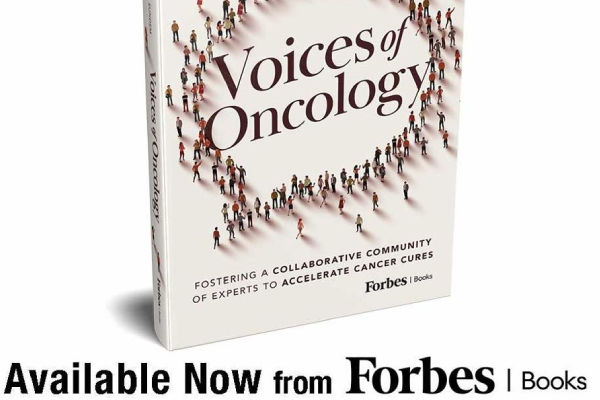
 Forbes Books Press Release Official
New Book Unites Oncology’s Brightest Minds To Innovate Cancer Cures
Voices of Oncology, Cancer cures, Oncology Voice Network, Kirk V. Shepard, Ramin Farhood, Forbes Books, Cancer treatment innovation, Oncology collaboration, Patient engagement in oncology, Precision medicine cancer
Voices of Oncology: Fostering a Collaborative Community of Experts to Accelerate Cancer Cures is a book by Kirk V. Shepard, M.D., and Ramin Farhood, PharmD, M.B.A., featuring insights from 33 contributors in the oncology field. It is available on platforms like Amazon and Barne…
Sep 9th • 5 mins read
 Xuanyi Li, Elizabeth A. Sigworth, Adrianne H. Wu, Jess Behrens, Shervin A. Etemad, Seema Nagpal, Ronald S. Go, Kristin Wuichet, Eddy J. Chen, Samuel M. Rubinstein, Neeta K. Venepalli, Benjamin F. Tillman, Andrew J. Cowan, Martin W. Schoen, Andrew Malty, J
Seven decades of chemotherapy clinical trials: a pan-cancer social network analysis
Cancer Medical research, Randomized controlled trials, Clinical trial design
Clinical trials are crucial in establishing cancer care standards, but the social dynamics among researchers in this field have not been extensively studied. A social network analysis of authors involved in chemotherapy-based prospective trials from 1946 to 2018 reveals significant insights. The …
Oct 16th • 12 mins read
 Stefanie Broes, Robbe Saesen, Denis Lacombe, Isabelle Huys
Past, Current, and Future Cancer Clinical Research Collaborations: The Case of the European Organisation for Research and Treatment of Cancer
European organisation for Research and Treatment of Cancer, EORTC, clinical research
Collaborations between academic institutions and industry have led to significant scientific breakthroughs in pharmaceutical research, particularly in the discovery phase. The role of multi-stakeholder partnerships in the clinical development of anticancer medicines requires further clarification…
Aug 16th • 8 mins read
 Sean X Zhang, MSc , Dean Fergusson, PhD , Jonathan Kimmelman, PhD
Proportion of Patients in Phase I Oncology Trials Receiving Treatments That Are Ultimately Approved
cancer, biological markers, phase 1 clinical trials, drug approval, medical oncology, united states food and drug administration guidelines, adverse event, national comprehensive cancer network, American society of clinical oncology
Phase I oncology trials are often considered a therapeutic option, but this claim is primarily based on surrogate measures like objective response rates. A systematic search was conducted to evaluate the therapeutic value of phase I cancer trial participation, focusing on the likelihood of patien…
Apr 1st • 14 mins read
 Massimo Di Maio, Francesco Perrone, Pierfranco Conte
Real-World Evidence in Oncology: Opportunities and Limitations
Real‐world evidence, Clinical trials, Cancer treatments
Randomized controlled trials (RCTs) are traditionally viewed as the gold standard for evaluating treatment efficacy, but real-world evidence (RWE) is gaining traction in oncology for addressing questions not fully answered by RCTs. RWE is derived from health records, cancer registries, and other …
Dec 24th • 8 mins read
 Doreen A. Ezeife MD, Francois Dionne PhD, Aline Fusco Fares MD, Ellen Laura Rose Cusano MD, Rouhi Fazelzad BSc, MISt, Wenzie Ng BSc, MPharm, RPh, Don Husereau BSc Pharm, MSc, Farzad Ali BPharm, MSc, Christina Sit MSc, Barry Stein B.Com BCL, LLB, Jennifer
Value assessment of oncology drugs using a weighted criterion-based approach
anticancer therapy, multicriteria decision analysis, value assessment, value assessment framework
The rising cost of anticancer therapy has led to efforts to quantify the overall value of new cancer treatments. Multicriteria decision analysis is used to incorporate multiple criteria and perspectives into value assessment. A diverse, multistakeholder group developed a drug assessment framewor…
Dec 20th • 15 mins read
 Jonathan H. Cheng, Justin W. Tiulim, Sheng Zhou, Anthony El-Khoueiry and Jorge Nieva
Mandatory Research Biopsy Requirements Delay Initiation of Clinical Trials
biomarker, clinical trial, targeted therapy, immunotherapy, mandatory research biopsy, oncology, lung cancer, head and neck cancer
The study investigates the impact of requiring fresh tumor tissue biopsies for enrollment in clinical trials. Key findings include: Requiring biopsies significantly increases screening duration, with a median of 30 days compared to 14 days for trials without biopsy requirements (p < 0.0001). …
Oct 18th • 10 mins read
 Roman Adam, Ariadna Tibau, Consolación Molto Valiente, Boštjan Šeruga, Alberto Ocaña, Eitan Amir, Arnoud J. Templeton
Clinical benefit of cancer drugs approved in Switzerland 2010–2019
cancer drug approval, clinical benefit criteria, ESMO-MCBS, ASCO-VF, OLUtool, Switzerland oncology drugs
The study evaluates the clinical benefit of cancer drugs approved in Switzerland between 2010 and 2019 using three different frameworks: ESMO-MCBS, ASCO-VF, and OLUtool. A total of 48 drugs for 92 indications were assessed based on 100 studies, with each study evaluated according to the criteria …
Jun 10th • 35 mins read
 Christopher A. Busch, MSC; Johannes Krisam, PhD; Meinhard Kieser, PhD
A Comprehensive Comparison of Additional Benefit Assessment Methods Applied by Institute for Quality and Efficiency in Health Care and European Society for Medical Oncology for Time-to-Event Endpoints After Significant Phase III Trials—A Simulation Study
cancer drug trials, time-to-event endpoints, overall survival, added benefit assessment, IQWiG, hazard ratio thresholds
The European Society for Medical Oncology (ESMO) and the German Institute for Quality and Efficiency in Health Care (IQWiG) use different methods for assessing additional benefit in cancer therapies, with ESMO considering both relative and absolute benefits, while IQWiG focuses on the upper limit …
Jun 28th • 30 mins read
 K. Ribi, N. Kalbermatten, M. Eicher, F. Strasser
Towards a novel approach guiding the decision-making process for anticancer treatment in patients with advanced cancer: framework for systemic anticancer treatment with palliative intent
Patient-centered cancer care, Advanced cancer decision-making, Stepwise decisional process, Palliative care domains, Illness understanding in oncology, Symptom control in cancer, End-of-life preparation, Patient-physician interaction, SACT-PI Decision Fra
Patient-centered decisions in advanced cancer care demand a step-wise decisional process, not a single decision act. The decision process includes key palliative care domains, e.g. illness understanding, symptom control, or end-of-life preparation. Patients' attitudes, beliefs, hopes, patient-ph…
Jun 1st • 25 mins read
 Shen Lin, Yaping Huang, Liangliang Dong, Meiyue Li, Yahong Wang, Dian Gu, Wei Wu, Dongni Nian, Shaohong Luo, Xiaoting Huang, Xiongwei Xu and Xiuhua Weng
The correlation between the costs and clinical benefits of PD-1/PD-L1 inhibitors in malignant tumors: An evaluation based on ASCO and ESMO frameworks
PD-1/PD-L1 inhibitors, malignant tumors, ASCO, ESMO, Immune Checkpoint Inhibitors, Gastrointestinal Cancers
Cancer drug innovation has significantly accelerated in the 21st century, with novel drug approvals and expenditures increasing notably. Assessment frameworks ASCO-VF and ESMO-MCBS were used to evaluate the clinical benefit of PD-1/PD-L1 inhibitors, finding that nearly half of the trials met "mea…
Feb 23rd • 9 mins read
 Emerson Y. Chen, MD, Sunil K. Joshi, BA, Audrey Tran, BA
Estimation of Study Time Reduction Using Surrogate End Points Rather Than Overall Survival in Oncology Clinical Trials
bevacizumab, metastatic breast cancer, RR, PFS, FDA, oncology clinical trials
The use of Response Rate (RR), Progression-Free Survival (PFS), and Overall Survival (OS) in clinical trials leading to FDA approval is associated with different study durations: RR: Median study duration of 25 months (range, 11-54 months). PFS: Median study duration of 31 months (range, 10-…
Apr 1st • 10 mins read
 Di Maria Jiang, Kelvin K. W. Chan, Raymond W. Jang, Christopher Booth, Geoffrey Liu, Eitan Amir, Robert Mason, Louis Everest, Elena Elimova
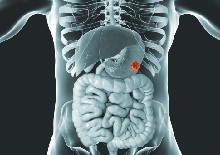
Anticancer drugs approved by the Food and Drug Administration for gastrointestinal malignancies: Clinical benefit and price considerations
ASCO VF, ESMO MCBS, gastrointestinal malignancies, anticancer drugs
Drugs approved between 2006 and 2017 were analyzed. Clinical benefit was measured using ESMO Magnitude of Clinical Benefit Scale and ASCO Value Framework. 16 GI cancer drugs received FDA approval for 24 indications, including various drug classes such as monoclonal antibodies, oral targeted …
Mar 7th • 8 mins read

 iNIZIO
Transforming oncology: Five frontiers driving progress in cancer care
From biomarker-driven breakthroughs to AI-powered early detection and a renewed commitment to equity and patient centricity, the past 12 months have seen major strides across cancer research, treatment, and communication. At Inizio, we’ve had a front-row seat to this transformation, supporting…
May 16th • 5 mins read
 Consolación Molto MD, Thomas J. Hwang AB, Maria Borrell MD, Marta Andres MD, Ignasi Gich MD, PhD, Agustí Barnadas MD, PhD, Eitan Amir MD, PhD, Aaron S. Kesselheim MD, JD, MPH, Ariadna Tibau MD, PhD
Clinical benefit and cost of breakthrough cancer drugs approved by the US Food and Drug Administration
USFDA, ESMO-MCBS, NCCN, ASCO-CRC, clinical, drug aroval
The study evaluates the clinical benefit and pricing of breakthrough-designated versus non-breakthrough-designated cancer drugs. The analysis covers approvals from July 2012 to December 2017, using frameworks like ASCO-VF, ASCO-CRC, ESMO-MCBS, and NCCN Evidence Blocks. High clinical benef…
Jul 22nd • 12 mins read
 Joseph M. Unger, PhD, MS, Van T. Nghiem, PhD, Dawn L. Hershman, MD, MS
Association of National Cancer Institute-Sponsored Clinical Trial Network Group Studies With Guideline Care and New Drug Indications
NCIS, clinical trials, NCTN, drug indications
Importance: NCTN groups are vital in identifying effective new antineoplastic regimens, but their clinical impact has not been systematically evaluated until now. Objective: To determine the association of NCTN trials with guideline care and new drug indications. Design, Setting, and Participant…
Sep 4th • 17 mins read
 Carrie Printz
Cancer experts point to new advances in research and treatment: A recent report by the American Association for Cancer Research highlights unprecedented successes as well as ongoing challenges in the cancer field
FDA, AACR, immunotherapeutics, immunotherapy, precision therapies, ALK, EGFR, BRAF
Within the last few years, cancer research has made significant strides, leading to the approval of 22 new cancer treatments by the FDA between August 1, 2017, and July 31, 2018. Among these, notable advancements include 14 anticancer therapeutics, such as CAR T-cell therapies for non-Hodgkin lympho…
Apr 1st • 2 mins read
 B. Gyawali, E. G. E. de Vries, U. Dafni, T. Amaral, J. Barriuso, J. Bogaerts, A. Calles, G. Curigliano, C. Gomez-Roca, B. Kiesewetter, S. Oosting, A. Passaro, G. Pentheroudakis, M. Piccart, F. Roitberg, J. Tabernero, N. Tarazona, D. Trapani, R. Wester, G.
Biases in study design, implementation, and data analysis that distort the appraisal of clinical benefit and ESMO-Magnitude of Clinical Benefit Scale (ESMO-MCBS) scoring
ESMO-MCBS, bias, clinical trial design, clinical trial implementation, clinical trial reporting, clinical trial analysis
The ESMO-MCBS is a tool used for scoring the clinical benefit of cancer medicines as reported in clinical trials, assuming valid research methodologies and quality implementation. The tool's effectiveness is compromised by studies with flawed design, implementation, or data analysis, w…
Apr 20th • 8 mins read
 Jayson L. Parker, Sebnem S. Kuzulugil, Kirill Pereverzev, Stephen Mac, Gilberto Lopes, Zain Shah, Ashini Weerasinghe, Daniel Rubinger, Adam Falconi, Ayse Bener, Bora Caglayan, Rohan Tangri, Nicholas Mitsakakis
Does biomarker use in oncology improve clinical trial failure risk? A large-scale analysis
biomarker, clinical trial, failure, analysis, NSCLC, oncology
Data from clinical trials across four oncology indications (breast cancer, NSCLC, melanoma, and colorectal cancer) from 1998 to 2017 were analyzed to assess drug approval likelihood based on biomarker status. Using multi-state Markov models, which describe stochastic processes, the study…
Feb 23rd • 8 mins read
 Mateusz T. Wasylewski, Karolina Strzebonska, Magdalena Koperny, Maciej Polak, Jonathan Kimmelman, Marcin Waligora
Clinical development success rates and social value of pediatric Phase 1 trials in oncology
pediatric oncology, clinical development, trials, success rates
Pediatric Phase 1 trials in oncology aim to assess social value, focusing on rates of approval, transition to further phases, and citation in research. The study analyzed trials from 2004 to 2013, utilizing data from FDA, EMA, ClinicalTrials.gov, EU Clinical Trials Register, and Google Scholar. …
Jun 21st • 28 mins read