
Results for 'anticancer therapy'

 Benjamin Gregory Carlisle, Adélaïde Doussau, Jonathan Kimmelman
Patient burden and clinical advances associated with post approval monotherapy cancer drug trials: a retrospective cohort study
clinical advances, monotherapy cancer drug trials, FDA
Objective: The study investigates the efforts to extend the uses of new drugs by testing them for new, non-approved indications and examines the patient burden and clinical impact. Design and Setting: A retrospective cohort study focused on post-approval trials of anticancer drugs approved betwee…
Feb 17th • 7 mins read
 Doreen A. Ezeife MD, Francois Dionne PhD, Aline Fusco Fares MD, Ellen Laura Rose Cusano MD, Rouhi Fazelzad BSc, MISt, Wenzie Ng BSc, MPharm, RPh, Don Husereau BSc Pharm, MSc, Farzad Ali BPharm, MSc, Christina Sit MSc, Barry Stein B.Com BCL, LLB, Jennifer
Value assessment of oncology drugs using a weighted criterion-based approach
anticancer therapy, multicriteria decision analysis, value assessment, value assessment framework
The rising cost of anticancer therapy has led to efforts to quantify the overall value of new cancer treatments. Multicriteria decision analysis is used to incorporate multiple criteria and perspectives into value assessment. A diverse, multistakeholder group developed a drug assessment framewor…
Dec 20th • 15 mins read
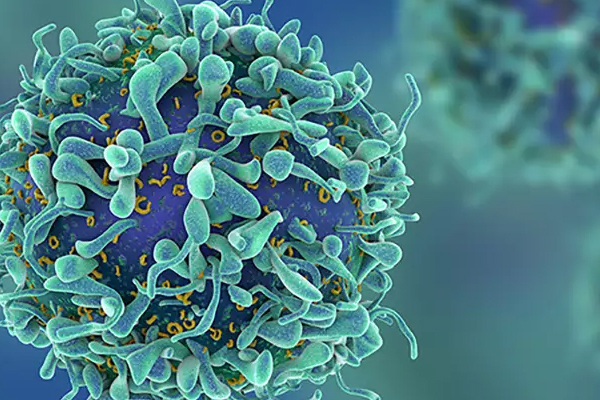 Kenji Omae, Yuki Kataoka, Yasushi Tsujimoto, Yusuke Tsutsumi, Yosuke Yamamoto, Shunichi Fukuhara, Toshi A Furukawa
Publication statuses of clinical trials supporting FDA-approved immune checkpoint inhibitors: a meta-epidemiological investigation
Anticancer drugs, Clinical trials, Drug approval, Immune checkpoint inhibitors, Publications, United states food and drug administration
The study investigates the publication status of clinical trials for anticancer drugs approved by the FDA, focusing on immune checkpoint inhibitors (ICPis). Data from ICPis approved between 2011 and 2014 was analyzed, revealing that 58% of ICPis trials were published within two years …
Oct 24th • 18 mins read
 Idine Mousavi, BA; Timothée Olivier, MD; Vinay Prasad, MD, MPH
Cost per Event Averted in Cancer Trials in the Adjuvant Setting From 2018 to 2022
anticancer drugs, adjuvant therapy, FDA approvals, cost per event averted, surrogate endpoints, oncology drug costs
Importance: Evaluating the cost-effectiveness of adjuvant therapies based on the cost per event averted. Objective: To assess the costs per event averted for anticancer drugs approved by the FDA between January 2018 and March 2022. Design, Setting, and Participants: Cross-sectional study of F…
Jun 10th • 30 mins read
 Louis Everest, BSc; Monica Shah, BSc; Kelvin K.W. Chan, MD, MSc, PhD
Comparison of Long-term Survival Benefits in Trials of Immune Checkpoint Inhibitor vs Non-Immune Checkpoint Inhibitor Anticancer Agents Using ASCO Value Framework and ESMO Magnitude of Clinical Benefit Scale
immunotherapy-triggered LTP, RCTs, FDA, ICI
Importance: Anticancer agents, especially immune checkpoint inhibitors (ICIs), have shown potential for long-term durable survival in some patients. However, traditional clinical benefit measures may not accurately capture this, leading to proposed amendments in valuation frameworks. Objectives: …
Jul 10th • 12 mins read
 Carrie Printz
Cancer experts point to new advances in research and treatment: A recent report by the American Association for Cancer Research highlights unprecedented successes as well as ongoing challenges in the cancer field
FDA, AACR, immunotherapeutics, immunotherapy, precision therapies, ALK, EGFR, BRAF
Within the last few years, cancer research has made significant strides, leading to the approval of 22 new cancer treatments by the FDA between August 1, 2017, and July 31, 2018. Among these, notable advancements include 14 anticancer therapeutics, such as CAR T-cell therapies for non-Hodgkin lympho…
Apr 1st • 2 mins read
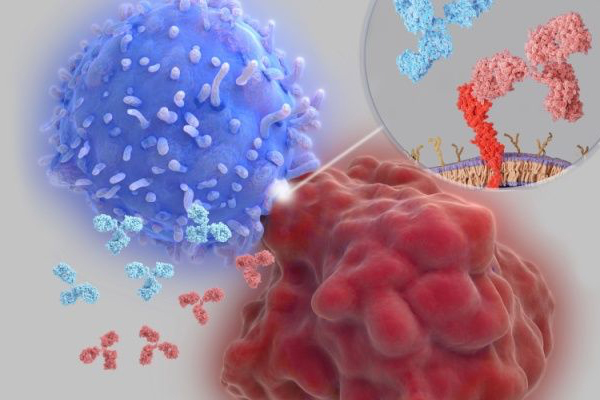 Fei Liang, Sheng Zhang, Qin Wang, Wenfeng Li
Clinical benefit of immune checkpoint inhibitors approved by US Food and Drug Administration
Randomized trials, Clinical benefits, Immune checkpoint inhibitors, Cancer, Food and drug administration agency
The study evaluates the clinical benefits of immune checkpoint inhibitors using the ESMO-MCBS and ASCO VF scales. 18 indications for these inhibitors were approved based on RCTs conducted between 2011 and 2018. All indications meet the ESMO-MCBS 1.1 threshold for meaningful bene…
Aug 31st • 16 mins read
 Tanja Cufer, Tudor E. Ciuleanu, Peter Berzinec, Gabriela Galffy, Marko Jakopovic, Jacek Jassem, Dragana Jovanovic, Zhasmina Mihaylova, Gyula Ostoros, Christiane Thallinger, Milada Zemanova, Christoph Zielinski
Access to Novel Drugs for Non-Small Cell Lung Cancer in Central and Southeastern Europe: A Central European Cooperative Oncology Group Analysis
Health Outcomes and Economics of Cancer Care, Lung Cancer, NSCLC, EMA
Treatment for non-small cell lung cancer (NSCLC) has significantly improved with the introduction of targeted and immune-oncologic drugs. Despite rapid development and European Medicinal Agency (EMA) registration, these novel drugs are not easily accessible in Central and Eastern European (CEE) c…
Nov 24th • 10 mins read
 Hagop M. Kantarjian MD, Ferran Prat PhD, JD, David P. Steensma MD, Razelle Kurzrock MD, David J. Stewart MD, Mikkael A. Sekeres MD, Joseph Leveque MD
Cancer research in the United States: A critical review of current status and proposal for alternative models
cancer research, research, NCI, Drug industry-driven research model, development in research, 2018 cancer model
Early research focused on tissue histology and animal models, with surgery and radiotherapy as primary treatments. 1950s: Introduction of cell lines (e.g., HeLa cells) and first anticancer drugs (antifolates, thiopurines), leading to the establishment of the Cancer Chemotherapy National Service C…
May 14th • 10 mins read
 Ariadna Tibau, Consolación Molto, Alberto Ocana, Arnoud J Templeton, Luis P Del Carpio, Joseph C Del Paggio, Agustí Barnadas, Christopher M Booth, Eitan Amir
Magnitude of Clinical Benefit of Cancer Drugs Approved by the US Food and Drug Administration
antineoplastic agents, immunologic adjuvants, pharmaceutical adjuvants, phase 3 clinical trials, drug approval, drug labeling, medical oncology, united states food and drug administration, diagnosis, palliative care, surrogate endpoints, weight measureme
Regulatory agencies assess drug safety and efficacy, but thresholds may differ from those accepted by clinicians . Only 43.8% of RCTs for FDA-approved drugs meet the ESMO-MCBS threshold for meaningful benefit, reflecting potential softening of FDA standards. Encouraging trends include an increas…
Dec 13th • 7 mins read