
Results for 'clinical research'

 Bridget Rasmusson
6 Tips to Ace Your Next MSL Interview!
digital marketing, content optimization, search engine ranking, keyword research, on-page SEO
As a Medical Affairs-focused recruitment firm, we see MSL interview "wins" and slip-ups on a daily basis. From our experience working with candidates across all therapeutic areas and across the entire United States, I've noticed a few trends that might help you get that next interview "win" under yo…
Sep 28th • 1 min read
 Tom Caravela
MSL Evolution: New Trends and Titles That May Emerge
digital marketing strategies, SEO best practices, content marketing tips, social media optimization, keyword research tools
The COVID-19 pandemic has clearly had a profound impact on Field Medical Affairs. Has the Medical Science Liaison role changed forever? What new titles, trends and opportunities might emerge as a result of the new age for Field Medical and the evolution of the Medical Science Liaison? Is virtual en…
Apr 5th • 1 min read
 Bridget Rasmusson
Positioning Yourself to Become an MSL in 2022
MSL role, clinical background, academic background, research background, industry, MSL Society, conference, scientific expert, therapeutic expertise, pharma companies
After attending the MSL Society’s 9th annual conference in Vegas Last week, I have taken some time to reflect on inquiries our team received about how to effectively step into the MSL role from a clinical, academic, or research background. Industry is a tough nut to crack, but it is absolutely…
Dec 21st • 10 mins read

 Shubham Sharma, J Connor Wells, Wilma M Hopman, Joseph C Del Paggio, Bishal Gyawali, Nazik Hammad, Annette E Hay, Christopher M Booth
Cancer, Clinical Trials, and Canada: Our Contribution to Worldwide Randomized Controlled Trials
cancer, clinical trials, research funding, Canada, high-income countries
This document reviews Canadian involvement in oncology randomized controlled trials (RCTs) from 2014-2017, comparing them to those from other high-income countries (HICs). Canada contributed to 155 (24%) of 636 HIC-led RCTs. Canadian RCTs focused more on palliative care (72%) compared to 62% in …
Apr 13th • 10 mins read
 B. Gyawali, E. G. E. de Vries, U. Dafni, T. Amaral, J. Barriuso, J. Bogaerts, A. Calles, G. Curigliano, C. Gomez-Roca, B. Kiesewetter, S. Oosting, A. Passaro, G. Pentheroudakis, M. Piccart, F. Roitberg, J. Tabernero, N. Tarazona, D. Trapani, R. Wester, G.
Biases in study design, implementation, and data analysis that distort the appraisal of clinical benefit and ESMO-Magnitude of Clinical Benefit Scale (ESMO-MCBS) scoring
ESMO-MCBS, bias, clinical trial design, clinical trial implementation, clinical trial reporting, clinical trial analysis
The ESMO-MCBS is a tool used for scoring the clinical benefit of cancer medicines as reported in clinical trials, assuming valid research methodologies and quality implementation. The tool's effectiveness is compromised by studies with flawed design, implementation, or data analysis, w…
Apr 20th • 8 mins read
 Kushal T. Kadakia, MSc, Malke Asaad, MD, Erica Adlakha, MS, Michael J. Overman, MD, Cristina M. Checka, MD, and Anaeze C. Offodile II, MD, MPH
Virtual Clinical Trials in Oncology-Overview, Challenges, Policy Considerations, and Future Directions
Virtual, Clinical trials, policy, analytics, telemedicine
The COVID-19 pandemic has significantly impacted clinical research, particularly in oncology, by accelerating the adoption of virtual clinical trials. These trials can address challenges such as high costs and participant burdens associated with traditional trials. Virtual Clinical Trials: Utiliz…
Apr 8th • 4 mins read
 Pai, Rekha
Advances in basic research in oncology in 2020: Bridging basic science and clinical care
advances, research, oncology, PCAWG, 2020
Cancer research is advancing with an understanding of the disease at the genetic level, facilitated by massive parallel sequencing. The pan-cancer analysis of the whole genome (PCAWG) in 2020 documented genomic changes across 38 cancer types, involving 2658 cancer genomes. An average of four to …
Mar 24th • 1 min read
 Ioannis Tsagakis and Maria Papatriantafyllou
Safeguarding cancer research funding by European charities amidst the COVID-19 pandemic
cancer charities, cancer research, COVID‐19, funding, pandemic, policy, AECC, AIRC
The COVID-19 outbreak has had a significant impact on cancer research and cancer care. European cancer charities are required to reassess their strategies. There is a need to safeguard income and provide support to cancer researchers. It is crucial to sustain cancer research funding during thes…
Nov 22nd • 3 mins read
 Xuanyi Li, Elizabeth A. Sigworth, Adrianne H. Wu, Jess Behrens, Shervin A. Etemad, Seema Nagpal, Ronald S. Go, Kristin Wuichet, Eddy J. Chen, Samuel M. Rubinstein, Neeta K. Venepalli, Benjamin F. Tillman, Andrew J. Cowan, Martin W. Schoen, Andrew Malty, J
Seven decades of chemotherapy clinical trials: a pan-cancer social network analysis
Cancer Medical research, Randomized controlled trials, Clinical trial design
Clinical trials are crucial in establishing cancer care standards, but the social dynamics among researchers in this field have not been extensively studied. A social network analysis of authors involved in chemotherapy-based prospective trials from 1946 to 2018 reveals significant insights. The …
Oct 16th • 12 mins read
 Yuan Zhang, Xu Liu, Ying-Qin Li, Ling-Long Tang, Lei Chen, Jun Ma
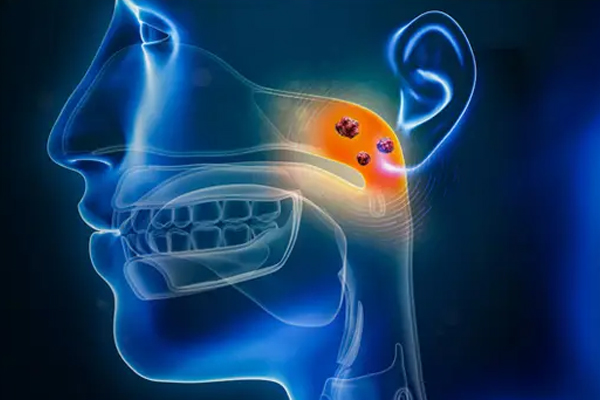
A Field Test of Major Value Frameworks in Chemotherapy of Nasopharyngeal Carcinoma-To Know, Then to Measure
value framework, European Society for Medical Oncology, Magnitude of Clinical Benefit Scale, American Society of Clinical Oncology, drug therapy, nasopharyngeal neoplasms
The European Society for Medical Oncology (ESMO) and the American Society of Clinical Oncology (ASCO) have developed frameworks to evaluate cancer treatments, particularly for nasopharyngeal carcinoma. A study compared these frameworks using data from 15 randomized controlled trials of systemic c…
Aug 12th • 10 mins read
 Stefanie Broes, Robbe Saesen, Denis Lacombe, Isabelle Huys
Past, Current, and Future Cancer Clinical Research Collaborations: The Case of the European Organisation for Research and Treatment of Cancer
European organisation for Research and Treatment of Cancer, EORTC, clinical research
Collaborations between academic institutions and industry have led to significant scientific breakthroughs in pharmaceutical research, particularly in the discovery phase. The role of multi-stakeholder partnerships in the clinical development of anticancer medicines requires further clarification…
Aug 16th • 8 mins read
 Jaques van Heerden, MD, Mohamed Zaghloul, MD, Anouk Neven, MSc, Teresa de Rojas, MD, PhD, Jennifer Geel, MD, Catherine Patte, MD, Joyce Balagadde-Kambugu, MD, Peter Hesseling, MD, Francine Tchintseme, MD, Eric Bouffet, MD, and Laila Hessissen, MD
Pediatric Oncology Clinical Trials and Collaborative Research in Africa: Current Landscape and Future Perspectives
pediatric oncology, clinical trials, research, Africa, collaborative research
Current childhood cancer survival rates in African countries range from 8.1% to 30.3%. The review focuses on pediatric oncology trials in Africa, highlighting challenges and suggesting research collaboration opportunities. Data were collected from the SIOP global mapping survey, ClinicalT…
Aug 7th • 10 mins read
 Dean Bottino, Rachael Liu, Hojjat Bazzazi, Karthik Venkatakrishnan
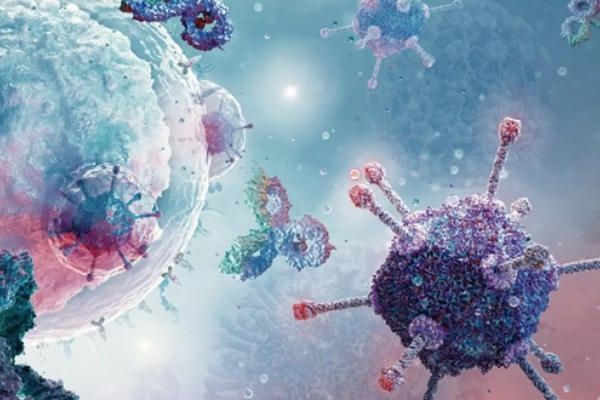
Quantitative Translation in Immuno-Oncology Research and Development
Quantitative Translation, Immuno-Oncology, Research, Development, CIC
Exploring the therapeutic potential of the rapidly expanding field of immuno-oncology (IO) drug targets and diverse therapeutic modalities. Recognizing the need for principled decisions based on biologically sound quantitative translation in a competitive clinical research environment. High…
Jul 9th • 3 mins read
 Nicole Grossmann, Martin Robausch, Eleen Rothschedl, Claudia Wild, Judit Simon
Publicly accessible evidence of health-related quality of life benefits associated with cancer drugs approved by the European Medicines Agency between 2009 and 2015
Antineoplastic agents, Health-related quality of life, Clinical efficacy, Drug approvals, Patient-relevant outcomes
The study investigates cancer drugs approved by the European Medicines Agency (EMA) that initially lack Health-related Quality of Life (HRQoL) information. Data was collected for cancer indications approved between January 2009 and October 2015, using sources like the EMA website, clinical…
Feb 23rd • 12 mins read
 Benjamin Gregory Carlisle, Adélaïde Doussau, Jonathan Kimmelman
Patient burden and clinical advances associated with post approval monotherapy cancer drug trials: a retrospective cohort study
clinical advances, monotherapy cancer drug trials, FDA
Objective: The study investigates the efforts to extend the uses of new drugs by testing them for new, non-approved indications and examines the patient burden and clinical impact. Design and Setting: A retrospective cohort study focused on post-approval trials of anticancer drugs approved betwee…
Feb 17th • 7 mins read
 Barbara Kiesewetter , Nathan I Cherny, Nicolas Boissel, Francesco Cerisoli, Urania Dafni, Elisabeth G E de Vries, Paolo Ghia, Nicola Gökbuget, Verónica González-Calle, Brian Huntly, Ulrich Jäger, Nicola Jane Latino, Jean-Yves Douillard, Luca Malcovati, Ma
EHA evaluation of the ESMO-Magnitude of Clinical Benefit Scale version 1.1 (ESMO-MCBS v1.1) for hematological malignancies
ESMO, hematological malignancies, Clinical benefit scale, EHA
The ESMO-MCBS v1.1 has not been previously validated for haematological malignancies, but it is being explored to avoid duplication of efforts. A feasibility test was conducted using 80 studies related to various haematological malignancies such as acute and chronic leukaemia, lymphoma, myel…
Jan 20th • 20 mins read
 Carrie Printz
Precision medicine for pediatric cancers lags behind that for adult cancers: Citing hurdles in clinical trial recruitment and drug development, researchers are exploring ways to close gaps
Precision Medicine, pediatrics, clinical trials
Pediatric precision oncology faces challenges due to the rarity of pediatric cancers, which limits research and funding compared to adult cancers. Dr. Katherine Janeway highlights the need for more validated pre-clinical models and pharmaceutical interest in pediatric cancers. The RACE Act, effe…
Jan 9th • 2 mins read
 Jonathan H. Cheng, Justin W. Tiulim, Sheng Zhou, Anthony El-Khoueiry and Jorge Nieva
Mandatory Research Biopsy Requirements Delay Initiation of Clinical Trials
biomarker, clinical trial, targeted therapy, immunotherapy, mandatory research biopsy, oncology, lung cancer, head and neck cancer
The study investigates the impact of requiring fresh tumor tissue biopsies for enrollment in clinical trials. Key findings include: Requiring biopsies significantly increases screening duration, with a median of 30 days compared to 14 days for trials without biopsy requirements (p < 0.0001). …
Oct 18th • 10 mins read
 S.E. Abdullah, E. Oflazoglu, J.C. Soria, M.M. Dar
New Realities of Phase I Clinical Trials in the Era of
durvalumab, durvalumab experience, clinical trials, immunotherapy
The development of cancer immunotherapy, particularly durvalumab, has progressed rapidly due to innovative strategies, such as novel study designs. Durvalumab, an anti-PD-L1 monoclonal antibody, was developed by AstraZeneca starting in 2012, with initial trials leading to its accelerated appr…
Oct 7th • 5 mins read
 Guillaume Beinse, MD, Virgile Tellier, Valentin Charvet, MSc, Eric Deutsch, MD, PhD, Isabelle Borget, PharmD, PhD, Christophe Massard, MD, PhD., Antoine Hollebecque, MD, PhD, and Loic Verlingue, MD
Prediction of Drug Approval After Phase I Clinical Trials in Oncology: RESOLVED2
clinical trials, RESOLVED2, FDA
Challenge in Oncology Drug Development: The field is currently facing an increase in the number of antineoplastic agents (ANAs) entering phase I clinical trials (P1CTs) and a high attrition rate for final FDA approval. Objective: Development of a machine learning algorithm, RESOLVED2, to …
Sep 20th • 12 mins read