
Results for 'anticancer drugs'

 Doreen A. Ezeife MD, Francois Dionne PhD, Aline Fusco Fares MD, Ellen Laura Rose Cusano MD, Rouhi Fazelzad BSc, MISt, Wenzie Ng BSc, MPharm, RPh, Don Husereau BSc Pharm, MSc, Farzad Ali BPharm, MSc, Christina Sit MSc, Barry Stein B.Com BCL, LLB, Jennifer
Value assessment of oncology drugs using a weighted criterion-based approach
anticancer therapy, multicriteria decision analysis, value assessment, value assessment framework
The rising cost of anticancer therapy has led to efforts to quantify the overall value of new cancer treatments. Multicriteria decision analysis is used to incorporate multiple criteria and perspectives into value assessment. A diverse, multistakeholder group developed a drug assessment framewor…
Dec 20th • 15 mins read
 Kenji Omae, Yuki Kataoka, Yasushi Tsujimoto, Yusuke Tsutsumi, Yosuke Yamamoto, Shunichi Fukuhara, Toshi A Furukawa
Publication statuses of clinical trials supporting FDA-approved immune checkpoint inhibitors: a meta-epidemiological investigation
Anticancer drugs, Clinical trials, Drug approval, Immune checkpoint inhibitors, Publications, United states food and drug administration
The study investigates the publication status of clinical trials for anticancer drugs approved by the FDA, focusing on immune checkpoint inhibitors (ICPis). Data from ICPis approved between 2011 and 2014 was analyzed, revealing that 58% of ICPis trials were published within two years …
Oct 24th • 18 mins read
 Idine Mousavi, BA; Timothée Olivier, MD; Vinay Prasad, MD, MPH
Cost per Event Averted in Cancer Trials in the Adjuvant Setting From 2018 to 2022
anticancer drugs, adjuvant therapy, FDA approvals, cost per event averted, surrogate endpoints, oncology drug costs
Importance: Evaluating the cost-effectiveness of adjuvant therapies based on the cost per event averted. Objective: To assess the costs per event averted for anticancer drugs approved by the FDA between January 2018 and March 2022. Design, Setting, and Participants: Cross-sectional study of F…
Jun 10th • 30 mins read
 Miloš D. Miljković, MD, MSc, Jordan E. Tuia, BA, Timothée Olivier, MD
Association Between US Drug Price and Measures of Efficacy for Oncology Drugs Approved by the US Food and Drug Administration From 2015 to 2020
Cancer drug pricing, Cancer care costs, Cancer drug efficacy, Progression-free survival, Value-based pricing in oncology, FDA anticancer approvals
The US has worse cancer-related outcomes compared to other high-income countries and has the highest cost of cancer care globally. High costs may be attributed to the improved efficacy of expensive new cancer drugs, though the relationship between cost and benefit is debated. A study found a lin…
Oct 31st • 10 mins read
 Yafang Huanga, Weiyi Xiongb, Jingwei Zhaoa, Wentao Lia, Li Mac, Hao Wua
Early phase clinical trial played a critical role in the Food and Drug Administration-approved indications for targeted anticancer drugs: a cross-sectional study from 2012 to 2021
Early phase clinical trial, Dose-expansion cohort, Single-arm trial, Pivotal trial, FDA approved indications, Targeted anticancer drugs
Analysis of 188 FDA-approved indications for 95 molecular targeted anticancer drugs between 2012 and 2021. 59.6% of indications were approved based on Early Phase Clinical Trials (EPCTs). There was a notable annual increase of 22.2% in approvals based on EPCTs, compared to a 5.0% increase for ph…
Mar 9th • 10 mins read
 Patrick C. DeMartino, MD, Miloš D. Miljković, MD, MS, Vinay Prasad, MD
Potential Cost Implications for All US Food and Drug Administration Oncology Drug Approvals in 2018
FDA, drug approvals, oncology, cancer drugs
The new, expensive cancer drugs approved by the FDA in 2018 could drastically increase U.S. healthcare spending if widely adopted, but industry forecasts suggest low-level market uptake, maintaining current budget trends. The healthcare system's financial stability partially relies on many eligible …
Aug 31st • 7 mins read
 Talal Hilal, MD; Mohamad Bassam Sonbol, MD; Vinay Prasad, MD, MPH
Analysis of Control Arm Quality in Randomized Clinical Trials Leading to Anticancer Drug Approval by the US Food and Drug Administration
RCTs, FDA, clinical trials, anticancer, suboptimal control arms
The aim of our analysis was to evaluate the quality of control arms in RCTs leading to anticancer drug approvals by the FDA. We found that, between January 1, 2013, and July 31, 2018, FDA approval of 16 (17%) of 95 anticancer drugs for the market were based on RCTs with sub-optim…
May 2nd • 15 mins read
 Di Maria Jiang, Kelvin K. W. Chan, Raymond W. Jang, Christopher Booth, Geoffrey Liu, Eitan Amir, Robert Mason, Louis Everest, Elena Elimova
Anticancer drugs approved by the Food and Drug Administration for gastrointestinal malignancies: Clinical benefit and price considerations
ASCO VF, ESMO MCBS, gastrointestinal malignancies, anticancer drugs
Drugs approved between 2006 and 2017 were analyzed. Clinical benefit was measured using ESMO Magnitude of Clinical Benefit Scale and ASCO Value Framework. 16 GI cancer drugs received FDA approval for 24 indications, including various drug classes such as monoclonal antibodies, oral targeted …
Mar 7th • 8 mins read
 Emmanuelle Jacqueta, Ghania Kerouani-Lafayeb, Francoise Grudeb, Sergio Goncalvesb, Annie Lorenced, Florence Turcryb, Liora Brunelb, Laetitia Belgodereb, Adrien Monardc, Gaëlle Guyaderb, Lotfi Boudalib, Nicolas Albin
Comparative study on anticancer drug access times between FDA, EMA and the French temporary authorisation for use program over 13 years
Innovation, Expanded access, Early drug access, Cancer, FDA, EMA
Cancer incidence is increasing globally, and while medical innovation significantly impacts patient survival, the drug development process is lengthy, often exceeding 10 years for marketing authorization (MA). France has implemented the ATU (Temporary Authorization for Use) program to facil…
Apr 7th • 12 mins read
 Tanja Cufer, Tudor E. Ciuleanu, Peter Berzinec, Gabriela Galffy, Marko Jakopovic, Jacek Jassem, Dragana Jovanovic, Zhasmina Mihaylova, Gyula Ostoros, Christiane Thallinger, Milada Zemanova, Christoph Zielinski
Access to Novel Drugs for Non-Small Cell Lung Cancer in Central and Southeastern Europe: A Central European Cooperative Oncology Group Analysis
Health Outcomes and Economics of Cancer Care, Lung Cancer, NSCLC, EMA
Treatment for non-small cell lung cancer (NSCLC) has significantly improved with the introduction of targeted and immune-oncologic drugs. Despite rapid development and European Medicinal Agency (EMA) registration, these novel drugs are not easily accessible in Central and Eastern European (CEE) c…
Nov 24th • 10 mins read
 Louis Everest, BSc; Monica Shah, BSc; Kelvin K.W. Chan, MD, MSc, PhD
Comparison of Long-term Survival Benefits in Trials of Immune Checkpoint Inhibitor vs Non-Immune Checkpoint Inhibitor Anticancer Agents Using ASCO Value Framework and ESMO Magnitude of Clinical Benefit Scale
immunotherapy-triggered LTP, RCTs, FDA, ICI
Importance: Anticancer agents, especially immune checkpoint inhibitors (ICIs), have shown potential for long-term durable survival in some patients. However, traditional clinical benefit measures may not accurately capture this, leading to proposed amendments in valuation frameworks. Objectives: …
Jul 10th • 12 mins read
 Ariadna Tibau, Consolación Molto, Alberto Ocana, Arnoud J Templeton, Luis P Del Carpio, Joseph C Del Paggio, Agustí Barnadas, Christopher M Booth, Eitan Amir
Magnitude of Clinical Benefit of Cancer Drugs Approved by the US Food and Drug Administration
antineoplastic agents, immunologic adjuvants, pharmaceutical adjuvants, phase 3 clinical trials, drug approval, drug labeling, medical oncology, united states food and drug administration, diagnosis, palliative care, surrogate endpoints, weight measureme
Regulatory agencies assess drug safety and efficacy, but thresholds may differ from those accepted by clinicians . Only 43.8% of RCTs for FDA-approved drugs meet the ESMO-MCBS threshold for meaningful benefit, reflecting potential softening of FDA standards. Encouraging trends include an increas…
Dec 13th • 7 mins read
 Paulo J. Oliveira, Ana M. Urbano
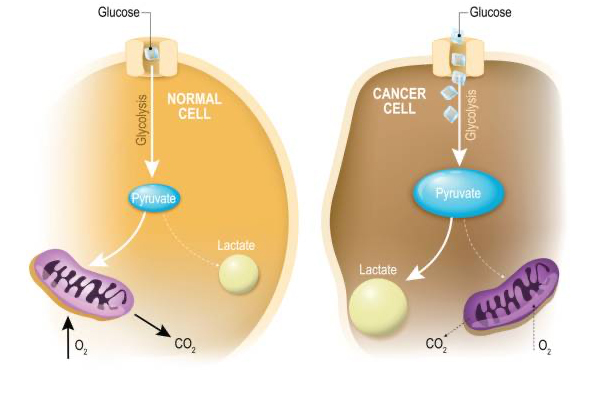
“Oncometabolism: The switchboard of cancer: An editorial”
Otto Warburg, biochemist, FDA, FDG-PET, MRS, Oncometabolism
Otto Warburg's discovery in the 1920s highlighted a unique bioenergetic phenotype in tumor cells, emphasizing their reliance on lactic acid fermentation, which spurred the field of oncometabolism. Oncometabolism has led to advancements like FDG-PET imaging for cancer diagnosis and staging,…
Feb 1st • 1 min read
 Fei Liang, Sheng Zhang, Qin Wang, Wenfeng Li
Clinical benefit of immune checkpoint inhibitors approved by US Food and Drug Administration
Randomized trials, Clinical benefits, Immune checkpoint inhibitors, Cancer, Food and drug administration agency
The study evaluates the clinical benefits of immune checkpoint inhibitors using the ESMO-MCBS and ASCO VF scales. 18 indications for these inhibitors were approved based on RCTs conducted between 2011 and 2018. All indications meet the ESMO-MCBS 1.1 threshold for meaningful bene…
Aug 31st • 16 mins read
 Benjamin Gregory Carlisle, Adélaïde Doussau, Jonathan Kimmelman
Patient burden and clinical advances associated with post approval monotherapy cancer drug trials: a retrospective cohort study
clinical advances, monotherapy cancer drug trials, FDA
Objective: The study investigates the efforts to extend the uses of new drugs by testing them for new, non-approved indications and examines the patient burden and clinical impact. Design and Setting: A retrospective cohort study focused on post-approval trials of anticancer drugs approved betwee…
Feb 17th • 7 mins read
 Meena N Murugappan, PharmD, MPH, PhD(c), Bellinda L King-Kallimanis, PhD, Gregory H Reaman, MD, Vishal Bhatnagar, MD, Erica G Horodniceanu, MPH, Najat Bouchkouj, MD, Paul G Kluetz, MD
Patient-Reported Outcomes in Pediatric Cancer Registration Trials: A US Food and Drug Administration Perspective
cancer, pediatrics, product labeling, united states food and drug administration, childhood cancer, denosumab, surrogate endpoints, adverse event, patient self-report, pediatric oncology, selumetinib, benefit-risk assessment, tisagenlecleucel, statistica
PROs have been feasible to collect from patients as young as 7 years old and were included in trials from 2013 onward. PROs were used as exploratory endpoints in four product applications but not included in product labeling. To include PRO data in FDA labeling, early interaction with the FDA, c…
Apr 30th • 12 mins read
 Mohamed Elmeliegy PhD, Derek Z. Yang BS, Engie Salama PharmD, Kourosh Parivar MPharm, Diane D. Wang PhD
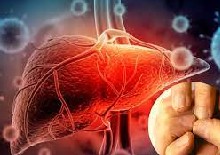
Discordance Between Child-Pugh and National Cancer Institute Classifications for Hepatic Dysfunction: Implications on Dosing Recommendations for Oncology Compounds
FDA, hepatic dysfunction, child-pugh, national cancer institute, dosing, oncology compounds
The FDA and European Medicines Agency recommend using Child-Pugh classification for pharmacokinetic evaluation in noncancer subjects with hepatic impairment (HI). Dosing recommendations for oncology compounds for patients with HI are commonly based on Child-Pugh classification. In oncology …
Jul 20th • 18 mins read
 Ronak Saluja, BS, Louis Everest, Sierra Cheng, Matthew Cheung, MD; Kelvin K. W. Chan, MD, MSc, PhD
Assessment of Whether the American Society of Clinical Oncology's Value Framework and the European Society for Medical Oncology's Magnitude of Clinical Benefit
ASCO, ESMO, value frameworks, randomized controlled trials, ASCO-CBS, ESMO-PMCBG
The ASCO-VF and ESMO-MCBS frameworks currently lack the ability to measure absolute survival benefit, which limits their effectiveness in comparing clinical benefits across different drugs and in establishing value. The authors of the ASCO framework have acknowledged the need for both relative and a…
May 16th • 15 mins read
 Carrie Printz
Cancer experts point to new advances in research and treatment: A recent report by the American Association for Cancer Research highlights unprecedented successes as well as ongoing challenges in the cancer field
FDA, AACR, immunotherapeutics, immunotherapy, precision therapies, ALK, EGFR, BRAF
Within the last few years, cancer research has made significant strides, leading to the approval of 22 new cancer treatments by the FDA between August 1, 2017, and July 31, 2018. Among these, notable advancements include 14 anticancer therapeutics, such as CAR T-cell therapies for non-Hodgkin lympho…
Apr 1st • 2 mins read
 Janice Bonsu, MPH, Lawrence Charles, MD, Avirup Guha, MD, Farrukh Awan, MD, MS, Jennifer Woyach, MD, Vedat Yildiz, MS, Lai Wei, PhD, Hani Jneid, MD, and Daniel Addison, MD
Representation of Patients With Cardiovascular Disease in Pivotal Cancer Clinical Trials
cancer, cardiovascular disease, clinical trials, underrepresentation, United States Food and Drug Administration, FDA, CVD
Heart failure (28%) was the most common exclusion criterion in clinical trials for FDA-approved anticancer therapies, followed by prior coronary disease and arrhythmias (27% and 23%, respectively). Over one-third of trials excluded patients with underlying cardiovascular disease (CVD), including mor…
Mar 18th • 3 mins read