
Results for 'trials'

 Shubham Sharma, J Connor Wells, Wilma M Hopman, Joseph C Del Paggio, Bishal Gyawali, Nazik Hammad, Annette E Hay, Christopher M Booth
Cancer, Clinical Trials, and Canada: Our Contribution to Worldwide Randomized Controlled Trials
cancer, clinical trials, research funding, Canada, high-income countries
This document reviews Canadian involvement in oncology randomized controlled trials (RCTs) from 2014-2017, comparing them to those from other high-income countries (HICs). Canada contributed to 155 (24%) of 636 HIC-led RCTs. Canadian RCTs focused more on palliative care (72%) compared to 62% in …
Apr 13th • 10 mins read
 Kushal T. Kadakia, MSc, Malke Asaad, MD, Erica Adlakha, MS, Michael J. Overman, MD, Cristina M. Checka, MD, and Anaeze C. Offodile II, MD, MPH
Virtual Clinical Trials in Oncology-Overview, Challenges, Policy Considerations, and Future Directions
Virtual, Clinical trials, policy, analytics, telemedicine
The COVID-19 pandemic has significantly impacted clinical research, particularly in oncology, by accelerating the adoption of virtual clinical trials. These trials can address challenges such as high costs and participant burdens associated with traditional trials. Virtual Clinical Trials: Utiliz…
Apr 8th • 4 mins read
 Xuanyi Li, Elizabeth A. Sigworth, Adrianne H. Wu, Jess Behrens, Shervin A. Etemad, Seema Nagpal, Ronald S. Go, Kristin Wuichet, Eddy J. Chen, Samuel M. Rubinstein, Neeta K. Venepalli, Benjamin F. Tillman, Andrew J. Cowan, Martin W. Schoen, Andrew Malty, J
Seven decades of chemotherapy clinical trials: a pan-cancer social network analysis
Cancer Medical research, Randomized controlled trials, Clinical trial design
Clinical trials are crucial in establishing cancer care standards, but the social dynamics among researchers in this field have not been extensively studied. A social network analysis of authors involved in chemotherapy-based prospective trials from 1946 to 2018 reveals significant insights. The …
Oct 16th • 12 mins read
 E.M. Ray, L.A. Carey, K.E. Reeder-Hayes
Leveraging existing data to contextualize phase II clinical trial findings in oncology
HER2, phase II trials, oncology, iDFS, EBC, early stage breast cancer
In the USA, over 250,000 women are diagnosed with early-stage breast cancer (EBC) yearly, with up to 30% having HER2 amplification. The standard care for HER2-positive EBC involves chemotherapy plus HER2-directed therapy for one year. The phase II Adjuvant Paclitaxel and Trastuzumab (APT) tr…
Sep 21st • 3 mins read
 Ramez Kouzy , Joseph Abi Jaoude , Walker Mainwaring , Timothy A. Lin , Austin B. Miller , Amit Jethanandani , Andres F. Espinoza , Vivek Verma , Clifton D. Fuller , Bruce D. Minsky , Claus Rödel , Cullen M. Taniguchi , Ethan B. Ludmir
Professional Medical Writer Assistance in Oncology Clinical Trials
PMW usage, phase III oncology trials, professional medical writer assistance
The use of professional medical writers (PMWs) in oncologic phase III randomized controlled trials (RCTs) has been historically low, but recent data on their usage is limited. This study aimed to quantify the usage of PMWs in cancer-specific phase III RCTs by analyzing trial manuscripts on Clinic…
Sep 17th • 7 mins read
 Fei Liang, Sheng Zhang, Qin Wang, Wenfeng Li
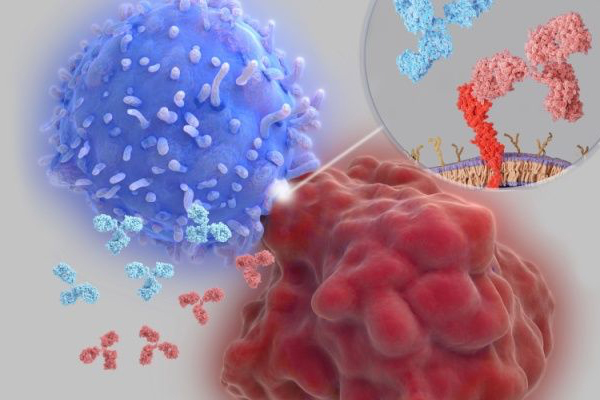
Clinical benefit of immune checkpoint inhibitors approved by US Food and Drug Administration
Randomized trials, Clinical benefits, Immune checkpoint inhibitors, Cancer, Food and drug administration agency
The study evaluates the clinical benefits of immune checkpoint inhibitors using the ESMO-MCBS and ASCO VF scales. 18 indications for these inhibitors were approved based on RCTs conducted between 2011 and 2018. All indications meet the ESMO-MCBS 1.1 threshold for meaningful bene…
Aug 31st • 16 mins read
 Jaques van Heerden, MD, Mohamed Zaghloul, MD, Anouk Neven, MSc, Teresa de Rojas, MD, PhD, Jennifer Geel, MD, Catherine Patte, MD, Joyce Balagadde-Kambugu, MD, Peter Hesseling, MD, Francine Tchintseme, MD, Eric Bouffet, MD, and Laila Hessissen, MD
Pediatric Oncology Clinical Trials and Collaborative Research in Africa: Current Landscape and Future Perspectives
pediatric oncology, clinical trials, research, Africa, collaborative research
Current childhood cancer survival rates in African countries range from 8.1% to 30.3%. The review focuses on pediatric oncology trials in Africa, highlighting challenges and suggesting research collaboration opportunities. Data were collected from the SIOP global mapping survey, ClinicalT…
Aug 7th • 10 mins read
 Mateusz T. Wasylewski, Karolina Strzebonska, Magdalena Koperny, Maciej Polak, Jonathan Kimmelman, Marcin Waligora
Clinical development success rates and social value of pediatric Phase 1 trials in oncology
pediatric oncology, clinical development, trials, success rates
Pediatric Phase 1 trials in oncology aim to assess social value, focusing on rates of approval, transition to further phases, and citation in research. The study analyzed trials from 2004 to 2013, utilizing data from FDA, EMA, ClinicalTrials.gov, EU Clinical Trials Register, and Google Scholar. …
Jun 21st • 28 mins read
 Dylan V Neel, David S Shulman, Clement Ma, Florence Bourgeois, Steven G DuBois
Sponsorship of oncology clinical trials in the United States according to age of eligibility
clinical trials, industry, oncology, pediatric, sponsorship
The sponsorship mix of trials relevant to young people with cancer has not been well-documented, which may impact policies and regulations in pediatric cancer drug development. An analysis of interventional trials in the U.S. from 2007 to 2018 was conducted using the ClinicalTrials.gov registry, …
Apr 29th • 8 mins read
 Audrey D. Zhang, Jeremy Puthumana, Nicholas S. Downing, MD
Assessment of Clinical Trials Supporting US Food and Drug Administration Approval of Novel Therapeutic Agents, 1995-2017
clinical trials, FDA, Novel therapeutic agents, biologics
The number of special regulatory programs for drug and biologic approvals by the FDA has increased since the introduction of the Fast Track designation in 1988. This study analyzed 273 new drugs and biologics approved by the FDA for 339 indications across three periods: 1995-1997, 2005-2007,…
Apr 21st • 20 mins read
 Sean X Zhang, MSc , Dean Fergusson, PhD , Jonathan Kimmelman, PhD
Proportion of Patients in Phase I Oncology Trials Receiving Treatments That Are Ultimately Approved
cancer, biological markers, phase 1 clinical trials, drug approval, medical oncology, united states food and drug administration guidelines, adverse event, national comprehensive cancer network, American society of clinical oncology
Phase I oncology trials are often considered a therapeutic option, but this claim is primarily based on surrogate measures like objective response rates. A systematic search was conducted to evaluate the therapeutic value of phase I cancer trial participation, focusing on the likelihood of patien…
Apr 1st • 14 mins read
 Benjamin Gregory Carlisle, Adélaïde Doussau, Jonathan Kimmelman
Patient burden and clinical advances associated with post approval monotherapy cancer drug trials: a retrospective cohort study
clinical advances, monotherapy cancer drug trials, FDA
Objective: The study investigates the efforts to extend the uses of new drugs by testing them for new, non-approved indications and examines the patient burden and clinical impact. Design and Setting: A retrospective cohort study focused on post-approval trials of anticancer drugs approved betwee…
Feb 17th • 7 mins read
 Carrie Printz
Precision medicine for pediatric cancers lags behind that for adult cancers: Citing hurdles in clinical trial recruitment and drug development, researchers are exploring ways to close gaps
Precision Medicine, pediatrics, clinical trials
Pediatric precision oncology faces challenges due to the rarity of pediatric cancers, which limits research and funding compared to adult cancers. Dr. Katherine Janeway highlights the need for more validated pre-clinical models and pharmaceutical interest in pediatric cancers. The RACE Act, effe…
Jan 9th • 2 mins read
 Massimo Di Maio, Francesco Perrone, Pierfranco Conte
Real-World Evidence in Oncology: Opportunities and Limitations
Real‐world evidence, Clinical trials, Cancer treatments
Randomized controlled trials (RCTs) are traditionally viewed as the gold standard for evaluating treatment efficacy, but real-world evidence (RWE) is gaining traction in oncology for addressing questions not fully answered by RCTs. RWE is derived from health records, cancer registries, and other …
Dec 24th • 8 mins read
 Kenji Omae, Yuki Kataoka, Yasushi Tsujimoto, Yusuke Tsutsumi, Yosuke Yamamoto, Shunichi Fukuhara, Toshi A Furukawa
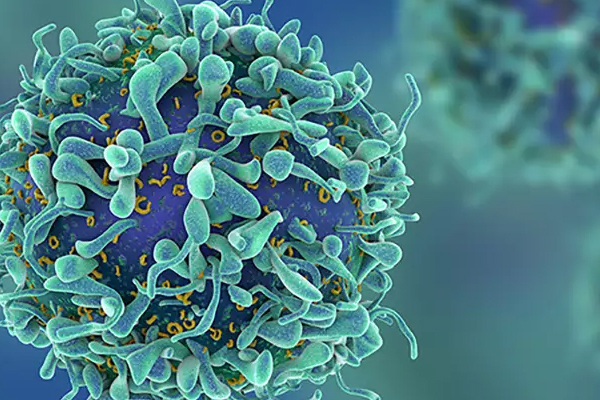
Publication statuses of clinical trials supporting FDA-approved immune checkpoint inhibitors: a meta-epidemiological investigation
Anticancer drugs, Clinical trials, Drug approval, Immune checkpoint inhibitors, Publications, United states food and drug administration
The study investigates the publication status of clinical trials for anticancer drugs approved by the FDA, focusing on immune checkpoint inhibitors (ICPis). Data from ICPis approved between 2011 and 2014 was analyzed, revealing that 58% of ICPis trials were published within two years …
Oct 24th • 18 mins read
 S.E. Abdullah, E. Oflazoglu, J.C. Soria, M.M. Dar
New Realities of Phase I Clinical Trials in the Era of
durvalumab, durvalumab experience, clinical trials, immunotherapy
The development of cancer immunotherapy, particularly durvalumab, has progressed rapidly due to innovative strategies, such as novel study designs. Durvalumab, an anti-PD-L1 monoclonal antibody, was developed by AstraZeneca starting in 2012, with initial trials leading to its accelerated appr…
Oct 7th • 5 mins read
 Guillaume Beinse, MD, Virgile Tellier, Valentin Charvet, MSc, Eric Deutsch, MD, PhD, Isabelle Borget, PharmD, PhD, Christophe Massard, MD, PhD., Antoine Hollebecque, MD, PhD, and Loic Verlingue, MD
Prediction of Drug Approval After Phase I Clinical Trials in Oncology: RESOLVED2
clinical trials, RESOLVED2, FDA
Challenge in Oncology Drug Development: The field is currently facing an increase in the number of antineoplastic agents (ANAs) entering phase I clinical trials (P1CTs) and a high attrition rate for final FDA approval. Objective: Development of a machine learning algorithm, RESOLVED2, to …
Sep 20th • 12 mins read
 Joseph M. Unger, PhD, MS, Van T. Nghiem, PhD, Dawn L. Hershman, MD, MS
Association of National Cancer Institute-Sponsored Clinical Trial Network Group Studies With Guideline Care and New Drug Indications
NCIS, clinical trials, NCTN, drug indications
Importance: NCTN groups are vital in identifying effective new antineoplastic regimens, but their clinical impact has not been systematically evaluated until now. Objective: To determine the association of NCTN trials with guideline care and new drug indications. Design, Setting, and Participant…
Sep 4th • 17 mins read
 Christopher A. Busch, MSC; Johannes Krisam, PhD; Meinhard Kieser, PhD
A Comprehensive Comparison of Additional Benefit Assessment Methods Applied by Institute for Quality and Efficiency in Health Care and European Society for Medical Oncology for Time-to-Event Endpoints After Significant Phase III Trials—A Simulation Study
cancer drug trials, time-to-event endpoints, overall survival, added benefit assessment, IQWiG, hazard ratio thresholds
The European Society for Medical Oncology (ESMO) and the German Institute for Quality and Efficiency in Health Care (IQWiG) use different methods for assessing additional benefit in cancer therapies, with ESMO considering both relative and absolute benefits, while IQWiG focuses on the upper limit …
Jun 28th • 30 mins read
 Natansh D. Modi, BPharm; Ahmad Y. Abuhelwa, PhD; Ross A. McKinnon, PhD
Audit of Data Sharing by Pharmaceutical Companies for Anticancer Medicines Approved by the US Food and Drug Administration
IPD sharing, clinical trial transparency, FDA anticancer approvals, oncology trials, data accessibility, pharmaceutical industry
The study examines the eligibility for individual participant data (IPD) sharing from clinical trials that supported the FDA approval of anticancer medicines over the past 10 years. Of the 304 trials analyzed, 136 (45%) were eligible for IPD sharing, while 168 (55%) were not. IPD sharing rates v…
Jul 28th • 20 mins read