
Results for 'regulation'

 Eric Q. Konnick
The regulatory landscape of precision oncology laboratory medicine in the United States - Perspective on the past 5 years and considerations for future regulation
Oncology, Regulation, Testing, LDTs, FDA, CLIA, CMS
The regulatory landscape for precision oncology in the United States is complex, involving multiple governmental agencies with varying jurisdictions. Since 2014, several regulatory proposals have been introduced following the FDA's draft guidance on laboratory-developed tests. There are ongoing …
May 22nd • 8 mins read
 MAXIMILIAN SALCHER-KONRAD, HUSEYIN NACI, COURTNEY DAVIS
Approval of Cancer Drugs With Uncertain Therapeutic Value: A Comparison of Regulatory Decisions in Europe and the United States
pharmaceutical regulation, US Food and Drug Administration, European Medicines Agency, cancer.
Regulatory agencies often have limited evidence on the clinical benefits and harms of new drugs at the time of market approval. There is frequent discordance between the FDA and EMA in regulatory outcomes and the use of special regulatory pathways for cancer drugs of uncertain therapeutic value. …
Oct 6th • 48 mins read
 Kirsten B Goldberg, Gideon M Blumenthal, Amy E McKee and Richard Pazdur
The FDA Oncology Center of Excellence and Precision Medicine
Biomarkers, drugs, hematology, medicine, oncology, precision medicine, regulation
The FDA is exploring real-world evidence to enhance understanding of the long-term safety and efficacy of oncology drugs. Initiatives like the Information Exchange and Data Transformation initiative are building infrastructure for big-data analytics. Additionally, patient-focused programs aim to inc…
Nov 6th • 3 mins read
 Thakur, Sayanta & Lahiry, Sandeep
Accelerated drug approvals in oncology: Pros and cons
Clinical study, drug approval, medical oncology
The summary of the content highlights the success of the accelerated approval process, especially for oncology drugs. Key points include: The rise of accelerated approval processes is significant, particularly in oncology. The use of surrogate endpoints and their validation has been debated. Th…
Sep 14th • 4 mins read
 Mateusz T. Wasylewski, Karolina Strzebonska, Magdalena Koperny, Maciej Polak, Jonathan Kimmelman, Marcin Waligora
Clinical development success rates and social value of pediatric Phase 1 trials in oncology
pediatric oncology, clinical development, trials, success rates
Pediatric Phase 1 trials in oncology aim to assess social value, focusing on rates of approval, transition to further phases, and citation in research. The study analyzed trials from 2004 to 2013, utilizing data from FDA, EMA, ClinicalTrials.gov, EU Clinical Trials Register, and Google Scholar. …
Jun 21st • 28 mins read
 Rinda Devi Bachu, Mariam Abou-Dahech, Swapnaa Balaji, Sai H. S. Boddu, Samson Amos, Vishal Singh, R. Jayachandra Babu, Amit K. Tiwari
Oncology biosimilars: New developments and future directions
biologics in cancer treatment, biosimilars development, high cost of biologics, healthcare system burden, biosimilars safety, regulatory guidelines for biosimilars, immunogenicity concerns, pharmacoeconomics of biosimilars
Biologics are essential in cancer treatment as both therapeutic and supportive care agents, but they are expensive and require extensive testing to ensure safety. The high cost of developing and manufacturing biologics can be a burden on healthcare systems, limiting patient access to necessary tr…
Nov 25th • 30 mins read

 Envision Pharma Group
Patient involvement: A must-have in medicine development, but is it being overlooked in a cost-constrained environment?
patient engagement in pharma, patient-centric drug development, life sciences industry innovation, patient insights in medicine, regulatory compliance in patient engagement, patient involvement in clinical trials, benefits of patient advocacy, patient-cen
The life sciences industry is in a constant state of advancement, bringing more and more groundbreaking medicines, cutting-edge technologies, and innovative solutions to market. Amidst these rapid changes, patients remain at the heart of these scientific developments. In recent decades, the l…
May 9th • 5 mins read
 Aviv Ladanie, PhD, Andreas M. Schmitt, MD, Benjamin Speich, PhD, Florian Naudet, PhD, Arnav Agarwal, MD, Tiago V. Pereira, PhD, Francesco Sclafani, PhD, Amanda K. Herbrand, MD, Matthias Briel, MD, MSc, Juan Martin-Liberal, PhD, Thomas Schmid, MD, Hannah E
Clinical Trial Evidence Supporting US Food and Drug Administration Approval of Novel Cancer Therapies Between 2000 and 2016
cancer treatment outcomes, outcomes, drug approval, clinical data, FDA
Data from 17 years of studies on novel cancer drugs show limited information available at market entry. Randomized Controlled Trials (RCTs) data are available for only half of the drug indications. Lack of data is particularly problematic for patients with hematological cancers. Novel therapies…
Nov 10th • 6 mins read
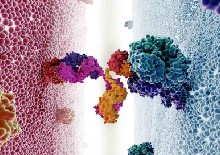 Alison Betts, Piet H. van der Graaf
Mechanistic Quantitative Pharmacology Strategies for the Early Clinical Development of Bispecific Antibodies in Oncology
bispecific antibodies, mechanistic quantitative, pharmacology, strategies, bsAbs, immune cells, MABEL aproach
Bi-specific antibodies (bsAbs) are crucial in cancer therapy research. BsAbs offer advantages such as enhanced efficacy and reduced systemic toxicity. Early clinical trials face challenges with dose selection and predicting effective doses. Clinical variability is influenced by factors like fun…
Jun 24th • 18 mins read
 Ajaikumar B Kunnumakkara [email protected], Devivasha Bordoloi, Bethsebie Lalduhsaki Sailo, Nand Kishor Roy, Krishan Kumar Thakur, Kishore Banik, Mehdi Shakibaei, Subash C Gupta, and Bharat B Aggarwal
Cancer drug development: The missing links
Cancer, drugs, patient survival, pre-clinical, clinical, cost
Despite advanced science and technology, cancer incidence is highest in America and Europe. Science and technology alone are not sufficient for treating diseases like cancer. Over 95% of drugs/compounds that show promise in pre-clinical trials fail in phase I clinical trials in humans. Most pre…
Apr 18th • 20 mins read
 Ariadna Tibau, Consolación Molto, Alberto Ocana, Arnoud J Templeton, Luis P Del Carpio, Joseph C Del Paggio, Agustí Barnadas, Christopher M Booth, Eitan Amir
Magnitude of Clinical Benefit of Cancer Drugs Approved by the US Food and Drug Administration
antineoplastic agents, immunologic adjuvants, pharmaceutical adjuvants, phase 3 clinical trials, drug approval, drug labeling, medical oncology, united states food and drug administration, diagnosis, palliative care, surrogate endpoints, weight measureme
Regulatory agencies assess drug safety and efficacy, but thresholds may differ from those accepted by clinicians . Only 43.8% of RCTs for FDA-approved drugs meet the ESMO-MCBS threshold for meaningful benefit, reflecting potential softening of FDA standards. Encouraging trends include an increas…
Dec 13th • 7 mins read
 Envision Pharma Group
AI-powered real-world evidence: Strategically enhancing value and access
Oncology, Clinical Development, Targeted Therapy, Immunotherapy, Genomic Profiling, CAR-T Cell Therapy, Precision Medicine
Real-world evidence (RWE) complements traditional randomized controlled trials by providing insights from diverse data sources, helping healthcare decision-makers with coverage, reimbursement, and treatment guidelines. Artificial intelligence (AI) and natural language processing (NLP) are pivotal…
Aug 22nd • 5 mins read