
Results for 'FDA accelerated approval'

 Avi Cherla, MSc; Huseyin Naci, MHS, PhD; Aaron S. Kesselheim, MD, JD, MPH; Bishal Gyawali, MD, PhD; Elias Mossialos, MD, PhD
Assessment of Coverage in England of Cancer Drugs Qualifying for US Food and Drug Administration Accelerated Approval
FDA, NHS, accelerated approval, NICE, clinical trial findings
The study evaluates the acceptance and coverage of FDA-accelerated approved cancer drugs by the National Health Service (NHS) in England, focusing on decisions made by the National Institute for Health and Care Excellence (NICE). A total of 93 cancer drug indications received accelerated approval…
Feb 22nd • 10 mins read
 Thakur, Sayanta & Lahiry, Sandeep
Accelerated drug approvals in oncology: Pros and cons
Clinical study, drug approval, medical oncology
The summary of the content highlights the success of the accelerated approval process, especially for oncology drugs. Key points include: The rise of accelerated approval processes is significant, particularly in oncology. The use of surrogate endpoints and their validation has been debated. Th…
Sep 14th • 4 mins read
 Audrey D. Zhang, Jeremy Puthumana, Nicholas S. Downing, MD
Assessment of Clinical Trials Supporting US Food and Drug Administration Approval of Novel Therapeutic Agents, 1995-2017
clinical trials, FDA, Novel therapeutic agents, biologics
The number of special regulatory programs for drug and biologic approvals by the FDA has increased since the introduction of the Fast Track designation in 1988. This study analyzed 273 new drugs and biologics approved by the FDA for 339 indications across three periods: 1995-1997, 2005-2007,…
Apr 21st • 20 mins read
 Rachel E. Sachs, JD, MPH, Kyle A. Gavulic, BA, Julie M. Donohue, PhD
Recent Trends in Medicaid Spending and Use of Drugs With US Food and Drug Administration Accelerated Approval
FDA accelerated approval, Medicaid spending, prescription drug costs, surrogate endpoints, cancer drugs, drug approval pathway
The study examines the impact of drugs approved through the FDA’s accelerated approval program on state Medicaid spending. From 1992 to 2020, 216 drug-indication pairs were granted accelerated approval, with a significant increase in cancer drug approvals in recent years. Although drugs wi…
Oct 8th • 25 mins read
 Ravi B. Parikh, MD, MPP Rebecca A. Hubbard, PhD Erkuan Wang, MA Trevor J. Royce, MD, MPH Aaron B. Cohen, MD, MSCE Amy S. Clark, MD, MSCE Ronac Mamtani, MD, MSCE
Exposure to US Cancer Drugs With Lack of Confirmed Benefit After US Food and Drug Administration Accelerated Approval
US, FDA, approval, drugs, benefits, cancer
Among 5 oncology indications, 26.1% of eligible treatment initiations involved an Accelerated Approval (AA) indication that was later withdrawn due to lack of benefit. There is an inherent trade-off between expediting access to promising cancer drugs and the potential withdrawal of some indicatio…
Dec 8th • 2 mins read
 Bhakti Arondekar, Mei Sheng Duh, Rachel H. Bhak, Maral DerSarkissian, Lynn Huynh, Kelsey Wang, John Wojciehowski, Melody Wu, Bryon Wornson, Alexander Niyazov, George D. Demetri
Real-World Evidence in Support of Oncology Product Registration: A Systematic Review of New Drug Application and Biologics License Application
RWE, Biologics License, FDA, BLA, suplements
The FDA emphasizes early engagement and transparent protocols in Real-World Evidence (RWE) studies. Aligning RWE populations with pivotal trial populations is crucial, often achieved through criteria matching and propensity score methodologies. Major critiques include differences in tumor asse…
Jan 1st • 12 mins read
 Mahnum Shahzad, BA, Huseyin Naci, MHS, PhD, Anita K. Wagner, PharmD, MPH, DrPH
Estimated Medicare Spending on Cancer Drug Indications With a Confirmed Lack of Clinical Benefit After US Food and Drug Administration Accelerated
medicare spending, drug indications, AA, FDA, medicare, ODAC
Medicare Parts B and D spent at least $569 million between 2017 and 2019 on 10 cancer drug indications without confirmed overall survival (OS) benefit after accelerated approval (AA). Approximately $224 million was spent on drug indications that were either voluntarily withdrawn or recommended fo…
Oct 18th • 5 mins read
 Bishal Gyawali, Benjamin N Rome, Aaron S Kesselheim
Regulatory and clinical consequences of negative confirmatory trials of accelerated approval cancer drugs: retrospective observational study
clinical guidelines, FDA, accelerated approval cancer drugs, surrogate measures, NCCN, EMA
Six of 18 cancer drugs that initially received accelerated approval have indications that remain on the labeling and are recommended in clinical guidelines despite no improvement in the primary endpoint in post-approval trials. These findings reflect the lack of fulfillment of the compromise between…
Aug 4th • 12 mins read
 Diana Brixner, PhD, RPh [email protected], Joseph Biskupiak, PhD, MBA, Gary Oderda, PharmD, MPH, Douglas Burgoyne, PharmD, FAMCP, Daniel C Malone, RPh, PhD, FAMCP, Bhakti Arondekar, PhD, MBA, and Alexander Niyazov, PharmD, RPh, MPH
Payer perceptions of the use of real-world evidence in oncology-based decision making
real world evidence, RWE, RCT, randomized controlled trials, payer, perceptions, FDA
US payers find real-world evidence (RWE) useful for improving costs and outcomes in oncology, and for making formulary decisions. Payers prioritize comparative effectiveness evidence but also value other RWE types such as total cost of care, burden of illness, treatment patterns, and economic…
Aug 1st • 12 mins read
 Chad Williamson, MBA, MS Leanne Berger, BS, Thomas P. Sullivan, BS SHOW
Addressing oncologists' gaps in the use of biosimilar products
biosimilar products, FDA, biosimilars, COA
The study highlights significant gaps in knowledge, competence, and confidence among oncologists regarding biosimilars. Educational interventions notably improved clinicians' understanding of the biosimilar approval process and familiarity with approved products. Post-education familiarity with the …
Jun 19th • 5 mins read
 Emerson Y. Chen, MD, Vikram Raghunathan, MD, Vinay Prasad, MD, MPH
An Overview of Cancer Drugs Approved by the US Food and Drug Administration Based on the Surrogate End Point of Response Rate
FDA, RR, drug approvels, OS
Many cancer drugs come to market based on single-arm studies with modest RRs. Most of these drugs are tested in studies of over 100 patients prior to approval. Most (60%) of these approvals lack randomized clinical trials during the life cycle of the product. Our findings suggest greater room for th…
May 28th • 5 mins read
 Jiaxi Zhou, Jonathon Vallejo, Paul Kluetz, Richard Pazdur, Tamy Kim, Patricia Keegan, Ann Farrell, Julia A Beaver, Rajeshwari Sridhara
Overview of Oncology and Hematology Drug Approvals at US Food and Drug Administration Between 2008 and 2016
drug approval, medical oncology, united states food and drug administration, hematology, surrogate endpoints, marketing, accelerated approval
Background: An overview was conducted of oncology products reviewed by the Office of Oncology Drug Products (OODP) at the FDA for marketing approval between July 2005 and December 2007. The study aims to understand the impact of post-2007 changes in laws, regulations, and organizational structure …
Aug 4th • 15 mins read
 Nicole M. Kuderer and Gary H. Lyman
Evolving Landscape of US Food and Drug Administration Drug Approval in the Era of Precision Oncology: Finding the Right Balance Between Access and Safety
FDA, trials, drug approval, access, safety
Balance is needed between enhancing drug access and ensuring patient safety. Accurate surrogate endpoints and sophisticated trial designs are crucial for predicting clinical benefits. Safety data before final approvals and postapproval assessments for vulnerable populations are necessary. Value…
Jun 20th • 3 mins read
 Ariadna Tibau, Consolación Molto, Alberto Ocana, Arnoud J Templeton, Luis P Del Carpio, Joseph C Del Paggio, Agustí Barnadas, Christopher M Booth, Eitan Amir
Magnitude of Clinical Benefit of Cancer Drugs Approved by the US Food and Drug Administration
antineoplastic agents, immunologic adjuvants, pharmaceutical adjuvants, phase 3 clinical trials, drug approval, drug labeling, medical oncology, united states food and drug administration, diagnosis, palliative care, surrogate endpoints, weight measureme
Regulatory agencies assess drug safety and efficacy, but thresholds may differ from those accepted by clinicians . Only 43.8% of RCTs for FDA-approved drugs meet the ESMO-MCBS threshold for meaningful benefit, reflecting potential softening of FDA standards. Encouraging trends include an increas…
Dec 13th • 7 mins read
 Cheryl Ho, MD, Howard J. Lim, MD, Dean A. Regier, PhD
Canadian Regulatory and Health Technology Assessment for Malignant Hematology and Oncology Indications Compared With the US Food and Drug Administration Accelerated Approval Program
canada, oncology, malignant, hematology, HTC
Canadian regulatory approvals align with FDA decisions, but submission numbers to Health Canada (HC) and Health Technology Assessment (HTA) processes are lower in Canada. There is a nearly 3-year delay between Accelerated Approval (AA) and funded access to treatment for Canadians. HTA in Canada …
Jun 5th • 6 mins read
 Kirsten B Goldberg, Gideon M Blumenthal, Amy E McKee and Richard Pazdur
The FDA Oncology Center of Excellence and Precision Medicine
Biomarkers, drugs, hematology, medicine, oncology, precision medicine, regulation
The FDA is exploring real-world evidence to enhance understanding of the long-term safety and efficacy of oncology drugs. Initiatives like the Information Exchange and Data Transformation initiative are building infrastructure for big-data analytics. Additionally, patient-focused programs aim to inc…
Nov 6th • 3 mins read
 Bishal Gyawali, Benjamin N Rome, Aaron S Kesselheim
Report from American Society of Clinical Oncology Symposium 2020 and American Society of Clinical Oncology Gastrointestinal Cancer Symposium 2021
ASCO, TNT, Gastrointestinal Cancer Symposium
Six out of 18 cancer drugs with accelerated approval still have indications on labeling and are recommended in guidelines despite not showing improvement in primary endpoints in post-approval trials. This issue highlights the imbalance between speed and evidence in the accelerated approval pathwa…
Aug 4th • 13 mins read
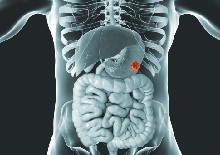 Di Maria Jiang, Kelvin K. W. Chan, Raymond W. Jang, Christopher Booth, Geoffrey Liu, Eitan Amir, Robert Mason, Louis Everest, Elena Elimova
Anticancer drugs approved by the Food and Drug Administration for gastrointestinal malignancies: Clinical benefit and price considerations
ASCO VF, ESMO MCBS, gastrointestinal malignancies, anticancer drugs
Drugs approved between 2006 and 2017 were analyzed. Clinical benefit was measured using ESMO Magnitude of Clinical Benefit Scale and ASCO Value Framework. 16 GI cancer drugs received FDA approval for 24 indications, including various drug classes such as monoclonal antibodies, oral targeted …
Mar 7th • 8 mins read