
Results for 'RCT'

 Aaron S. Long, BS; Audrey D. Zhang, MD; Caitlin E. Meyer, MLIS; Alexander C. Egilman, BS; Joseph S. Ross, MD, MHS; Joshua D. Wallach, PhD, MS
Evaluation of Trials Comparing Single-Enantiomer Drugs to Their Racemic Precursors: A Systematic Review
single-enantiomer racemic drug pairs, single-enantiomer, FDA, RCTs, generic drugs
Chiral Switching: A strategy where drug manufacturers develop a single-enantiomer formulation from a racemic one to extend market exclusivity, often without proving enhanced efficacy or safety. Objective: To evaluate randomized clinical trials (RCTs) comparing FDA-approved single-enantiomer drugs…
May 6th • 18 mins read
 Louis Everest, BSc; Monica Shah, BSc; Kelvin K.W. Chan, MD, MSc, PhD
Comparison of Long-term Survival Benefits in Trials of Immune Checkpoint Inhibitor vs Non-Immune Checkpoint Inhibitor Anticancer Agents Using ASCO Value Framework and ESMO Magnitude of Clinical Benefit Scale
immunotherapy-triggered LTP, RCTs, FDA, ICI
Importance: Anticancer agents, especially immune checkpoint inhibitors (ICIs), have shown potential for long-term durable survival in some patients. However, traditional clinical benefit measures may not accurately capture this, leading to proposed amendments in valuation frameworks. Objectives: …
Jul 10th • 12 mins read
 Laurent Azoulay
Rationale, Strengths, and Limitations of Real-World Evidence in Oncology: A Canadian Review and Perspective
real-world evidence; RWE, real-world studies, RWS, oncology, real-world evidence, RWE, randomized controlled trial, RCT
Data obtained from real-world studies have an integral role in evidence-based medicine, serving as an essential source of safety information and a complement to efficacy data from RCTs. RWE is particularly useful for expanding the evidence base to encompass populations of patients who are not well r…
Apr 26th • 9 mins read
 Diana Brixner, PhD, RPh [email protected], Joseph Biskupiak, PhD, MBA, Gary Oderda, PharmD, MPH, Douglas Burgoyne, PharmD, FAMCP, Daniel C Malone, RPh, PhD, FAMCP, Bhakti Arondekar, PhD, MBA, and Alexander Niyazov, PharmD, RPh, MPH
Payer perceptions of the use of real-world evidence in oncology-based decision making
real world evidence, RWE, RCT, randomized controlled trials, payer, perceptions, FDA
US payers find real-world evidence (RWE) useful for improving costs and outcomes in oncology, and for making formulary decisions. Payers prioritize comparative effectiveness evidence but also value other RWE types such as total cost of care, burden of illness, treatment patterns, and economic…
Aug 1st • 12 mins read
 Marc Clausen MA, Chloe Mighton MS, Ruhi Kiflen MPH, Agnes Sebastian MSc, Wei Fang Dai MPH, Rebecca E. Mercer PhD, Jaclyn M. Beca MSc, Wanrudee Isaranuwatchai PhD, Kelvin K.W. Chan MD PhD, Yvonne Bombard PhD
Use of real-world evidence in cancer drug funding decisions in Canada: a qualitative study of stakeholders’ perspectives
RWE, RCT's, Canada, drug funding, Canadian Real-World Evidence, Data
The study emphasizes the need for a cultural shift, enhanced data infrastructure, investment in capacity building, and stakeholder collaboration for effective use of Real-World Evidence (RWE) in drug funding decisions. Cancer drug costs are escalating, with some offering substantial benefit…
Nov 4th • 12 mins read
 Alfredo Addeo, MD; Glen J. Weiss, MD, MBA; Bishal Gyawali, MD, PhD
Association of Industry and Academic Sponsorship With Negative Phase 3 Oncology Trials and Reported Outcomes on Participant Survival: A Pooled Analysis
pooled analysis, FDA, negative phase 3 trials, phase 3 trial, RCT, PRISMA, RCT's
In this study of trials published in 2016 through 2018, approximately 40% of negative phase 3 RCTs in oncology were conducted without supporting phase 2 trials, and such phase 3 trials were sponsored by both academia and industry. On the basis of our results, proactive steps from regulators and ethi…
May 10th • 8 mins read
 Talal Hilal, MD; Mohamad Bassam Sonbol, MD; Vinay Prasad, MD, MPH
Analysis of Control Arm Quality in Randomized Clinical Trials Leading to Anticancer Drug Approval by the US Food and Drug Administration
RCTs, FDA, clinical trials, anticancer, suboptimal control arms
The aim of our analysis was to evaluate the quality of control arms in RCTs leading to anticancer drug approvals by the FDA. We found that, between January 1, 2013, and July 31, 2018, FDA approval of 16 (17%) of 95 anticancer drugs for the market were based on RCTs with sub-optim…
May 2nd • 15 mins read
 Jonathon Webster, MD and B. Douglas Smith, MD
The Case for Real-world Evidence in the Future of Clinical Research on Chronic Myeloid Leukemia
Real world data, FDA, RCT, RWE, RWD
In light of recently published guidelines from the US Food and Drug Administration (FDA) on the communication of real-world data (RWD) and real-world evidence (RWE) to support regulatory decision making, it is important to understand the following key points and concepts: Development of RWD and R…
Jan 29th • 10 mins read
 Shubham Sharma, J Connor Wells, Wilma M Hopman, Joseph C Del Paggio, Bishal Gyawali, Nazik Hammad, Annette E Hay, Christopher M Booth
Cancer, Clinical Trials, and Canada: Our Contribution to Worldwide Randomized Controlled Trials
cancer, clinical trials, research funding, Canada, high-income countries
This document reviews Canadian involvement in oncology randomized controlled trials (RCTs) from 2014-2017, comparing them to those from other high-income countries (HICs). Canada contributed to 155 (24%) of 636 HIC-led RCTs. Canadian RCTs focused more on palliative care (72%) compared to 62% in …
Apr 13th • 10 mins read
 Adela Rodriguez, Francis Esposito, Helena Oliveres, Ferran Torres and Joan Maurel
Are Quality of Randomized Clinical Trials and ESMO-Magnitude of Clinical Benefit Scale Two Sides of the Same Coin, to Grade Recommendations for Drug Approval?
quality randomized studies, ESMO-MCBS, drug approval
The approval of new cancer drugs by the FDA and EMA is primarily based on positive results from well-designed randomized phase III clinical trials (RCTs). Not all RCTs are analyzed to support drug approval recommendations, highlighting the need for scales to evaluate RCT quality and clinical…
Feb 11th • 3 mins read
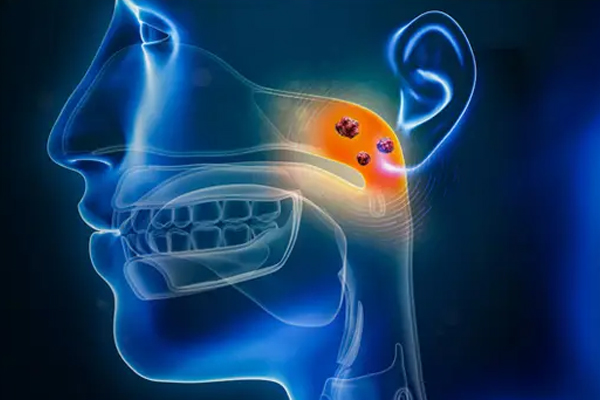 Yuan Zhang, Xu Liu, Ying-Qin Li, Ling-Long Tang, Lei Chen, Jun Ma
A Field Test of Major Value Frameworks in Chemotherapy of Nasopharyngeal Carcinoma-To Know, Then to Measure
value framework, European Society for Medical Oncology, Magnitude of Clinical Benefit Scale, American Society of Clinical Oncology, drug therapy, nasopharyngeal neoplasms
The European Society for Medical Oncology (ESMO) and the American Society of Clinical Oncology (ASCO) have developed frameworks to evaluate cancer treatments, particularly for nasopharyngeal carcinoma. A study compared these frameworks using data from 15 randomized controlled trials of systemic c…
Aug 12th • 10 mins read
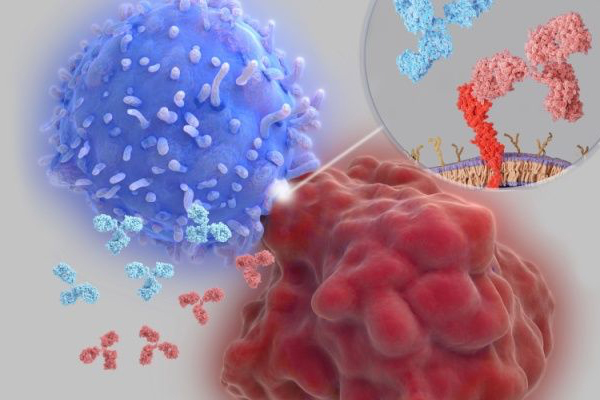 Fei Liang, Sheng Zhang, Qin Wang, Wenfeng Li
Clinical benefit of immune checkpoint inhibitors approved by US Food and Drug Administration
Randomized trials, Clinical benefits, Immune checkpoint inhibitors, Cancer, Food and drug administration agency
The study evaluates the clinical benefits of immune checkpoint inhibitors using the ESMO-MCBS and ASCO VF scales. 18 indications for these inhibitors were approved based on RCTs conducted between 2011 and 2018. All indications meet the ESMO-MCBS 1.1 threshold for meaningful bene…
Aug 31st • 16 mins read
 Melissa H. Roberts & Gary T. Ferguson
Real-World Evidence: Bridging Gaps in Evidence to Guide Payer Decisions
Real world evidence, RWE, payer decisions, RWD
Randomized controlled trials (RCTs) are preferred by payers for health technology assessments and coverage decisions, but they may not reflect real-world clinical practice. Real-world evidence (RWE) from observational studies can fill evidence gaps not addressed by RCTs and is valuable for payer …
Jun 18th • 6 mins read
 Massimo Di Maio, Francesco Perrone, Pierfranco Conte
Real-World Evidence in Oncology: Opportunities and Limitations
Real‐world evidence, Clinical trials, Cancer treatments
Randomized controlled trials (RCTs) are traditionally viewed as the gold standard for evaluating treatment efficacy, but real-world evidence (RWE) is gaining traction in oncology for addressing questions not fully answered by RCTs. RWE is derived from health records, cancer registries, and other …
Dec 24th • 8 mins read
 Consolacion Molto, Ariadna Tibau, Aida Bujosa, Jose Carlos Tapia, Abhenil Mittal, Faris Tamimi & Eitan Amir
Association between control group therapy and magnitude of clinical benefit of cancer drugs
control group therapy, clinical benefit scales, ESMO-MCBS, ASCO-VF, randomized trials
The study investigated the impact of control group therapy on various clinical benefit scales like ASCO-VF, ESMO-MCBS, NCCN Evidence Blocks, and ASCO-CRC. Researchers analyzed cancer drugs approved between 2012 and 2021 using data from randomized controlled trials (RCTs) listed on Drugs@FDA. Sig…
Dec 9th • 20 mins read
 J. Mulder, S. Teerenstra, P. B. van Hennik, A. M. G. Pasmooij, V. Stoyanova-Beninska, E. E. Voest & A. de Boer
Single-arm trials supporting the approval of anticancer medicinal products in the European Union: contextualization of trial results and observed clinical benefit
single-arm trials, anticancer medicinal products, EU, trial, SAT's, oncology, European Medicines Agency, clinical benefit, contextualization
Between 2012 and 2021, 18 anticancer medicinal products for solid tumors were approved in the EU based on 21 SATs (single-arm trials). Pivotal SAT-based applications often included additional information for contextualization, such as supportive studies and external evidence. Thresholds for…
Apr 11th • 14 mins read
 Robbe Saesen, Mieke Van Hemelrijck, Jan Bogaerts, Christopher M. Booth, Jan J. Cornelissen, Andre Dekker, Elizabeth A. Eisenhauer, André Freitas, Alessandro Gronchi, Miguel A. Hernán, Frank Hulstaert, Piet Ost, Petr Szturz, Helena M. Verkooijen, Michael W
Defining the role of real-world data in cancer clinical research: The position of the
real-world data, real-world evidence, randomised, pragmatic trials, cancer, clinical research, add-on cohorts
Real-World Data (RWD) are increasingly used in cancer clinical research as an alternative evidence source. RWD studies primarily involve observational data, which offer insights into real-world conditions but may have quality limitations. Some research questions necessitate Randomized Controlled…
Mar 20th • 10 mins read
 Min Jeong Kim, Hyo Jung Kim, Danbee Kang, Hee Kyung Ahn, Soo-Yong Shin, Juhee Cho, Yeon Hee Park,
Preliminary Attainability Assessment of Real-World Data for Answering Major Clinical Research Questions in Breast Cancer Brain Metastasis: Framework Development and Validation Study
real-world data, preliminary attainability assessment, observational study, clinical data warehouse, PAR framework, brain metastasis, breast cancer
The study proposes the PAR framework for data attainability screening in clinical research, particularly useful for addressing unmet clinical needs in BCBM. A survey showed clinical questions had a mean score of 4.37, indicating the significance of these questions. RWE generation is crucial…
Oct 9th • 4 mins read
 MAXIMILIAN SALCHER-KONRAD, HUSEYIN NACI, COURTNEY DAVIS
Approval of Cancer Drugs With Uncertain Therapeutic Value: A Comparison of Regulatory Decisions in Europe and the United States
pharmaceutical regulation, US Food and Drug Administration, European Medicines Agency, cancer.
Regulatory agencies often have limited evidence on the clinical benefits and harms of new drugs at the time of market approval. There is frequent discordance between the FDA and EMA in regulatory outcomes and the use of special regulatory pathways for cancer drugs of uncertain therapeutic value. …
Oct 6th • 48 mins read

 Envision Pharma Group
AI-powered real-world evidence: Strategically enhancing value and access
Oncology, Clinical Development, Targeted Therapy, Immunotherapy, Genomic Profiling, CAR-T Cell Therapy, Precision Medicine
Real-world evidence (RWE) complements traditional randomized controlled trials by providing insights from diverse data sources, helping healthcare decision-makers with coverage, reimbursement, and treatment guidelines. Artificial intelligence (AI) and natural language processing (NLP) are pivotal…
Aug 22nd • 5 mins read