
Results for 'breast cancer'

 E.M. Ray, L.A. Carey, K.E. Reeder-Hayes
Leveraging existing data to contextualize phase II clinical trial findings in oncology
HER2, phase II trials, oncology, iDFS, EBC, early stage breast cancer
In the USA, over 250,000 women are diagnosed with early-stage breast cancer (EBC) yearly, with up to 30% having HER2 amplification. The standard care for HER2-positive EBC involves chemotherapy plus HER2-directed therapy for one year. The phase II Adjuvant Paclitaxel and Trastuzumab (APT) tr…
Sep 21st • 3 mins read
 Shani Paluch-Shimon, Nathan I. Cherny, Elisabeth G.E. de Vries, Urania Dafni, Martine J. Piccart, Nicola Jane Latino, Fatima Cardoso
Application of the ESMO-Magnitude of Clinical Benefit Scale (V.1.1) to the field of early breast cancer therapies
early breast cancer, magnitude of clinical benefit scale, ESMO-MCBS
The ESMO-MCBS is a validated value scale for assessing solid tumour anticancer treatments, specifically for therapies with curative intent. This document represents the first large-scale field testing of the ESMO-MCBS in early breast cancer to assess its applicability and identify any sh…
Sep 6th • 20 mins read
 Mark Verrill, Paul Declerck, Sibylle Loibl, Jake Lee & Javier Cortes
The rise of oncology biosimilars: from process to promise
biologic, biosimilar, breast cancer, SB3, trastuzumab
Biosimilars are biologic products that are highly similar to the approved originator molecule, with no clinically meaningful differences. They are expected to play a key role in cancer treatment by reducing costs and improving access. Regulatory bodies use robust mechanisms for approval, involvi…
Aug 23rd • 18 mins read
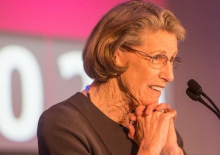 Leslie Bernstein, PhD
First person profile: Leslie Bernstein, PhD: An epidemiologist known for her groundbreaking discoveries about breast cancer, Dr. Bernstein continues to push the field forward
breast cancer, Leslie Bernstein, epidemiologist
Dr. Leslie Bernstein is a renowned researcher in breast cancer risk and prevention at City of Hope, California. Her colleague, Dr. Jonine Bernstein, highlights her groundbreaking work and passion for research. They have collaborated on the WECARE Study, focusing on genetic susceptibility and…
Aug 12th • 4 mins read
 Min Jeong Kim, Hyo Jung Kim, Danbee Kang, Hee Kyung Ahn, Soo-Yong Shin, Juhee Cho, Yeon Hee Park,
Preliminary Attainability Assessment of Real-World Data for Answering Major Clinical Research Questions in Breast Cancer Brain Metastasis: Framework Development and Validation Study
real-world data, preliminary attainability assessment, observational study, clinical data warehouse, PAR framework, brain metastasis, breast cancer
The study proposes the PAR framework for data attainability screening in clinical research, particularly useful for addressing unmet clinical needs in BCBM. A survey showed clinical questions had a mean score of 4.37, indicating the significance of these questions. RWE generation is crucial…
Oct 9th • 4 mins read
 Qiyou Wu, Zhiwei Lian, Xin Wang, Hanchao Cheng, Jing Sun, Hui Yu, Gong Zhang, Fan Wu, Jian Liu and Chuanben Chen
Factors associated with the uptake of biosimilars for breast cancer treatment from the perspectives of physicians and patients-Evidence from China
biosimilar, breast cancer, uptake, physician, patient
In 2021, the trastuzumab biosimilar entered clinical use in the research setting with less than 20% uptake in China, significantly lower than in the EU. Older patients are more likely to adopt biosimilars due to price sensitivity and financial concerns. Only 11.3% of patients switched from …
Jan 12th • 13 mins read
 Ajaikumar B Kunnumakkara [email protected], Devivasha Bordoloi, Bethsebie Lalduhsaki Sailo, Nand Kishor Roy, Krishan Kumar Thakur, Kishore Banik, Mehdi Shakibaei, Subash C Gupta, and Bharat B Aggarwal
Cancer drug development: The missing links
Cancer, drugs, patient survival, pre-clinical, clinical, cost
Despite advanced science and technology, cancer incidence is highest in America and Europe. Science and technology alone are not sufficient for treating diseases like cancer. Over 95% of drugs/compounds that show promise in pre-clinical trials fail in phase I clinical trials in humans. Most pre…
Apr 18th • 20 mins read
 Emerson Y. Chen, MD, Sunil K. Joshi, BA, Audrey Tran, BA
Estimation of Study Time Reduction Using Surrogate End Points Rather Than Overall Survival in Oncology Clinical Trials
bevacizumab, metastatic breast cancer, RR, PFS, FDA, oncology clinical trials
The use of Response Rate (RR), Progression-Free Survival (PFS), and Overall Survival (OS) in clinical trials leading to FDA approval is associated with different study durations: RR: Median study duration of 25 months (range, 11-54 months). PFS: Median study duration of 31 months (range, 10-…
Apr 1st • 10 mins read
 Hagop M. Kantarjian MD, Ferran Prat PhD, JD, David P. Steensma MD, Razelle Kurzrock MD, David J. Stewart MD, Mikkael A. Sekeres MD, Joseph Leveque MD
Cancer research in the United States: A critical review of current status and proposal for alternative models
cancer research, research, NCI, Drug industry-driven research model, development in research, 2018 cancer model
Early research focused on tissue histology and animal models, with surgery and radiotherapy as primary treatments. 1950s: Introduction of cell lines (e.g., HeLa cells) and first anticancer drugs (antifolates, thiopurines), leading to the establishment of the Cancer Chemotherapy National Service C…
May 14th • 10 mins read

 iNIZIO
Transforming oncology: Five frontiers driving progress in cancer care
From biomarker-driven breakthroughs to AI-powered early detection and a renewed commitment to equity and patient centricity, the past 12 months have seen major strides across cancer research, treatment, and communication. At Inizio, we’ve had a front-row seat to this transformation, supporting…
May 16th • 5 mins read
 Carrie Printz
First person profile: Supriya G. Mohile, MD, MS: A respected geriatric oncologist, Dr. Mohile has conducted innovative research on improving care for older patients with cancer
Supriya G. Mohile, geriatric oncologist
Ms. Canin and Dr. Mohile collaborated to involve patients and caregivers in geriatric oncology studies, forming the SCOREboard advisory group. Dr. Mohile received a $2 million grant to create infrastructure for cancer and aging studies, and she is recognized as a leader in geria…
Oct 11th • 2 mins read
 Mahnum Shahzad, BA, Huseyin Naci, MHS, PhD, Anita K. Wagner, PharmD, MPH, DrPH
Estimated Medicare Spending on Cancer Drug Indications With a Confirmed Lack of Clinical Benefit After US Food and Drug Administration Accelerated
medicare spending, drug indications, AA, FDA, medicare, ODAC
Medicare Parts B and D spent at least $569 million between 2017 and 2019 on 10 cancer drug indications without confirmed overall survival (OS) benefit after accelerated approval (AA). Approximately $224 million was spent on drug indications that were either voluntarily withdrawn or recommended fo…
Oct 18th • 5 mins read
 Jayson L. Parker, Sebnem S. Kuzulugil, Kirill Pereverzev, Stephen Mac, Gilberto Lopes, Zain Shah, Ashini Weerasinghe, Daniel Rubinger, Adam Falconi, Ayse Bener, Bora Caglayan, Rohan Tangri, Nicholas Mitsakakis
Does biomarker use in oncology improve clinical trial failure risk? A large-scale analysis
biomarker, clinical trial, failure, analysis, NSCLC, oncology
Data from clinical trials across four oncology indications (breast cancer, NSCLC, melanoma, and colorectal cancer) from 1998 to 2017 were analyzed to assess drug approval likelihood based on biomarker status. Using multi-state Markov models, which describe stochastic processes, the study…
Feb 23rd • 8 mins read
 Thakur, Sayanta & Lahiry, Sandeep
Accelerated drug approvals in oncology: Pros and cons
Clinical study, drug approval, medical oncology
The summary of the content highlights the success of the accelerated approval process, especially for oncology drugs. Key points include: The rise of accelerated approval processes is significant, particularly in oncology. The use of surrogate endpoints and their validation has been debated. Th…
Sep 14th • 4 mins read
 Ali Raza Khaki
Loose Regulatory Standards Portend a New Era of Imprecision Oncology
precision oncology, TMB-high, homologous recombination deficiency, Olaparib, pembrolizumab
Precision oncology aims to tailor cancer treatment based on genetic understanding, revolutionizing oncology. The FDA has been approving drugs under precision oncology with broad indications that may not align with studied populations. Examples include the approval of pembrolizumab for a wide ran…
Dec 1st • 4 mins read
 Jingjing Yu, Isabelle Ragueneau-Majlessi
In Vitro-to-In Vivo Extrapolation of Transporter Inhibition Data for Drugs Approved by the US Food and Drug Administration in 2018
In Vitro-to-In Vivo, Transporter Inhibition Data, Drug Approval, FDA, 2018
The analysis focuses on inhibition transporter data from New Drug Applications approved by the FDA in 2018, involving 42 drugs. Key points include: In vitro-to-in vivo predictions were available for nine recommended transporters. 29 parent drugs and 16 metabolites inhibited at least one transpor…
Jan 25th • 12 mins read
 Mythili Shastry, PhD, Avantika Gupta, PhD, Sarat Chandarlapaty, MD, PhD, Matthew Young, MD, Thomas Powles, MD, and Erika Hamilton, MD
Rise of Antibody-Drug Conjugates: The Present and Future
Antibody-drug conjugates (ADCs) are designed for targeted cancer therapy by delivering cytotoxic agents specifically to tumor cells, minimizing harm to normal cells. ADCs have evolved significantly since the first FDA approval in 2000, with advancements leading to approvals for various tumor type…
May 25th • 20 mins read
 Gregory S. Calip, PharmD, MPH, PhD, Ivy P. Altomare, MD, Jenny S. Guadamuz, MSPH, PhD
Evaluating External Validity of Oncology Biosimilar Safety Studies
biologics, external validity, FDA, biosimilars, trastuzumab
Biologics are the fastest growing medication class in the US, significantly contributing to healthcare costs. The Biologics Price Competition and Innovation Act of 2009 created an abbreviated approval pathway to make biological products more accessible. A phase 3 randomized trial of SB3, a trast…
Apr 6th • 2 mins read
 Neil Carleton and Priscilla F. McAuliffe
Are the chronological age cutoffs used in clinical oncology guidelines biologically meaningful?
Age, cutoffs, clinical oncology guide, biomarkerslines
Age is a significant risk factor for cancer, influencing tumour biology, treatment recommendations, and therapy response. Breast cancer incidence peaks around 70 years of age, with over one-third of diagnoses in this age group. Clinical guidelines vary in defining "older" patients, using …
Dec 1st • 4 mins read
 Steven Sorscher
Clinical Trials in Oncology and Defining Benefit
The article emphasizes the importance of defining efficacy and futility in oncology clinical trials from the patient's perspective, highlighting that what may be effective for one patient could be futile for another. It advocates for precision oncology, which integrates improved efficacy markers wit…
Jan 22nd • 1 min read