
Results for 'clinical oncology guide'
 B. Gyawali, E. G. E. de Vries, U. Dafni, T. Amaral, J. Barriuso, J. Bogaerts, A. Calles, G. Curigliano, C. Gomez-Roca, B. Kiesewetter, S. Oosting, A. Passaro, G. Pentheroudakis, M. Piccart, F. Roitberg, J. Tabernero, N. Tarazona, D. Trapani, R. Wester, G.
Biases in study design, implementation, and data analysis that distort the appraisal of clinical benefit and ESMO-Magnitude of Clinical Benefit Scale (ESMO-MCBS) scoring
ESMO-MCBS, bias, clinical trial design, clinical trial implementation, clinical trial reporting, clinical trial analysis
The ESMO-MCBS is a tool used for scoring the clinical benefit of cancer medicines as reported in clinical trials, assuming valid research methodologies and quality implementation. The tool's effectiveness is compromised by studies with flawed design, implementation, or data analysis, w…
Apr 20th • 8 mins read
 Jaques van Heerden, MD, Mohamed Zaghloul, MD, Anouk Neven, MSc, Teresa de Rojas, MD, PhD, Jennifer Geel, MD, Catherine Patte, MD, Joyce Balagadde-Kambugu, MD, Peter Hesseling, MD, Francine Tchintseme, MD, Eric Bouffet, MD, and Laila Hessissen, MD
Pediatric Oncology Clinical Trials and Collaborative Research in Africa: Current Landscape and Future Perspectives
pediatric oncology, clinical trials, research, Africa, collaborative research
Current childhood cancer survival rates in African countries range from 8.1% to 30.3%. The review focuses on pediatric oncology trials in Africa, highlighting challenges and suggesting research collaboration opportunities. Data were collected from the SIOP global mapping survey, ClinicalT…
Aug 7th • 10 mins read
 Mateusz T. Wasylewski, Karolina Strzebonska, Magdalena Koperny, Maciej Polak, Jonathan Kimmelman, Marcin Waligora
Clinical development success rates and social value of pediatric Phase 1 trials in oncology
pediatric oncology, clinical development, trials, success rates
Pediatric Phase 1 trials in oncology aim to assess social value, focusing on rates of approval, transition to further phases, and citation in research. The study analyzed trials from 2004 to 2013, utilizing data from FDA, EMA, ClinicalTrials.gov, EU Clinical Trials Register, and Google Scholar. …
Jun 21st • 28 mins read
 Sean X Zhang, MSc , Dean Fergusson, PhD , Jonathan Kimmelman, PhD
Proportion of Patients in Phase I Oncology Trials Receiving Treatments That Are Ultimately Approved
cancer, biological markers, phase 1 clinical trials, drug approval, medical oncology, united states food and drug administration guidelines, adverse event, national comprehensive cancer network, American society of clinical oncology
Phase I oncology trials are often considered a therapeutic option, but this claim is primarily based on surrogate measures like objective response rates. A systematic search was conducted to evaluate the therapeutic value of phase I cancer trial participation, focusing on the likelihood of patien…
Apr 1st • 14 mins read
 Barbara Kiesewetter , Nathan I Cherny, Nicolas Boissel, Francesco Cerisoli, Urania Dafni, Elisabeth G E de Vries, Paolo Ghia, Nicola Gökbuget, Verónica González-Calle, Brian Huntly, Ulrich Jäger, Nicola Jane Latino, Jean-Yves Douillard, Luca Malcovati, Ma
EHA evaluation of the ESMO-Magnitude of Clinical Benefit Scale version 1.1 (ESMO-MCBS v1.1) for hematological malignancies
ESMO, hematological malignancies, Clinical benefit scale, EHA
The ESMO-MCBS v1.1 has not been previously validated for haematological malignancies, but it is being explored to avoid duplication of efforts. A feasibility test was conducted using 80 studies related to various haematological malignancies such as acute and chronic leukaemia, lymphoma, myel…
Jan 20th • 20 mins read
 R. Kurzrock, L.A. Gurski, R.W. Carlson, D.S. Ettinger, S.M. Horwitz, S.K. Kumar, L. Million, M. von Mehren, A.B. Benson III
Level of evidence used in recommendations by the National Comprehensive Cancer Network (NCCN) guidelines beyond Food and Drug Administration approvals
oncology, guidelines, off-label drug use
The analysis reviewed 113 NCCN recommendations, focusing on 44 off-label uses of drugs. 14 of these off-label recommendations were later FDA-approved or backed by RCT data. 13 recommendations were minor extrapolations from the FDA label or actually on-label. Of the remaining 17 extrapolations…
Aug 2nd • 8 mins read
 Anushka Walia, Alyson Haslam, Vinay Prasad
FDA validation of surrogate endpoints in oncology: 2005–2022
FDA drug approval, surrogate endpoints, oncology drugs, overall survival correlation, clinical trials analysis, drug approval guidelines
ere are summary bullets based on the provided text: The FDA has increasingly approved oncologic drugs based on surrogate endpoints, which often lack a demonstrated correlation with clinically meaningful outcomes like overall survival. A review of FDA analyses from 2005 to 2022 examined the valid…
Dec 1st • 20 mins read
 S.F. Oosting, J. Barriuso, A. Bottomley, M. Galotti, B. Gyawali, B. Kiesewetter, N.J. Latino, F. Martinelli, M. Pe, G. Pentheroudakis, F. Roitberg, H. Vachon, E.G.E. de Vries, M. Piccart, N.I. Cherny
Methodological and reporting standards for quality-of-life data eligible for European Society for Medical Oncology-Magnitude of Clinical Benefit Scale
Benefit Scale, MCBS, Quality of Life, Health Assessment, Oncology Scale, Cancer Guidelines, Treatment Evaluation, Medicine Scoring
The ESMO-Magnitude of Clinical Benefit Scale (ESMO-MCBS) was introduced in 2015 to standardize the assessment of clinical benefits from cancer treatments. ESMO-MCBS helps in health-technology assessment, especially given the increasing number of treatment options and rising cancer care costs. Ne…
Apr 1st • 30 mins read
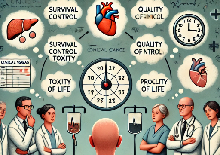 K. Ribi, N. Kalbermatten, M. Eicher, F. Strasser
Towards a novel approach guiding the decision-making process for anticancer treatment in patients with advanced cancer: framework for systemic anticancer treatment with palliative intent
Patient-centered cancer care, Advanced cancer decision-making, Stepwise decisional process, Palliative care domains, Illness understanding in oncology, Symptom control in cancer, End-of-life preparation, Patient-physician interaction, SACT-PI Decision Fra
Patient-centered decisions in advanced cancer care demand a step-wise decisional process, not a single decision act. The decision process includes key palliative care domains, e.g. illness understanding, symptom control, or end-of-life preparation. Patients' attitudes, beliefs, hopes, patient-ph…
Jun 1st • 25 mins read

 Envision Pharma Group
Patient involvement: A must-have in medicine development, but is it being overlooked in a cost-constrained environment?
patient engagement in pharma, patient-centric drug development, life sciences industry innovation, patient insights in medicine, regulatory compliance in patient engagement, patient involvement in clinical trials, benefits of patient advocacy, patient-cen
The life sciences industry is in a constant state of advancement, bringing more and more groundbreaking medicines, cutting-edge technologies, and innovative solutions to market. Amidst these rapid changes, patients remain at the heart of these scientific developments. In recent decades, the l…
May 9th • 5 mins read
 Robbe Saesen, Mieke Van Hemelrijck, Jan Bogaerts, Christopher M. Booth, Jan J. Cornelissen, Andre Dekker, Elizabeth A. Eisenhauer, André Freitas, Alessandro Gronchi, Miguel A. Hernán, Frank Hulstaert, Piet Ost, Petr Szturz, Helena M. Verkooijen, Michael W
Defining the role of real-world data in cancer clinical research: The position of the
real-world data, real-world evidence, randomised, pragmatic trials, cancer, clinical research, add-on cohorts
Real-World Data (RWD) are increasingly used in cancer clinical research as an alternative evidence source. RWD studies primarily involve observational data, which offer insights into real-world conditions but may have quality limitations. Some research questions necessitate Randomized Controlled…
Mar 20th • 10 mins read
 G. Zarkavelis A.L. Amylidi C. Verbaanderd N.I. Cherny Y. Metaxas E.G.E. de Vries P. Zygoura T. Amaral K. Jordan M. Strijbos U. Dafni N. Latino M. Galotti F. Lordick R. Giuliani F. Pignatti G. Pentheroudakis
Off-label despite high-level evidence: a clinical practice review of commonly used off-patent cancer medicines
off-label, ESMO-MCBS, EMA, cancer, ESMO Clinical Practice Guidelines
Several 'old' cancer medicines remain off-label despite strong scientific evidence supporting their use in specific settings. Off-label prescriptions often carry administrative and legal burdens for physicians, affecting workflows and potentially patient access to safe and effective therapies. R…
Nov 14th • 21 mins read
 Garth W. Strohbehn, MD, MPhil, Allen S. Lichter, MD and Mark J. Ratain, MD
US Government Payer-Funded Trials to Address Oncology's Drug-Dosing Conundrum: A Congressional Call to Action?
ORF, NCTN, dosing, clinical trials, FDA
Since the mid-20th century, cancer drug development has been driven by the "more is better" assumption, seeking the maximum tolerated dose in early trials. The FDA's Oncology Center of Excellence (OCE) Project Optimus (2021) requires dose optimization for new oncology drugs, but this does not…
Feb 13th • 5 mins read
 Neil Carleton and Priscilla F. McAuliffe
Are the chronological age cutoffs used in clinical oncology guidelines biologically meaningful?
Age, cutoffs, clinical oncology guide, biomarkerslines
Age is a significant risk factor for cancer, influencing tumour biology, treatment recommendations, and therapy response. Breast cancer incidence peaks around 70 years of age, with over one-third of diagnoses in this age group. Clinical guidelines vary in defining "older" patients, using …
Dec 1st • 4 mins read
 Sarah M. Dermody, Andrew G. Shuman
Implications of Research Biopsies in Clinical Trials
biopsies, clinical trials, oncology
Increased interest in noninvasive testing for treatment monitoring, tumor burden estimation, and disease recurrence prediction. Lower-risk research specimens and liquid biopsies (blood, saliva, urine) offer alternatives to invasive biopsies. Liquid biopsies present new privacy and risk considera…
Aug 31st • 2 mins read
 Kyle A. Dymanus BS, Mohit Butaney MBBS, Diana E. Magee MD, MPH, MSc, Amanda E. Hird MD, MSc, Amy N. Luckenbaugh MD, Merry W. Ma MD, PhD, Mary E. Hall MD, Heather L. Huelster MD, Aaron A. Laviana MD, MBA, Nancy B. Davis MD, Martha K. Terris MD, Zachary Kla
Assessment of gender representation in clinical trials leading to FDA approval for oncology therapeutics between 2014 and 2019: A systematic review-based cohort study
clinical trials, drug approval, health care disparities, medical oncology, sexism
Gender representation in oncology clinical trials varies by cancer type, with women often underrepresented compared to national cancer incidence. Despite FDA guidelines from June 2015 requiring consideration of biological variables like sex in research designs, disparities persist. Women continu…
Jun 23rd • 8 mins read
 Mohamed Elmeliegy PhD, Derek Z. Yang BS, Engie Salama PharmD, Kourosh Parivar MPharm, Diane D. Wang PhD
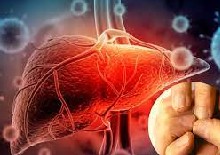
Discordance Between Child-Pugh and National Cancer Institute Classifications for Hepatic Dysfunction: Implications on Dosing Recommendations for Oncology Compounds
FDA, hepatic dysfunction, child-pugh, national cancer institute, dosing, oncology compounds
The FDA and European Medicines Agency recommend using Child-Pugh classification for pharmacokinetic evaluation in noncancer subjects with hepatic impairment (HI). Dosing recommendations for oncology compounds for patients with HI are commonly based on Child-Pugh classification. In oncology …
Jul 20th • 18 mins read
 Envision Pharma Group
AI-powered real-world evidence: Strategically enhancing value and access
Oncology, Clinical Development, Targeted Therapy, Immunotherapy, Genomic Profiling, CAR-T Cell Therapy, Precision Medicine
Real-world evidence (RWE) complements traditional randomized controlled trials by providing insights from diverse data sources, helping healthcare decision-makers with coverage, reimbursement, and treatment guidelines. Artificial intelligence (AI) and natural language processing (NLP) are pivotal…
Aug 22nd • 5 mins read
 Cornelius F Waller & Adriano Friganovi´c
Biosimilars in oncology: key role of nurses in patient education
biologics, biosimilars, cancer care, nurse
Biosimilars can reduce costs and improve access to cancer therapies, but unfamiliarity may hinder their adoption. Nurses, as trusted healthcare providers, are crucial in educating patients about biosimilars. Biosimilars are highly regulated and offer benefits comparable to existing biologic…
Jun 15th • 10 mins read
 Nidal Al-Huniti, Yan Feng, Jingyu (Jerry) Yu, Zheng Lu, Mario Nagase, Diansong Zhou, Jennifer Sheng
Tumor Growth Dynamic Modeling in Oncology Drug Development and Regulatory Approval: Past, Present, and Future Opportunities
tumor growth, drug developement, drug approval, TGD, MIDD, PDUFA
Model-informed drug development (MIDD) has advanced rapidly in recent years, especially in oncology. The Prescription Drug User Fee Act (PDUFA) VI includes commitments to enhance MIDD. Tumor growth dynamic (TGD) modeling is a key MIDD approach used to accelerate drug development, support new dru…
Jun 26th • 18 mins read