
Results for 'oncology clinical trial'

 Bridget Rasmusson
Positioning Yourself to Become an MSL in 2022
MSL role, clinical background, academic background, research background, industry, MSL Society, conference, scientific expert, therapeutic expertise, pharma companies
After attending the MSL Society’s 9th annual conference in Vegas Last week, I have taken some time to reflect on inquiries our team received about how to effectively step into the MSL role from a clinical, academic, or research background. Industry is a tough nut to crack, but it is absolutely…
Dec 21st • 10 mins read

 iNIZIO
Transforming oncology: Five frontiers driving progress in cancer care
From biomarker-driven breakthroughs to AI-powered early detection and a renewed commitment to equity and patient centricity, the past 12 months have seen major strides across cancer research, treatment, and communication. At Inizio, we’ve had a front-row seat to this transformation, supporting…
May 16th • 5 mins read
 B. Gyawali, E. G. E. de Vries, U. Dafni, T. Amaral, J. Barriuso, J. Bogaerts, A. Calles, G. Curigliano, C. Gomez-Roca, B. Kiesewetter, S. Oosting, A. Passaro, G. Pentheroudakis, M. Piccart, F. Roitberg, J. Tabernero, N. Tarazona, D. Trapani, R. Wester, G.
Biases in study design, implementation, and data analysis that distort the appraisal of clinical benefit and ESMO-Magnitude of Clinical Benefit Scale (ESMO-MCBS) scoring
ESMO-MCBS, bias, clinical trial design, clinical trial implementation, clinical trial reporting, clinical trial analysis
The ESMO-MCBS is a tool used for scoring the clinical benefit of cancer medicines as reported in clinical trials, assuming valid research methodologies and quality implementation. The tool's effectiveness is compromised by studies with flawed design, implementation, or data analysis, w…
Apr 20th • 8 mins read
 Kushal T. Kadakia, MSc, Malke Asaad, MD, Erica Adlakha, MS, Michael J. Overman, MD, Cristina M. Checka, MD, and Anaeze C. Offodile II, MD, MPH
Virtual Clinical Trials in Oncology-Overview, Challenges, Policy Considerations, and Future Directions
Virtual, Clinical trials, policy, analytics, telemedicine
The COVID-19 pandemic has significantly impacted clinical research, particularly in oncology, by accelerating the adoption of virtual clinical trials. These trials can address challenges such as high costs and participant burdens associated with traditional trials. Virtual Clinical Trials: Utiliz…
Apr 8th • 4 mins read
 Jayson L. Parker, Sebnem S. Kuzulugil, Kirill Pereverzev, Stephen Mac, Gilberto Lopes, Zain Shah, Ashini Weerasinghe, Daniel Rubinger, Adam Falconi, Ayse Bener, Bora Caglayan, Rohan Tangri, Nicholas Mitsakakis
Does biomarker use in oncology improve clinical trial failure risk? A large-scale analysis
biomarker, clinical trial, failure, analysis, NSCLC, oncology
Data from clinical trials across four oncology indications (breast cancer, NSCLC, melanoma, and colorectal cancer) from 1998 to 2017 were analyzed to assess drug approval likelihood based on biomarker status. Using multi-state Markov models, which describe stochastic processes, the study…
Feb 23rd • 8 mins read
 Thakur, Sayanta & Lahiry, Sandeep
Accelerated drug approvals in oncology: Pros and cons
Clinical study, drug approval, medical oncology
The summary of the content highlights the success of the accelerated approval process, especially for oncology drugs. Key points include: The rise of accelerated approval processes is significant, particularly in oncology. The use of surrogate endpoints and their validation has been debated. Th…
Sep 14th • 4 mins read
 E.M. Ray, L.A. Carey, K.E. Reeder-Hayes
Leveraging existing data to contextualize phase II clinical trial findings in oncology
HER2, phase II trials, oncology, iDFS, EBC, early stage breast cancer
In the USA, over 250,000 women are diagnosed with early-stage breast cancer (EBC) yearly, with up to 30% having HER2 amplification. The standard care for HER2-positive EBC involves chemotherapy plus HER2-directed therapy for one year. The phase II Adjuvant Paclitaxel and Trastuzumab (APT) tr…
Sep 21st • 3 mins read
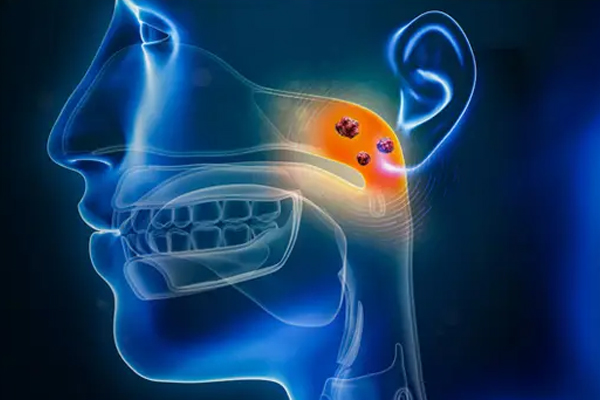 Yuan Zhang, Xu Liu, Ying-Qin Li, Ling-Long Tang, Lei Chen, Jun Ma
A Field Test of Major Value Frameworks in Chemotherapy of Nasopharyngeal Carcinoma-To Know, Then to Measure
value framework, European Society for Medical Oncology, Magnitude of Clinical Benefit Scale, American Society of Clinical Oncology, drug therapy, nasopharyngeal neoplasms
The European Society for Medical Oncology (ESMO) and the American Society of Clinical Oncology (ASCO) have developed frameworks to evaluate cancer treatments, particularly for nasopharyngeal carcinoma. A study compared these frameworks using data from 15 randomized controlled trials of systemic c…
Aug 12th • 10 mins read
 Ramez Kouzy , Joseph Abi Jaoude , Walker Mainwaring , Timothy A. Lin , Austin B. Miller , Amit Jethanandani , Andres F. Espinoza , Vivek Verma , Clifton D. Fuller , Bruce D. Minsky , Claus Rödel , Cullen M. Taniguchi , Ethan B. Ludmir
Professional Medical Writer Assistance in Oncology Clinical Trials
PMW usage, phase III oncology trials, professional medical writer assistance
The use of professional medical writers (PMWs) in oncologic phase III randomized controlled trials (RCTs) has been historically low, but recent data on their usage is limited. This study aimed to quantify the usage of PMWs in cancer-specific phase III RCTs by analyzing trial manuscripts on Clinic…
Sep 17th • 7 mins read
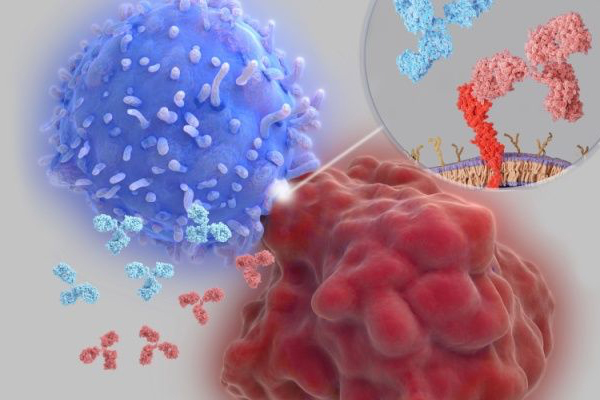 Fei Liang, Sheng Zhang, Qin Wang, Wenfeng Li
Clinical benefit of immune checkpoint inhibitors approved by US Food and Drug Administration
Randomized trials, Clinical benefits, Immune checkpoint inhibitors, Cancer, Food and drug administration agency
The study evaluates the clinical benefits of immune checkpoint inhibitors using the ESMO-MCBS and ASCO VF scales. 18 indications for these inhibitors were approved based on RCTs conducted between 2011 and 2018. All indications meet the ESMO-MCBS 1.1 threshold for meaningful bene…
Aug 31st • 16 mins read
 Stefanie Broes, Robbe Saesen, Denis Lacombe, Isabelle Huys
Past, Current, and Future Cancer Clinical Research Collaborations: The Case of the European Organisation for Research and Treatment of Cancer
European organisation for Research and Treatment of Cancer, EORTC, clinical research
Collaborations between academic institutions and industry have led to significant scientific breakthroughs in pharmaceutical research, particularly in the discovery phase. The role of multi-stakeholder partnerships in the clinical development of anticancer medicines requires further clarification…
Aug 16th • 8 mins read
 Jaques van Heerden, MD, Mohamed Zaghloul, MD, Anouk Neven, MSc, Teresa de Rojas, MD, PhD, Jennifer Geel, MD, Catherine Patte, MD, Joyce Balagadde-Kambugu, MD, Peter Hesseling, MD, Francine Tchintseme, MD, Eric Bouffet, MD, and Laila Hessissen, MD
Pediatric Oncology Clinical Trials and Collaborative Research in Africa: Current Landscape and Future Perspectives
pediatric oncology, clinical trials, research, Africa, collaborative research
Current childhood cancer survival rates in African countries range from 8.1% to 30.3%. The review focuses on pediatric oncology trials in Africa, highlighting challenges and suggesting research collaboration opportunities. Data were collected from the SIOP global mapping survey, ClinicalT…
Aug 7th • 10 mins read
 Mateusz T. Wasylewski, Karolina Strzebonska, Magdalena Koperny, Maciej Polak, Jonathan Kimmelman, Marcin Waligora
Clinical development success rates and social value of pediatric Phase 1 trials in oncology
pediatric oncology, clinical development, trials, success rates
Pediatric Phase 1 trials in oncology aim to assess social value, focusing on rates of approval, transition to further phases, and citation in research. The study analyzed trials from 2004 to 2013, utilizing data from FDA, EMA, ClinicalTrials.gov, EU Clinical Trials Register, and Google Scholar. …
Jun 21st • 28 mins read
 Dylan V Neel, David S Shulman, Clement Ma, Florence Bourgeois, Steven G DuBois
Sponsorship of oncology clinical trials in the United States according to age of eligibility
clinical trials, industry, oncology, pediatric, sponsorship
The sponsorship mix of trials relevant to young people with cancer has not been well-documented, which may impact policies and regulations in pediatric cancer drug development. An analysis of interventional trials in the U.S. from 2007 to 2018 was conducted using the ClinicalTrials.gov registry, …
Apr 29th • 8 mins read
 Ashley Woolmore , Dirk Arnold , Jean‐Yves Blay , Christian Buske , Alfredo Carrato , Winald Gerritsen , Marc Peeters , Jesus Garcia‐Foncillas , David Kerr
The Oncology Data Network (ODN): Methodology, Challenges, and Achievements
The oncology data network, ODN
The Oncology Data Network (ODN) aims to create a collaborative infrastructure for precision medicine, established in over seven European countries with 124 cancer centers. The ODN collects concise data on cancer medicine use, adhering to EU GDPR regulations, and has a central European Data Wareho…
May 21st • 8 mins read
 Sean X Zhang, MSc , Dean Fergusson, PhD , Jonathan Kimmelman, PhD
Proportion of Patients in Phase I Oncology Trials Receiving Treatments That Are Ultimately Approved
cancer, biological markers, phase 1 clinical trials, drug approval, medical oncology, united states food and drug administration guidelines, adverse event, national comprehensive cancer network, American society of clinical oncology
Phase I oncology trials are often considered a therapeutic option, but this claim is primarily based on surrogate measures like objective response rates. A systematic search was conducted to evaluate the therapeutic value of phase I cancer trial participation, focusing on the likelihood of patien…
Apr 1st • 14 mins read
 Barbara Kiesewetter , Nathan I Cherny, Nicolas Boissel, Francesco Cerisoli, Urania Dafni, Elisabeth G E de Vries, Paolo Ghia, Nicola Gökbuget, Verónica González-Calle, Brian Huntly, Ulrich Jäger, Nicola Jane Latino, Jean-Yves Douillard, Luca Malcovati, Ma
EHA evaluation of the ESMO-Magnitude of Clinical Benefit Scale version 1.1 (ESMO-MCBS v1.1) for hematological malignancies
ESMO, hematological malignancies, Clinical benefit scale, EHA
The ESMO-MCBS v1.1 has not been previously validated for haematological malignancies, but it is being explored to avoid duplication of efforts. A feasibility test was conducted using 80 studies related to various haematological malignancies such as acute and chronic leukaemia, lymphoma, myel…
Jan 20th • 20 mins read
 Carrie Printz
Precision medicine for pediatric cancers lags behind that for adult cancers: Citing hurdles in clinical trial recruitment and drug development, researchers are exploring ways to close gaps
Precision Medicine, pediatrics, clinical trials
Pediatric precision oncology faces challenges due to the rarity of pediatric cancers, which limits research and funding compared to adult cancers. Dr. Katherine Janeway highlights the need for more validated pre-clinical models and pharmaceutical interest in pediatric cancers. The RACE Act, effe…
Jan 9th • 2 mins read
 Massimo Di Maio, Francesco Perrone, Pierfranco Conte
Real-World Evidence in Oncology: Opportunities and Limitations
Real‐world evidence, Clinical trials, Cancer treatments
Randomized controlled trials (RCTs) are traditionally viewed as the gold standard for evaluating treatment efficacy, but real-world evidence (RWE) is gaining traction in oncology for addressing questions not fully answered by RCTs. RWE is derived from health records, cancer registries, and other …
Dec 24th • 8 mins read
 Jonathan H. Cheng, Justin W. Tiulim, Sheng Zhou, Anthony El-Khoueiry and Jorge Nieva
Mandatory Research Biopsy Requirements Delay Initiation of Clinical Trials
biomarker, clinical trial, targeted therapy, immunotherapy, mandatory research biopsy, oncology, lung cancer, head and neck cancer
The study investigates the impact of requiring fresh tumor tissue biopsies for enrollment in clinical trials. Key findings include: Requiring biopsies significantly increases screening duration, with a median of 30 days compared to 14 days for trials without biopsy requirements (p < 0.0001). …
Oct 18th • 10 mins read