
Results for 'policy'

 Kushal T. Kadakia, MSc, Malke Asaad, MD, Erica Adlakha, MS, Michael J. Overman, MD, Cristina M. Checka, MD, and Anaeze C. Offodile II, MD, MPH
Virtual Clinical Trials in Oncology-Overview, Challenges, Policy Considerations, and Future Directions
Virtual, Clinical trials, policy, analytics, telemedicine
The COVID-19 pandemic has significantly impacted clinical research, particularly in oncology, by accelerating the adoption of virtual clinical trials. These trials can address challenges such as high costs and participant burdens associated with traditional trials. Virtual Clinical Trials: Utiliz…
Apr 8th • 4 mins read
 Ioannis Tsagakis and Maria Papatriantafyllou
Safeguarding cancer research funding by European charities amidst the COVID-19 pandemic
cancer charities, cancer research, COVID‐19, funding, pandemic, policy, AECC, AIRC
The COVID-19 outbreak has had a significant impact on cancer research and cancer care. European cancer charities are required to reassess their strategies. There is a need to safeguard income and provide support to cancer researchers. It is crucial to sustain cancer research funding during thes…
Nov 22nd • 3 mins read
 Gracy Crane, John C. W. Lim, Churn-Shiouh Gau, Jipan Xie & Laura Chu
The challenges and opportunities in using real-world data to drive advances in healthcare in East Asia: expert panel recommendations
Real-world data, real-world evidenc, East Asia, policy recommendations, decision-making support, East Asia, expert, RWD, RWE
Recommend approaches to improve the use of Real-World Evidence (RWE) in healthcare decision-making in East Asia and beyond. Encourage large-scale collaborations involving diverse stakeholders. Key stakeholders include government agencies, hospitals, research organizations, patient groups, and th…
Jun 28th • 13 mins read
 Fernando Petracci, Chirag Ghai, Andrew Pangilinan, Luis Alberto Suarez, Roberto Uehara, Marwan Ghosn
Use of real-world evidence for oncology clinical decision making in emerging economies
Asia-Pacific, effectiveness, electronic database, health policy, Latin America, Middle East, randomized clinical trials, real-world data, real-world evidence, safety
Despite RWE being a relatively nascent concept in emerging economies, we have seen evidence of increasing use over the past 5 years growing at 11% per year. That said, barriers specific to emerging economies need to be overcome through collaborative efforts, with regulatory agencies at the forefront…
May 5th • 12 mins read
 Omer Ben‐Aharon, Racheli Magnezi, Moshe Leshno, and Daniel A. Goldstein
Median Survival or Mean Survival: Which Measure Is the Most Appropriate for Patients, Physicians, and Policymakers?
Immunotherapies, Median survival, Mean survival, Weibull
The average Restricted Mean Survival Time (RMST) for modern oncology agents approved by the FDA from 2013 to 2017 is 3.6 months, which is lower than the average median Overall Survival (OS) or Progression-Free Survival (PFS) of 4.6 months. When assuming a Weibull distribution post-trial, t…
Jul 18th • 15 mins read

 Tom Caravela
MSL People Skills: Top 10 Tips for Better Engagement
Medical Science Liaison, relationship building, business etiquette, social awareness, emotional intelligence, professional interactions, Dale Carnegie, How to Win Friends and Influence People, professional brand, engagement tips, digital communication
The cornerstone of the Medical Science Liaison role is RELATIONSHIP BUILDING. In a nutshell, better engagement equates to better relationships. The purpose of this article is to address the importance of proper business etiquette and the impact of social awareness and emotional intelligence as it re…
Apr 20th • 8 mins read

 iNIZIO
Transforming oncology: Five frontiers driving progress in cancer care
From biomarker-driven breakthroughs to AI-powered early detection and a renewed commitment to equity and patient centricity, the past 12 months have seen major strides across cancer research, treatment, and communication. At Inizio, we’ve had a front-row seat to this transformation, supporting…
May 16th • 5 mins read
 iNIZIO
Expert perspectives live from ASCO® 2025
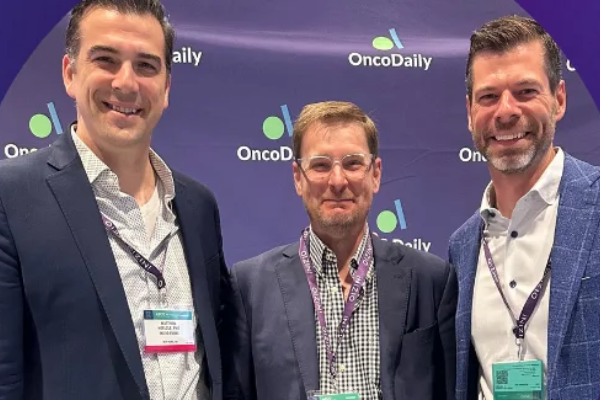
At the 2025 ASCO® Annual Meeting, three of our experts sat down with OncoDaily to share their unique perspectives in oncology – from amplifying the patient voice to unlocking real-world impact through data and AI. Watch the videos below. Matthew Hoelzle | Medical strategy, AI and real-wor…
Jul 2nd • 1 min read
 Emmanuelle Jacqueta, Ghania Kerouani-Lafayeb, Francoise Grudeb, Sergio Goncalvesb, Annie Lorenced, Florence Turcryb, Liora Brunelb, Laetitia Belgodereb, Adrien Monardc, Gaëlle Guyaderb, Lotfi Boudalib, Nicolas Albin
Comparative study on anticancer drug access times between FDA, EMA and the French temporary authorisation for use program over 13 years
Innovation, Expanded access, Early drug access, Cancer, FDA, EMA
Cancer incidence is increasing globally, and while medical innovation significantly impacts patient survival, the drug development process is lengthy, often exceeding 10 years for marketing authorization (MA). France has implemented the ATU (Temporary Authorization for Use) program to facil…
Apr 7th • 12 mins read
 Dylan V Neel, David S Shulman, Clement Ma, Florence Bourgeois, Steven G DuBois
Sponsorship of oncology clinical trials in the United States according to age of eligibility
clinical trials, industry, oncology, pediatric, sponsorship
The sponsorship mix of trials relevant to young people with cancer has not been well-documented, which may impact policies and regulations in pediatric cancer drug development. An analysis of interventional trials in the U.S. from 2007 to 2018 was conducted using the ClinicalTrials.gov registry, …
Apr 29th • 8 mins read
 Ashley Woolmore , Dirk Arnold , Jean‐Yves Blay , Christian Buske , Alfredo Carrato , Winald Gerritsen , Marc Peeters , Jesus Garcia‐Foncillas , David Kerr
The Oncology Data Network (ODN): Methodology, Challenges, and Achievements
The oncology data network, ODN
The Oncology Data Network (ODN) aims to create a collaborative infrastructure for precision medicine, established in over seven European countries with 124 cancer centers. The ODN collects concise data on cancer medicine use, adhering to EU GDPR regulations, and has a central European Data Wareho…
May 21st • 8 mins read
 Sean X Zhang, MSc , Dean Fergusson, PhD , Jonathan Kimmelman, PhD
Proportion of Patients in Phase I Oncology Trials Receiving Treatments That Are Ultimately Approved
cancer, biological markers, phase 1 clinical trials, drug approval, medical oncology, united states food and drug administration guidelines, adverse event, national comprehensive cancer network, American society of clinical oncology
Phase I oncology trials are often considered a therapeutic option, but this claim is primarily based on surrogate measures like objective response rates. A systematic search was conducted to evaluate the therapeutic value of phase I cancer trial participation, focusing on the likelihood of patien…
Apr 1st • 14 mins read
 Barbara Kiesewetter , Nathan I Cherny, Nicolas Boissel, Francesco Cerisoli, Urania Dafni, Elisabeth G E de Vries, Paolo Ghia, Nicola Gökbuget, Verónica González-Calle, Brian Huntly, Ulrich Jäger, Nicola Jane Latino, Jean-Yves Douillard, Luca Malcovati, Ma
EHA evaluation of the ESMO-Magnitude of Clinical Benefit Scale version 1.1 (ESMO-MCBS v1.1) for hematological malignancies
ESMO, hematological malignancies, Clinical benefit scale, EHA
The ESMO-MCBS v1.1 has not been previously validated for haematological malignancies, but it is being explored to avoid duplication of efforts. A feasibility test was conducted using 80 studies related to various haematological malignancies such as acute and chronic leukaemia, lymphoma, myel…
Jan 20th • 20 mins read
 Kelvin Chan, Seungree Nam, Bill Evans, Claire de Oliveira Alexandra Chambers, Scott Gavura, Jeffrey Hoch, Rebecca E Mercer, Wei Fang Dai, Jaclyn Beca, Mina Tadrous, Wanrudee Isaranuwatchai
Developing a framework to incorporate real-world evidence in cancer drug funding decisions: the Canadian Real-world Evidence for Value of Cancer Drugs (CanREValue) collaboration
RWD, Canadian Real World Evidence, cancer drug, funding, framework
Oncology therapy is becoming more expensive, challenging the affordability and sustainability of drug programs globally. Health technology assessment organizations use clinical trials for drug funding decisions, which may not reflect real-world outcomes. The Canadian Real-world Evidence for Valu…
Jan 7th • 8 mins read
 Massimo Di Maio, Francesco Perrone, Pierfranco Conte
Real-World Evidence in Oncology: Opportunities and Limitations
Real‐world evidence, Clinical trials, Cancer treatments
Randomized controlled trials (RCTs) are traditionally viewed as the gold standard for evaluating treatment efficacy, but real-world evidence (RWE) is gaining traction in oncology for addressing questions not fully answered by RCTs. RWE is derived from health records, cancer registries, and other …
Dec 24th • 8 mins read
 Jakub P. Hlávka, PhD, Pei-Jung Lin, PhD, Peter J. Neumann, ScD
Outcome measures for oncology alternative payment models: practical considerations and recommendations
This paper focuses on synthesizing existing research on quality measures in oncology, particularly outcome-based quality measures which are underutilized. A set of "core outcome measures" is proposed for future oncology alternative payment models (APM). The study design includes a literature rev…
Dec 1st • 10 mins read
 YuQian Liu, PharmD
Uptake of Oncology Biosimilars: Managed Care Strategies to Improve Value-Based Care Systems
biosimilars in oncology, cost-effective cancer care, healthcare education, bioequivalence studies, biosimilar adoption, cancer treatment protocols
Biosimilars offer a cost-effective alternative in oncology, expanding access to cancer care, but their utilization is inconsistent due to varying perceptions and knowledge among stakeholders. Increasing the adoption of biosimilars requires improved education and understanding among healthcare pro…
Jul 7th • 25 mins read
 Diana Romero
Research Highlights In The News From ESMO
ESMO, cancer treatment optimization, NICHE-2 trial, SWOG S1801 trial, IPSOS trial, oncology research
The ESMO 2022 Congress took place in Paris in September 2022, with around 29,000 delegates, including 5,000 online participants. The program featured a broad range of topics, including clinical trial results, translational studies, and health policy initiatives. A key theme discussed was…
Sep 30th • 10 mins read
 E Dawn Flick, Howard R Terebelo, Susan Fish, Amani Kitali, Vrinda Mahajan, Melissa Nifenecker, Kristen Sullivan, Paul Thaler, Sarah Ussery, David L Grinblatt
The Value of Pharmaceutical Industry-Sponsored Patient Registries in Oncology Clinical Research
registry, oncology, observational study, prospective cohort study, real-world evidence
Oncology patient registries are valuable for generating Real-World Evidence (RWE) due to: Prospective, primary data collection Characterizing smaller patient populations not typically included in clinical trials Providing insights into the rapidly changing disease course Allowing for longitudi…
Jun 7th • 8 mins read
 Kirsten B Goldberg, Gideon M Blumenthal, Amy E McKee and Richard Pazdur
The FDA Oncology Center of Excellence and Precision Medicine
Biomarkers, drugs, hematology, medicine, oncology, precision medicine, regulation
The FDA is exploring real-world evidence to enhance understanding of the long-term safety and efficacy of oncology drugs. Initiatives like the Information Exchange and Data Transformation initiative are building infrastructure for big-data analytics. Additionally, patient-focused programs aim to inc…
Nov 6th • 3 mins read