
Results for 'liver cancer'

 Idine Mousavi, BA; Timothée Olivier, MD; Vinay Prasad, MD, MPH
Cost per Event Averted in Cancer Trials in the Adjuvant Setting From 2018 to 2022
anticancer drugs, adjuvant therapy, FDA approvals, cost per event averted, surrogate endpoints, oncology drug costs
Importance: Evaluating the cost-effectiveness of adjuvant therapies based on the cost per event averted. Objective: To assess the costs per event averted for anticancer drugs approved by the FDA between January 2018 and March 2022. Design, Setting, and Participants: Cross-sectional study of F…
Jun 10th • 30 mins read
 Rajat Thawani, Neha Agrawal, Nicholas F Taflin, Adel Kardosh, Emerson Y Chen
Application of Value Framework to Phase III Trials of Immune Checkpoint Inhibitors in Esophageal and Gastric Cancer
esophageal cancer, gastric cancer, comparative effectiveness research, outcome assessment, antineoplastic agents, immunotherapy
Immunotherapy checkpoint inhibitors are FDA-approved for first-line metastatic esophageal and gastric cancer, but not all scenarios benefit from non-selective chemo-immunotherapy application. ASCO Net Health scores were consistently higher in esophageal cancer trials compared to gastric cancer tr…
Jan 13th • 8 mins read
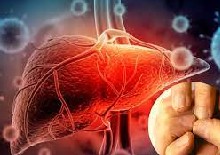 Mohamed Elmeliegy PhD, Derek Z. Yang BS, Engie Salama PharmD, Kourosh Parivar MPharm, Diane D. Wang PhD
Discordance Between Child-Pugh and National Cancer Institute Classifications for Hepatic Dysfunction: Implications on Dosing Recommendations for Oncology Compounds
FDA, hepatic dysfunction, child-pugh, national cancer institute, dosing, oncology compounds
The FDA and European Medicines Agency recommend using Child-Pugh classification for pharmacokinetic evaluation in noncancer subjects with hepatic impairment (HI). Dosing recommendations for oncology compounds for patients with HI are commonly based on Child-Pugh classification. In oncology …
Jul 20th • 18 mins read
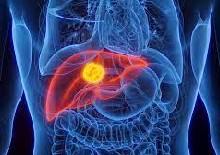 Sean P Martin, Xin Wei Wang
The evolving landscape of precision medicine in primary liver cancer
liver cancer, personalized care, precision medicine
The field of oncology and cancer research is changing. As our understanding of the underlying biology of the disease improves, the one-size-fits-all treatment model has been exposed as inadequate. PLC is among the hardest to treat malignancies and as such carries one of the worst prognoses. While th…
Mar 29th • 3 mins read
 G. Pentheroudakis
Recent eUpdates to the ESMO Clinical Practice Guidelines on hepatocellular carcinoma, cancer of the pancreas, soft tissue and visceral sarcomas, cancer of the prostate and gastric cancer
ESMO, hepatocellular carcinoma, gastric cancer, prostate cancer
The following ESMO Clinical Practice Guidelines have been recently updated with new treatment recommendations for the ESMO Clinical Practice Guidelines on Hepatocellular Carcinoma, Cancer of the Pancreas, Soft Tissue and Visceral Sarcomas, Cancer of the Prostate and Gastric Cancer.
Jun 6th • 2 mins read
 Ajaikumar B Kunnumakkara [email protected], Devivasha Bordoloi, Bethsebie Lalduhsaki Sailo, Nand Kishor Roy, Krishan Kumar Thakur, Kishore Banik, Mehdi Shakibaei, Subash C Gupta, and Bharat B Aggarwal
Cancer drug development: The missing links
Cancer, drugs, patient survival, pre-clinical, clinical, cost
Despite advanced science and technology, cancer incidence is highest in America and Europe. Science and technology alone are not sufficient for treating diseases like cancer. Over 95% of drugs/compounds that show promise in pre-clinical trials fail in phase I clinical trials in humans. Most pre…
Apr 18th • 20 mins read

 iNIZIO
Transforming oncology: Five frontiers driving progress in cancer care
From biomarker-driven breakthroughs to AI-powered early detection and a renewed commitment to equity and patient centricity, the past 12 months have seen major strides across cancer research, treatment, and communication. At Inizio, we’ve had a front-row seat to this transformation, supporting…
May 16th • 5 mins read
 Carrie Printz
Cancer experts point to new advances in research and treatment: A recent report by the American Association for Cancer Research highlights unprecedented successes as well as ongoing challenges in the cancer field
FDA, AACR, immunotherapeutics, immunotherapy, precision therapies, ALK, EGFR, BRAF
Within the last few years, cancer research has made significant strides, leading to the approval of 22 new cancer treatments by the FDA between August 1, 2017, and July 31, 2018. Among these, notable advancements include 14 anticancer therapeutics, such as CAR T-cell therapies for non-Hodgkin lympho…
Apr 1st • 2 mins read
 Adela Rodriguez, Francis Esposito, Helena Oliveres, Ferran Torres and Joan Maurel
Are Quality of Randomized Clinical Trials and ESMO-Magnitude of Clinical Benefit Scale Two Sides of the Same Coin, to Grade Recommendations for Drug Approval?
quality randomized studies, ESMO-MCBS, drug approval
The approval of new cancer drugs by the FDA and EMA is primarily based on positive results from well-designed randomized phase III clinical trials (RCTs). Not all RCTs are analyzed to support drug approval recommendations, highlighting the need for scales to evaluate RCT quality and clinical…
Feb 11th • 3 mins read
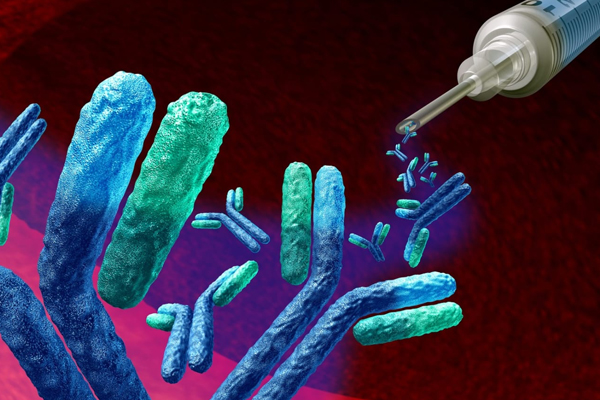 Sonoko Kawakatsu, René Bruno, Matts Kågedal, Chunze Li, Sandhya Girish, Amita Joshi, Benjamin Wu
Confounding factors in exposure–response analyses and mitigation strategies for monoclonal antibodies in oncology
monoclonal antibodies, E-R analyses, tumour growth inhibition, drug development
Dose selection and optimization is crucial in drug development to maximize benefits for all patients. Exposure–response (E-R) analysis is useful for dose-selection strategy, but in oncology, prognostic factors can confound the analysis, especially for monoclonal antibodies. The review addr…
Nov 20th • 12 mins read
 Jaques van Heerden, MD, Mohamed Zaghloul, MD, Anouk Neven, MSc, Teresa de Rojas, MD, PhD, Jennifer Geel, MD, Catherine Patte, MD, Joyce Balagadde-Kambugu, MD, Peter Hesseling, MD, Francine Tchintseme, MD, Eric Bouffet, MD, and Laila Hessissen, MD
Pediatric Oncology Clinical Trials and Collaborative Research in Africa: Current Landscape and Future Perspectives
pediatric oncology, clinical trials, research, Africa, collaborative research
Current childhood cancer survival rates in African countries range from 8.1% to 30.3%. The review focuses on pediatric oncology trials in Africa, highlighting challenges and suggesting research collaboration opportunities. Data were collected from the SIOP global mapping survey, ClinicalT…
Aug 7th • 10 mins read
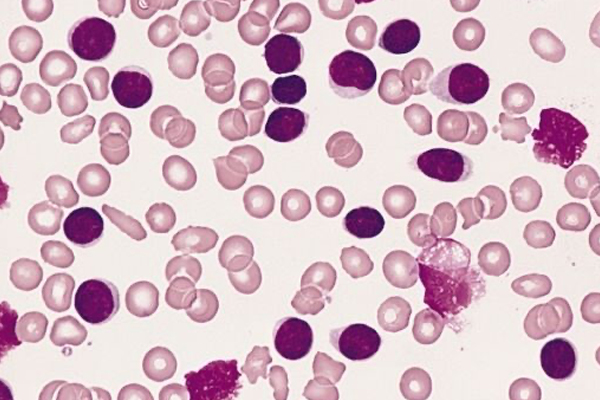 Vishwanath Sathyanarayanan, MD, DM, Christopher R. Flowers, MD, MSc, and Swaminathan P. Iyer, MD, MBBS
Comparison of Access to Novel Drugs for Lymphoma and Chronic Lymphocytic Leukemia Between India and the United States
lymphoma, leukemia, India, United States, biosimiliars
The review examines the costs and access to novel drugs for treating chronic lymphocytic leukemia (CLL) and lymphoma in the United States and India over the last 5 years. Clinical outcomes for patients with hematologic malignancies have improved significantly due to immunotherapeutic and tar…
Jul 21st • 12 mins read

 Envision Pharma Group
Patient involvement: A must-have in medicine development, but is it being overlooked in a cost-constrained environment?
patient engagement in pharma, patient-centric drug development, life sciences industry innovation, patient insights in medicine, regulatory compliance in patient engagement, patient involvement in clinical trials, benefits of patient advocacy, patient-cen
The life sciences industry is in a constant state of advancement, bringing more and more groundbreaking medicines, cutting-edge technologies, and innovative solutions to market. Amidst these rapid changes, patients remain at the heart of these scientific developments. In recent decades, the l…
May 9th • 5 mins read