
Results for 'dosing'
 Garth W. Strohbehn, MD, MPhil, Allen S. Lichter, MD and Mark J. Ratain, MD
US Government Payer-Funded Trials to Address Oncology's Drug-Dosing Conundrum: A Congressional Call to Action?
ORF, NCTN, dosing, clinical trials, FDA
Since the mid-20th century, cancer drug development has been driven by the "more is better" assumption, seeking the maximum tolerated dose in early trials. The FDA's Oncology Center of Excellence (OCE) Project Optimus (2021) requires dose optimization for new oncology drugs, but this does not…
Feb 13th • 5 mins read
 Timothy Qi, Tyler Dunlap, Yanguang Cao1
Embracing Project Optimus: Can we Leverage Evolutionary Theory to Optimize Dosing in Oncology?
oncology, precision medicine, tumor evolution, dosing, FDA
Focus on tumor evolution, which leads to therapeutic failure and disease relapse. Emphasis on the effect of tumor evolution on the exposure-response (E-R) relationships of oncology drugs. Advocacy for prioritizing tumor evolution during clinical development to select optimal doses for targeted t…
Sep 2nd • 10 mins read
 Mohamed Elmeliegy PhD, Derek Z. Yang BS, Engie Salama PharmD, Kourosh Parivar MPharm, Diane D. Wang PhD
Discordance Between Child-Pugh and National Cancer Institute Classifications for Hepatic Dysfunction: Implications on Dosing Recommendations for Oncology Compounds
FDA, hepatic dysfunction, child-pugh, national cancer institute, dosing, oncology compounds
The FDA and European Medicines Agency recommend using Child-Pugh classification for pharmacokinetic evaluation in noncancer subjects with hepatic impairment (HI). Dosing recommendations for oncology compounds for patients with HI are commonly based on Child-Pugh classification. In oncology …
Jul 20th • 18 mins read
 Sonoko Kawakatsu, René Bruno, Matts Kågedal, Chunze Li, Sandhya Girish, Amita Joshi, Benjamin Wu
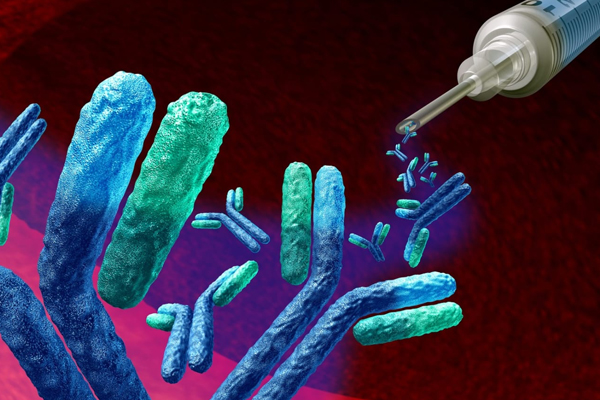
Confounding factors in exposure–response analyses and mitigation strategies for monoclonal antibodies in oncology
monoclonal antibodies, E-R analyses, tumour growth inhibition, drug development
Dose selection and optimization is crucial in drug development to maximize benefits for all patients. Exposure–response (E-R) analysis is useful for dose-selection strategy, but in oncology, prognostic factors can confound the analysis, especially for monoclonal antibodies. The review addr…
Nov 20th • 12 mins read
 Nidal Al-Huniti, Yan Feng, Jingyu (Jerry) Yu, Zheng Lu, Mario Nagase, Diansong Zhou, Jennifer Sheng
Tumor Growth Dynamic Modeling in Oncology Drug Development and Regulatory Approval: Past, Present, and Future Opportunities
tumor growth, drug developement, drug approval, TGD, MIDD, PDUFA
Model-informed drug development (MIDD) has advanced rapidly in recent years, especially in oncology. The Prescription Drug User Fee Act (PDUFA) VI includes commitments to enhance MIDD. Tumor growth dynamic (TGD) modeling is a key MIDD approach used to accelerate drug development, support new dru…
Jun 26th • 18 mins read
 Sean X Zhang, MSc , Dean Fergusson, PhD , Jonathan Kimmelman, PhD
Proportion of Patients in Phase I Oncology Trials Receiving Treatments That Are Ultimately Approved
cancer, biological markers, phase 1 clinical trials, drug approval, medical oncology, united states food and drug administration guidelines, adverse event, national comprehensive cancer network, American society of clinical oncology
Phase I oncology trials are often considered a therapeutic option, but this claim is primarily based on surrogate measures like objective response rates. A systematic search was conducted to evaluate the therapeutic value of phase I cancer trial participation, focusing on the likelihood of patien…
Apr 1st • 14 mins read
 Mariam A. Ahmed, Chirag Patel, Nicole Drezner, Whitney Helms, Weiwei Tan, Daria Stypinski
Pivotal Considerations for Optimal Deployment of Healthy Volunteers in Oncology Drug Development
drug development, healthy, volunteers, oncology clinical trial
The content discusses the challenges and opportunities in conducting oncology clinical trials, particularly focusing on trials involving normal healthy volunteers (NHVs) and patients with cancer. There are over 5,000 ongoing oncology trials in the U.S., with low enrollment rates among adult c…
Oct 31st • 20 mins read
 Fernando Petracci, Chirag Ghai, Andrew Pangilinan, Luis Alberto Suarez, Roberto Uehara, Marwan Ghosn
Use of real-world evidence for oncology clinical decision making in emerging economies
Asia-Pacific, effectiveness, electronic database, health policy, Latin America, Middle East, randomized clinical trials, real-world data, real-world evidence, safety
Despite RWE being a relatively nascent concept in emerging economies, we have seen evidence of increasing use over the past 5 years growing at 11% per year. That said, barriers specific to emerging economies need to be overcome through collaborative efforts, with regulatory agencies at the forefront…
May 5th • 12 mins read
 Michael Z. Liao, Dan Lu, Matts Kågedal, Dale Miles, Divya Samineni, Stephanie N. Liu, Chunze Li
Model-Informed Therapeutic Dose Optimization Strategies for Antibody-Drug Conjugates in Oncology: What Can We Learn From US Food and Drug Administration-Approved Antibody-Drug Conjugates?
antibody, antibody-drug conjugates, ADC's, FDA
ADCs (Antibody-Drug Conjugates) are a promising area in oncology drug development, improving the therapeutic window of potent, nonspecific payloads by conjugating them to antibodies. The FDA has approved nine ADCs for solid and hematological tumors, with several more showing promising clinical ac…
Apr 26th • 15 mins read
 Laleh Amiri-Kordestani & Richard Pazdur
Oncology approvals in 2020: a year of firsts in the midst of a pandemic
oncology approvals, pandemic, FDA, biosimilar, oncology, COVID-19
Despite the global COVID-19 pandemic, 2020 was an active year for the OCE. In 2021, the OCE is engaging in Project 2025, an effort to envision the next 5 years in oncology drug development and leverage our resources and talents to improve collaboration with stakeholders to move the field forward as …
Jan 29th • 4 mins read
 Emerson Y. Chen, MD, Vikram Raghunathan, MD, Vinay Prasad, MD, MPH
An Overview of Cancer Drugs Approved by the US Food and Drug Administration Based on the Surrogate End Point of Response Rate
FDA, RR, drug approvels, OS
Many cancer drugs come to market based on single-arm studies with modest RRs. Most of these drugs are tested in studies of over 100 patients prior to approval. Most (60%) of these approvals lack randomized clinical trials during the life cycle of the product. Our findings suggest greater room for th…
May 28th • 5 mins read