
Results for '2018'

 Jingjing Yu, Isabelle Ragueneau-Majlessi
In Vitro-to-In Vivo Extrapolation of Transporter Inhibition Data for Drugs Approved by the US Food and Drug Administration in 2018
In Vitro-to-In Vivo, Transporter Inhibition Data, Drug Approval, FDA, 2018
The analysis focuses on inhibition transporter data from New Drug Applications approved by the FDA in 2018, involving 42 drugs. Key points include: In vitro-to-in vivo predictions were available for nine recommended transporters. 29 parent drugs and 16 metabolites inhibited at least one transpor…
Jan 25th • 12 mins read
 Hagop M. Kantarjian MD, Ferran Prat PhD, JD, David P. Steensma MD, Razelle Kurzrock MD, David J. Stewart MD, Mikkael A. Sekeres MD, Joseph Leveque MD
Cancer research in the United States: A critical review of current status and proposal for alternative models
cancer research, research, NCI, Drug industry-driven research model, development in research, 2018 cancer model
Early research focused on tissue histology and animal models, with surgery and radiotherapy as primary treatments. 1950s: Introduction of cell lines (e.g., HeLa cells) and first anticancer drugs (antifolates, thiopurines), leading to the establishment of the Cancer Chemotherapy National Service C…
May 14th • 10 mins read
 Idine Mousavi, BA; Timothée Olivier, MD; Vinay Prasad, MD, MPH
Cost per Event Averted in Cancer Trials in the Adjuvant Setting From 2018 to 2022
anticancer drugs, adjuvant therapy, FDA approvals, cost per event averted, surrogate endpoints, oncology drug costs
Importance: Evaluating the cost-effectiveness of adjuvant therapies based on the cost per event averted. Objective: To assess the costs per event averted for anticancer drugs approved by the FDA between January 2018 and March 2022. Design, Setting, and Participants: Cross-sectional study of F…
Jun 10th • 30 mins read
 Patrick C. DeMartino, MD, Miloš D. Miljković, MD, MS, Vinay Prasad, MD
Potential Cost Implications for All US Food and Drug Administration Oncology Drug Approvals in 2018
FDA, drug approvals, oncology, cancer drugs
The new, expensive cancer drugs approved by the FDA in 2018 could drastically increase U.S. healthcare spending if widely adopted, but industry forecasts suggest low-level market uptake, maintaining current budget trends. The healthcare system's financial stability partially relies on many eligible …
Aug 31st • 7 mins read

 Tom Caravela
MSL Retention – What Matters Most
digital marketing, search engine optimization, keyword analysis, content strategy, online visibility
As the Medical Science Liaison job market continues to become more and more competitive, attrition rates continue to increase as a result. One of the most common questions I receive from MSL Directors and Medical Affairs leaders is, “What can we do to keep our MSLs loyal and motivated?” …
Mar 15th • 2 mins read
 Tom Caravela
MSL Evolution: New Trends and Titles That May Emerge
digital marketing strategies, SEO best practices, content marketing tips, social media optimization, keyword research tools
The COVID-19 pandemic has clearly had a profound impact on Field Medical Affairs. Has the Medical Science Liaison role changed forever? What new titles, trends and opportunities might emerge as a result of the new age for Field Medical and the evolution of the Medical Science Liaison? Is virtual en…
Apr 5th • 1 min read
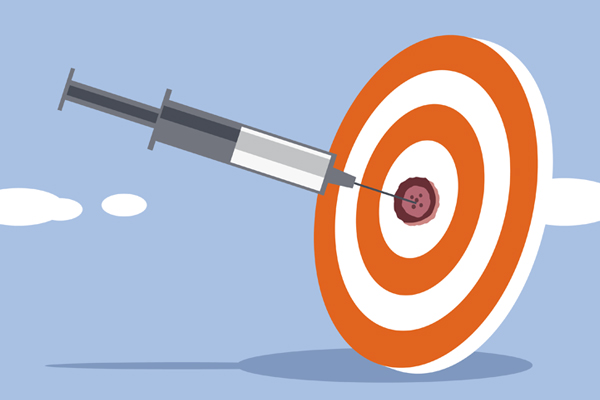 A. Haslam, M.S. Kim, V. Prasad
Updated estimates of eligibility for and response to genome-targeted oncology drugs among US cancer patients, 2006-2020
genome-targeted therapy, eligibility, response
Recent studies have been conducted to update the estimates of eligibility and response rates to genome-targeted therapies among US cancer patients, reflecting data up to 2020. The number of FDA-approved drugs targeting genetic indications has increased significantly since prior assessments. …
Apr 20th • 7 mins read
 Emmanuelle Jacqueta, Ghania Kerouani-Lafayeb, Francoise Grudeb, Sergio Goncalvesb, Annie Lorenced, Florence Turcryb, Liora Brunelb, Laetitia Belgodereb, Adrien Monardc, Gaëlle Guyaderb, Lotfi Boudalib, Nicolas Albin
Comparative study on anticancer drug access times between FDA, EMA and the French temporary authorisation for use program over 13 years
Innovation, Expanded access, Early drug access, Cancer, FDA, EMA
Cancer incidence is increasing globally, and while medical innovation significantly impacts patient survival, the drug development process is lengthy, often exceeding 10 years for marketing authorization (MA). France has implemented the ATU (Temporary Authorization for Use) program to facil…
Apr 7th • 12 mins read
 Jayson L. Parker, Sebnem S. Kuzulugil, Kirill Pereverzev, Stephen Mac, Gilberto Lopes, Zain Shah, Ashini Weerasinghe, Daniel Rubinger, Adam Falconi, Ayse Bener, Bora Caglayan, Rohan Tangri, Nicholas Mitsakakis
Does biomarker use in oncology improve clinical trial failure risk? A large-scale analysis
biomarker, clinical trial, failure, analysis, NSCLC, oncology
Data from clinical trials across four oncology indications (breast cancer, NSCLC, melanoma, and colorectal cancer) from 1998 to 2017 were analyzed to assess drug approval likelihood based on biomarker status. Using multi-state Markov models, which describe stochastic processes, the study…
Feb 23rd • 8 mins read
 Avi Cherla, MSc; Huseyin Naci, MHS, PhD; Aaron S. Kesselheim, MD, JD, MPH; Bishal Gyawali, MD, PhD; Elias Mossialos, MD, PhD
Assessment of Coverage in England of Cancer Drugs Qualifying for US Food and Drug Administration Accelerated Approval
FDA, NHS, accelerated approval, NICE, clinical trial findings
The study evaluates the acceptance and coverage of FDA-accelerated approved cancer drugs by the National Health Service (NHS) in England, focusing on decisions made by the National Institute for Health and Care Excellence (NICE). A total of 93 cancer drug indications received accelerated approval…
Feb 22nd • 10 mins read
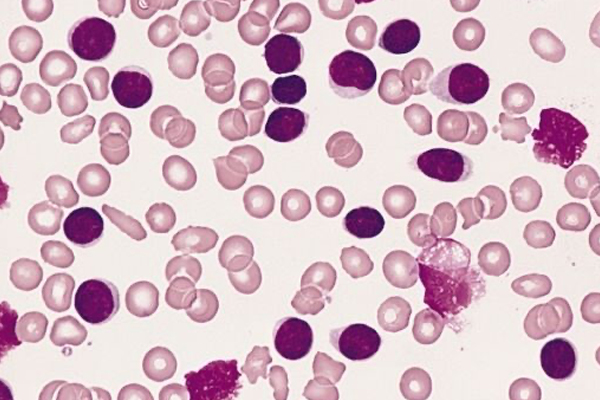 Vishwanath Sathyanarayanan, MD, DM, Christopher R. Flowers, MD, MSc, and Swaminathan P. Iyer, MD, MBBS
Comparison of Access to Novel Drugs for Lymphoma and Chronic Lymphocytic Leukemia Between India and the United States
lymphoma, leukemia, India, United States, biosimiliars
The review examines the costs and access to novel drugs for treating chronic lymphocytic leukemia (CLL) and lymphoma in the United States and India over the last 5 years. Clinical outcomes for patients with hematologic malignancies have improved significantly due to immunotherapeutic and tar…
Jul 21st • 12 mins read
 Guillaume Beinse, MD, Virgile Tellier, Valentin Charvet, MSc, Eric Deutsch, MD, PhD, Isabelle Borget, PharmD, PhD, Christophe Massard, MD, PhD., Antoine Hollebecque, MD, PhD, and Loic Verlingue, MD
Prediction of Drug Approval After Phase I Clinical Trials in Oncology: RESOLVED2
clinical trials, RESOLVED2, FDA
Challenge in Oncology Drug Development: The field is currently facing an increase in the number of antineoplastic agents (ANAs) entering phase I clinical trials (P1CTs) and a high attrition rate for final FDA approval. Objective: Development of a machine learning algorithm, RESOLVED2, to …
Sep 20th • 12 mins read
 Natansh D. Modi, BPharm; Ahmad Y. Abuhelwa, PhD; Ross A. McKinnon, PhD
Audit of Data Sharing by Pharmaceutical Companies for Anticancer Medicines Approved by the US Food and Drug Administration
IPD sharing, clinical trial transparency, FDA anticancer approvals, oncology trials, data accessibility, pharmaceutical industry
The study examines the eligibility for individual participant data (IPD) sharing from clinical trials that supported the FDA approval of anticancer medicines over the past 10 years. Of the 304 trials analyzed, 136 (45%) were eligible for IPD sharing, while 168 (55%) were not. IPD sharing rates v…
Jul 28th • 20 mins read
 Diana Brixner, PhD, RPh [email protected], Joseph Biskupiak, PhD, MBA, Gary Oderda, PharmD, MPH, Douglas Burgoyne, PharmD, FAMCP, Daniel C Malone, RPh, PhD, FAMCP, Bhakti Arondekar, PhD, MBA, and Alexander Niyazov, PharmD, RPh, MPH
Payer perceptions of the use of real-world evidence in oncology-based decision making
real world evidence, RWE, RCT, randomized controlled trials, payer, perceptions, FDA
US payers find real-world evidence (RWE) useful for improving costs and outcomes in oncology, and for making formulary decisions. Payers prioritize comparative effectiveness evidence but also value other RWE types such as total cost of care, burden of illness, treatment patterns, and economic…
Aug 1st • 12 mins read
 Bruce A. Feinberg, DO Ajeet Gajra, MBBS, MD Marjorie E. Zettler, PhD, MPH Todd D. Phillips, PharmD Eli G. Phillips Jr., PharmD, JD Jonathan K. Kish, PhD, MPH
Use of Real-World Evidence to Support FDA Approval of Oncology Drugs
Food and Drug Administration, oncology drug approval, real-world data, real-world evidence
Real-world evidence (RWE) has gained increased attention in recent years as a complement to traditional clinical trials. The use of RWE to establish the efficacy of oncology drugs for Food and Drug Administration (FDA) approval has not been described. In this paper, we review 5 recent examples whe…
Sep 14th • 16 mins read
 Chad Williamson, MBA, MS Leanne Berger, BS, Thomas P. Sullivan, BS SHOW
Addressing oncologists' gaps in the use of biosimilar products
biosimilar products, FDA, biosimilars, COA
The study highlights significant gaps in knowledge, competence, and confidence among oncologists regarding biosimilars. Educational interventions notably improved clinicians' understanding of the biosimilar approval process and familiarity with approved products. Post-education familiarity with the …
Jun 19th • 5 mins read
 Jonathan H Seltzer MD, MBA, MA, Gary Gintant PhD, Laleh Amiri-Kordestani MD, Jack Singer MD, Luana Pesco Koplowitz MD, PhD, Javid J Moslehi MD, Ana Barac MD, PhD, Anthony F. Yu MD
Assessing cardiac safety in oncology drug development
Cardiac safety, cardiovascular, FDA, CSRC
The Cardiac Safety Research Consortium (CSRC) highlighted the importance of addressing cardiovascular (CV) adverse effects in oncology drug development during a Think Tank meeting in October 2017. With over 1,600 cancer therapies in development, the cardiovascular toxicity of cancer treatments has b…
Jun 12th • 12 mins read
 G. Pentheroudakis
Recent eUpdates to the ESMO Clinical Practice Guidelines on hepatocellular carcinoma, cancer of the pancreas, soft tissue and visceral sarcomas, cancer of the prostate and gastric cancer
ESMO, hepatocellular carcinoma, gastric cancer, prostate cancer
The following ESMO Clinical Practice Guidelines have been recently updated with new treatment recommendations for the ESMO Clinical Practice Guidelines on Hepatocellular Carcinoma, Cancer of the Pancreas, Soft Tissue and Visceral Sarcomas, Cancer of the Prostate and Gastric Cancer.
Jun 6th • 2 mins read
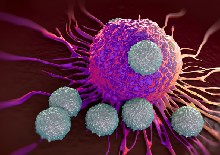 Alyson Haslam, PhD; Vinay Prasad, MD, MPH
Estimation of the Percentage of US Patients With Cancer Who Are Eligible for and Respond to Checkpoint Inhibitor Immunotherapy Drugs
checkpoint inhibitor drugs, immunotherapy drugs, FDA, checkpoint, inhibitor, drugs
If FDA-approved checkpoint inhibitor drugs are universally available, we estimated that the proportion of US patients with cancer who could be eligible for such drugs is approximately 44%, while approximately 13% have a response to these drugs. These estimates, although modest, are better than estim…
May 3rd • 10 mins read
 Carrie Printz
Cancer experts point to new advances in research and treatment: A recent report by the American Association for Cancer Research highlights unprecedented successes as well as ongoing challenges in the cancer field
FDA, AACR, immunotherapeutics, immunotherapy, precision therapies, ALK, EGFR, BRAF
Within the last few years, cancer research has made significant strides, leading to the approval of 22 new cancer treatments by the FDA between August 1, 2017, and July 31, 2018. Among these, notable advancements include 14 anticancer therapeutics, such as CAR T-cell therapies for non-Hodgkin lympho…
Apr 1st • 2 mins read