
Results for 'United states food and drug administration'
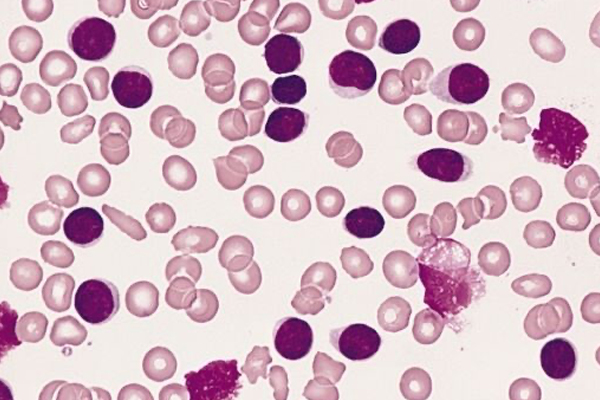
 Vishwanath Sathyanarayanan, MD, DM, Christopher R. Flowers, MD, MSc, and Swaminathan P. Iyer, MD, MBBS
Comparison of Access to Novel Drugs for Lymphoma and Chronic Lymphocytic Leukemia Between India and the United States
lymphoma, leukemia, India, United States, biosimiliars
The review examines the costs and access to novel drugs for treating chronic lymphocytic leukemia (CLL) and lymphoma in the United States and India over the last 5 years. Clinical outcomes for patients with hematologic malignancies have improved significantly due to immunotherapeutic and tar…
Jul 21st • 12 mins read
 Sean X Zhang, MSc , Dean Fergusson, PhD , Jonathan Kimmelman, PhD
Proportion of Patients in Phase I Oncology Trials Receiving Treatments That Are Ultimately Approved
cancer, biological markers, phase 1 clinical trials, drug approval, medical oncology, united states food and drug administration guidelines, adverse event, national comprehensive cancer network, American society of clinical oncology
Phase I oncology trials are often considered a therapeutic option, but this claim is primarily based on surrogate measures like objective response rates. A systematic search was conducted to evaluate the therapeutic value of phase I cancer trial participation, focusing on the likelihood of patien…
Apr 1st • 14 mins read
 Kenji Omae, Yuki Kataoka, Yasushi Tsujimoto, Yusuke Tsutsumi, Yosuke Yamamoto, Shunichi Fukuhara, Toshi A Furukawa
Publication statuses of clinical trials supporting FDA-approved immune checkpoint inhibitors: a meta-epidemiological investigation
Anticancer drugs, Clinical trials, Drug approval, Immune checkpoint inhibitors, Publications, United states food and drug administration
The study investigates the publication status of clinical trials for anticancer drugs approved by the FDA, focusing on immune checkpoint inhibitors (ICPis). Data from ICPis approved between 2011 and 2014 was analyzed, revealing that 58% of ICPis trials were published within two years …
Oct 24th • 18 mins read
 R. Kurzrock, L.A. Gurski, R.W. Carlson, D.S. Ettinger, S.M. Horwitz, S.K. Kumar, L. Million, M. von Mehren, A.B. Benson III
Level of evidence used in recommendations by the National Comprehensive Cancer Network (NCCN) guidelines beyond Food and Drug Administration approvals
oncology, guidelines, off-label drug use
The analysis reviewed 113 NCCN recommendations, focusing on 44 off-label uses of drugs. 14 of these off-label recommendations were later FDA-approved or backed by RCT data. 13 recommendations were minor extrapolations from the FDA label or actually on-label. Of the remaining 17 extrapolations…
Aug 2nd • 8 mins read
 Meena N Murugappan, PharmD, MPH, PhD(c), Bellinda L King-Kallimanis, PhD, Gregory H Reaman, MD, Vishal Bhatnagar, MD, Erica G Horodniceanu, MPH, Najat Bouchkouj, MD, Paul G Kluetz, MD
Patient-Reported Outcomes in Pediatric Cancer Registration Trials: A US Food and Drug Administration Perspective
cancer, pediatrics, product labeling, united states food and drug administration, childhood cancer, denosumab, surrogate endpoints, adverse event, patient self-report, pediatric oncology, selumetinib, benefit-risk assessment, tisagenlecleucel, statistica
PROs have been feasible to collect from patients as young as 7 years old and were included in trials from 2013 onward. PROs were used as exploratory endpoints in four product applications but not included in product labeling. To include PRO data in FDA labeling, early interaction with the FDA, c…
Apr 30th • 12 mins read
 Bruce A. Feinberg, DO Ajeet Gajra, MBBS, MD Marjorie E. Zettler, PhD, MPH Todd D. Phillips, PharmD Eli G. Phillips Jr., PharmD, JD Jonathan K. Kish, PhD, MPH
Use of Real-World Evidence to Support FDA Approval of Oncology Drugs
Food and Drug Administration, oncology drug approval, real-world data, real-world evidence
Real-world evidence (RWE) has gained increased attention in recent years as a complement to traditional clinical trials. The use of RWE to establish the efficacy of oncology drugs for Food and Drug Administration (FDA) approval has not been described. In this paper, we review 5 recent examples whe…
Sep 14th • 16 mins read
 MAXIMILIAN SALCHER-KONRAD, HUSEYIN NACI, COURTNEY DAVIS
Approval of Cancer Drugs With Uncertain Therapeutic Value: A Comparison of Regulatory Decisions in Europe and the United States
pharmaceutical regulation, US Food and Drug Administration, European Medicines Agency, cancer.
Regulatory agencies often have limited evidence on the clinical benefits and harms of new drugs at the time of market approval. There is frequent discordance between the FDA and EMA in regulatory outcomes and the use of special regulatory pathways for cancer drugs of uncertain therapeutic value. …
Oct 6th • 48 mins read
 Thomas J. Hwang, Liat Orenstein, Steven G. DuBois, Katherine A. Janeway, Florence T. Bourgeois
Pediatric Trials for Cancer Therapies With Targets Potentially Relevant to Pediatric Cancers
antineoplastic agents, adult, child, pediatrics, continental population groups, united states food and drug administration, statutes and laws, cancer therapy, childhood cancer, molecular target
The Research to Accelerate Cures and Equity (RACE) for Children Act was enacted in 2017. The Act authorizes the US FDA to require pediatric studies for new cancer drugs with molecular targets relevant to pediatric cancers. An examination of 78 adult cancer drugs approved by the FDA from 2007 to …
Oct 29th • 10 mins read
 Janice Bonsu, MPH, Lawrence Charles, MD, Avirup Guha, MD, Farrukh Awan, MD, MS, Jennifer Woyach, MD, Vedat Yildiz, MS, Lai Wei, PhD, Hani Jneid, MD, and Daniel Addison, MD
Representation of Patients With Cardiovascular Disease in Pivotal Cancer Clinical Trials
cancer, cardiovascular disease, clinical trials, underrepresentation, United States Food and Drug Administration, FDA, CVD
Heart failure (28%) was the most common exclusion criterion in clinical trials for FDA-approved anticancer therapies, followed by prior coronary disease and arrhythmias (27% and 23%, respectively). Over one-third of trials excluded patients with underlying cardiovascular disease (CVD), including mor…
Mar 18th • 3 mins read
 Di Maria Jiang, Kelvin K. W. Chan, Raymond W. Jang, Christopher Booth, Geoffrey Liu, Eitan Amir, Robert Mason, Louis Everest, Elena Elimova
Anticancer drugs approved by the Food and Drug Administration for gastrointestinal malignancies: Clinical benefit and price considerations
ASCO VF, ESMO MCBS, gastrointestinal malignancies, anticancer drugs
Drugs approved between 2006 and 2017 were analyzed. Clinical benefit was measured using ESMO Magnitude of Clinical Benefit Scale and ASCO Value Framework. 16 GI cancer drugs received FDA approval for 24 indications, including various drug classes such as monoclonal antibodies, oral targeted …
Mar 7th • 8 mins read
 Jiaxi Zhou, Jonathon Vallejo, Paul Kluetz, Richard Pazdur, Tamy Kim, Patricia Keegan, Ann Farrell, Julia A Beaver, Rajeshwari Sridhara
Overview of Oncology and Hematology Drug Approvals at US Food and Drug Administration Between 2008 and 2016
drug approval, medical oncology, united states food and drug administration, hematology, surrogate endpoints, marketing, accelerated approval
Background: An overview was conducted of oncology products reviewed by the Office of Oncology Drug Products (OODP) at the FDA for marketing approval between July 2005 and December 2007. The study aims to understand the impact of post-2007 changes in laws, regulations, and organizational structure …
Aug 4th • 15 mins read
 Ariadna Tibau, Consolación Molto, Alberto Ocana, Arnoud J Templeton, Luis P Del Carpio, Joseph C Del Paggio, Agustí Barnadas, Christopher M Booth, Eitan Amir
Magnitude of Clinical Benefit of Cancer Drugs Approved by the US Food and Drug Administration
antineoplastic agents, immunologic adjuvants, pharmaceutical adjuvants, phase 3 clinical trials, drug approval, drug labeling, medical oncology, united states food and drug administration, diagnosis, palliative care, surrogate endpoints, weight measureme
Regulatory agencies assess drug safety and efficacy, but thresholds may differ from those accepted by clinicians . Only 43.8% of RCTs for FDA-approved drugs meet the ESMO-MCBS threshold for meaningful benefit, reflecting potential softening of FDA standards. Encouraging trends include an increas…
Dec 13th • 7 mins read
 Ali Raza Khaki
Loose Regulatory Standards Portend a New Era of Imprecision Oncology
precision oncology, TMB-high, homologous recombination deficiency, Olaparib, pembrolizumab
Precision oncology aims to tailor cancer treatment based on genetic understanding, revolutionizing oncology. The FDA has been approving drugs under precision oncology with broad indications that may not align with studied populations. Examples include the approval of pembrolizumab for a wide ran…
Dec 1st • 4 mins read
 Eric Q. Konnick
The regulatory landscape of precision oncology laboratory medicine in the United States - Perspective on the past 5 years and considerations for future regulation
Oncology, Regulation, Testing, LDTs, FDA, CLIA, CMS
The regulatory landscape for precision oncology in the United States is complex, involving multiple governmental agencies with varying jurisdictions. Since 2014, several regulatory proposals have been introduced following the FDA's draft guidance on laboratory-developed tests. There are ongoing …
May 22nd • 8 mins read
 Audrey D. Zhang, Jeremy Puthumana, Nicholas S. Downing, MD
Assessment of Clinical Trials Supporting US Food and Drug Administration Approval of Novel Therapeutic Agents, 1995-2017
clinical trials, FDA, Novel therapeutic agents, biologics
The number of special regulatory programs for drug and biologic approvals by the FDA has increased since the introduction of the Fast Track designation in 1988. This study analyzed 273 new drugs and biologics approved by the FDA for 339 indications across three periods: 1995-1997, 2005-2007,…
Apr 21st • 20 mins read
 S.F. Oosting, J. Barriuso, A. Bottomley, M. Galotti, B. Gyawali, B. Kiesewetter, N.J. Latino, F. Martinelli, M. Pe, G. Pentheroudakis, F. Roitberg, H. Vachon, E.G.E. de Vries, M. Piccart, N.I. Cherny
Methodological and reporting standards for quality-of-life data eligible for European Society for Medical Oncology-Magnitude of Clinical Benefit Scale
Benefit Scale, MCBS, Quality of Life, Health Assessment, Oncology Scale, Cancer Guidelines, Treatment Evaluation, Medicine Scoring
The ESMO-Magnitude of Clinical Benefit Scale (ESMO-MCBS) was introduced in 2015 to standardize the assessment of clinical benefits from cancer treatments. ESMO-MCBS helps in health-technology assessment, especially given the increasing number of treatment options and rising cancer care costs. Ne…
Apr 1st • 30 mins read
 John Devin Peipert, PhD, Karen Kaiser, PhD, Sheetal Kircher, MD, George J. Greene, PhD, Sara Shaunfield, PhD, Katherina Hauner, PhD, David Cella, PhD, and Daniel K. Mroczek, PhD
Medical Oncologists’ Knowledge and Perspectives on the Use of Biosimilars in the United States
oncologist, biosimilars, ASCO, FDA, RSP
Most oncologists (88%) treated patients with biosimilars, and 63% reported that biosimilars were required at their institutions. Approximately half (52%) correctly identified that biosimilars are not the same as generic medicines. Common barriers to biosimilar use included concerns abou…
Jan 9th • 9 mins read
 Melissa H. Roberts & Gary T. Ferguson
Real-World Evidence: Bridging Gaps in Evidence to Guide Payer Decisions
Real world evidence, RWE, payer decisions, RWD
Randomized controlled trials (RCTs) are preferred by payers for health technology assessments and coverage decisions, but they may not reflect real-world clinical practice. Real-world evidence (RWE) from observational studies can fill evidence gaps not addressed by RCTs and is valuable for payer …
Jun 18th • 6 mins read