
Results for 'toxicity'

 Daan Geert Knapen, Nathan I. Cherny, Panagiota Zygoura, Nicola Jane Latino, Jean-Yves Douillard, Urania Dafni, Elisabeth G.E. de Vries, Derk Jan de Groot
Lessons learnt from scoring adjuvant colon cancer trials and meta-analyses using the ESMO-Magnitude of Clinical Benefit Scale V.1.1
ESMO-MCBS, early colon cancer, toxicity, adjuvant chemotherapy, quality of life
Form 1 of the European Society for Medical Oncology-Magnitude of Clinical Benefit Scale (ESMO-MCBS) is used to grade therapies with curative intent. The study aimed to evaluate the applicability and reasonableness of the ESMO-MCBS scores in early colon cancer. Adjuvant studies were sourced f…
Sep 6th • 17 mins read
 Sonoko Kawakatsu, René Bruno, Matts Kågedal, Chunze Li, Sandhya Girish, Amita Joshi, Benjamin Wu
Confounding factors in exposure–response analyses and mitigation strategies for monoclonal antibodies in oncology
monoclonal antibodies, E-R analyses, tumour growth inhibition, drug development
Dose selection and optimization is crucial in drug development to maximize benefits for all patients. Exposure–response (E-R) analysis is useful for dose-selection strategy, but in oncology, prognostic factors can confound the analysis, especially for monoclonal antibodies. The review addr…
Nov 20th • 12 mins read
 E.M. Ray, L.A. Carey, K.E. Reeder-Hayes
Leveraging existing data to contextualize phase II clinical trial findings in oncology
HER2, phase II trials, oncology, iDFS, EBC, early stage breast cancer
In the USA, over 250,000 women are diagnosed with early-stage breast cancer (EBC) yearly, with up to 30% having HER2 amplification. The standard care for HER2-positive EBC involves chemotherapy plus HER2-directed therapy for one year. The phase II Adjuvant Paclitaxel and Trastuzumab (APT) tr…
Sep 21st • 3 mins read
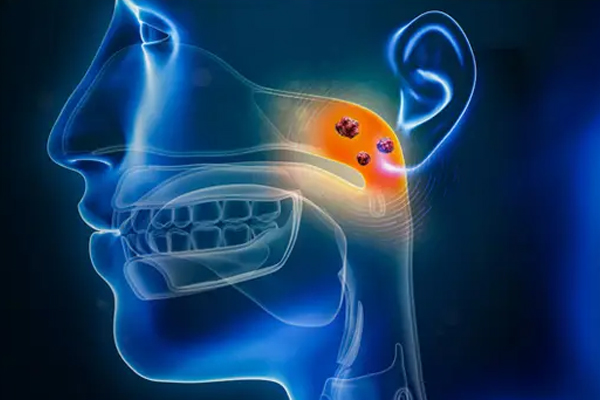 Yuan Zhang, Xu Liu, Ying-Qin Li, Ling-Long Tang, Lei Chen, Jun Ma
A Field Test of Major Value Frameworks in Chemotherapy of Nasopharyngeal Carcinoma-To Know, Then to Measure
value framework, European Society for Medical Oncology, Magnitude of Clinical Benefit Scale, American Society of Clinical Oncology, drug therapy, nasopharyngeal neoplasms
The European Society for Medical Oncology (ESMO) and the American Society of Clinical Oncology (ASCO) have developed frameworks to evaluate cancer treatments, particularly for nasopharyngeal carcinoma. A study compared these frameworks using data from 15 randomized controlled trials of systemic c…
Aug 12th • 10 mins read
 Muneera Al Hussain
Comment on: Oncology research in Saudi Arabia over a 10-year period. A synopsis
oncology research, saudi arabia
An article in the Saudi Medical Journal by Alghamdi et al reported on oncology research progress in Saudi Arabia. The study compared research quantity and quality between two periods: 2008-2012 and 2013-2017. There was an increase in the amount of research over time, but quality and scienti…
Jun 24th • 3 mins read
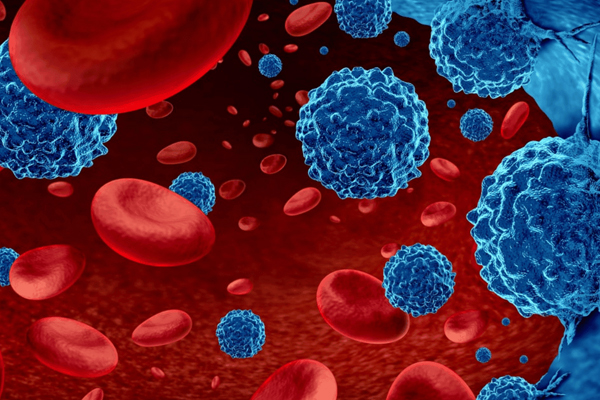 Barbara Kiesewetter , Nathan I Cherny, Nicolas Boissel, Francesco Cerisoli, Urania Dafni, Elisabeth G E de Vries, Paolo Ghia, Nicola Gökbuget, Verónica González-Calle, Brian Huntly, Ulrich Jäger, Nicola Jane Latino, Jean-Yves Douillard, Luca Malcovati, Ma
EHA evaluation of the ESMO-Magnitude of Clinical Benefit Scale version 1.1 (ESMO-MCBS v1.1) for hematological malignancies
ESMO, hematological malignancies, Clinical benefit scale, EHA
The ESMO-MCBS v1.1 has not been previously validated for haematological malignancies, but it is being explored to avoid duplication of efforts. A feasibility test was conducted using 80 studies related to various haematological malignancies such as acute and chronic leukaemia, lymphoma, myel…
Jan 20th • 20 mins read
 Mythili Shastry, PhD, Avantika Gupta, PhD, Sarat Chandarlapaty, MD, PhD, Matthew Young, MD, Thomas Powles, MD, and Erika Hamilton, MD
Rise of Antibody-Drug Conjugates: The Present and Future
Antibody-drug conjugates (ADCs) are designed for targeted cancer therapy by delivering cytotoxic agents specifically to tumor cells, minimizing harm to normal cells. ADCs have evolved significantly since the first FDA approval in 2000, with advancements leading to approvals for various tumor type…
May 25th • 20 mins read
 Mariam A. Ahmed, Chirag Patel, Nicole Drezner, Whitney Helms, Weiwei Tan, Daria Stypinski
Pivotal Considerations for Optimal Deployment of Healthy Volunteers in Oncology Drug Development
drug development, healthy, volunteers, oncology clinical trial
The content discusses the challenges and opportunities in conducting oncology clinical trials, particularly focusing on trials involving normal healthy volunteers (NHVs) and patients with cancer. There are over 5,000 ongoing oncology trials in the U.S., with low enrollment rates among adult c…
Oct 31st • 20 mins read
 Kenji Omae, Yuki Kataoka, Yasushi Tsujimoto, Yusuke Tsutsumi, Yosuke Yamamoto, Shunichi Fukuhara, Toshi A Furukawa
Publication statuses of clinical trials supporting FDA-approved immune checkpoint inhibitors: a meta-epidemiological investigation
Anticancer drugs, Clinical trials, Drug approval, Immune checkpoint inhibitors, Publications, United states food and drug administration
The study investigates the publication status of clinical trials for anticancer drugs approved by the FDA, focusing on immune checkpoint inhibitors (ICPis). Data from ICPis approved between 2011 and 2014 was analyzed, revealing that 58% of ICPis trials were published within two years …
Oct 24th • 18 mins read
 Christopher A. Busch, MSC; Johannes Krisam, PhD; Meinhard Kieser, PhD
A Comprehensive Comparison of Additional Benefit Assessment Methods Applied by Institute for Quality and Efficiency in Health Care and European Society for Medical Oncology for Time-to-Event Endpoints After Significant Phase III Trials—A Simulation Study
cancer drug trials, time-to-event endpoints, overall survival, added benefit assessment, IQWiG, hazard ratio thresholds
The European Society for Medical Oncology (ESMO) and the German Institute for Quality and Efficiency in Health Care (IQWiG) use different methods for assessing additional benefit in cancer therapies, with ESMO considering both relative and absolute benefits, while IQWiG focuses on the upper limit …
Jun 28th • 30 mins read
 Anushka Walia, Alyson Haslam, Vinay Prasad
FDA validation of surrogate endpoints in oncology: 2005–2022
FDA drug approval, surrogate endpoints, oncology drugs, overall survival correlation, clinical trials analysis, drug approval guidelines
ere are summary bullets based on the provided text: The FDA has increasingly approved oncologic drugs based on surrogate endpoints, which often lack a demonstrated correlation with clinically meaningful outcomes like overall survival. A review of FDA analyses from 2005 to 2022 examined the valid…
Dec 1st • 20 mins read
 S.F. Oosting, J. Barriuso, A. Bottomley, M. Galotti, B. Gyawali, B. Kiesewetter, N.J. Latino, F. Martinelli, M. Pe, G. Pentheroudakis, F. Roitberg, H. Vachon, E.G.E. de Vries, M. Piccart, N.I. Cherny
Methodological and reporting standards for quality-of-life data eligible for European Society for Medical Oncology-Magnitude of Clinical Benefit Scale
Benefit Scale, MCBS, Quality of Life, Health Assessment, Oncology Scale, Cancer Guidelines, Treatment Evaluation, Medicine Scoring
The ESMO-Magnitude of Clinical Benefit Scale (ESMO-MCBS) was introduced in 2015 to standardize the assessment of clinical benefits from cancer treatments. ESMO-MCBS helps in health-technology assessment, especially given the increasing number of treatment options and rising cancer care costs. Ne…
Apr 1st • 30 mins read
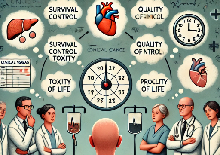 K. Ribi, N. Kalbermatten, M. Eicher, F. Strasser
Towards a novel approach guiding the decision-making process for anticancer treatment in patients with advanced cancer: framework for systemic anticancer treatment with palliative intent
Patient-centered cancer care, Advanced cancer decision-making, Stepwise decisional process, Palliative care domains, Illness understanding in oncology, Symptom control in cancer, End-of-life preparation, Patient-physician interaction, SACT-PI Decision Fra
Patient-centered decisions in advanced cancer care demand a step-wise decisional process, not a single decision act. The decision process includes key palliative care domains, e.g. illness understanding, symptom control, or end-of-life preparation. Patients' attitudes, beliefs, hopes, patient-ph…
Jun 1st • 25 mins read
 Gregory S. Calip, PharmD, MPH, PhD, Ivy P. Altomare, MD, Jenny S. Guadamuz, MSPH, PhD
Evaluating External Validity of Oncology Biosimilar Safety Studies
biologics, external validity, FDA, biosimilars, trastuzumab
Biologics are the fastest growing medication class in the US, significantly contributing to healthcare costs. The Biologics Price Competition and Innovation Act of 2009 created an abbreviated approval pathway to make biological products more accessible. A phase 3 randomized trial of SB3, a trast…
Apr 6th • 2 mins read
 Shen Lin, Yaping Huang, Liangliang Dong, Meiyue Li, Yahong Wang, Dian Gu, Wei Wu, Dongni Nian, Shaohong Luo, Xiaoting Huang, Xiongwei Xu and Xiuhua Weng
The correlation between the costs and clinical benefits of PD-1/PD-L1 inhibitors in malignant tumors: An evaluation based on ASCO and ESMO frameworks
PD-1/PD-L1 inhibitors, malignant tumors, ASCO, ESMO, Immune Checkpoint Inhibitors, Gastrointestinal Cancers
Cancer drug innovation has significantly accelerated in the 21st century, with novel drug approvals and expenditures increasing notably. Assessment frameworks ASCO-VF and ESMO-MCBS were used to evaluate the clinical benefit of PD-1/PD-L1 inhibitors, finding that nearly half of the trials met "mea…
Feb 23rd • 9 mins read
 Garth W. Strohbehn, MD, MPhil, Allen S. Lichter, MD and Mark J. Ratain, MD
US Government Payer-Funded Trials to Address Oncology's Drug-Dosing Conundrum: A Congressional Call to Action?
ORF, NCTN, dosing, clinical trials, FDA
Since the mid-20th century, cancer drug development has been driven by the "more is better" assumption, seeking the maximum tolerated dose in early trials. The FDA's Oncology Center of Excellence (OCE) Project Optimus (2021) requires dose optimization for new oncology drugs, but this does not…
Feb 13th • 5 mins read
 Timothy Qi, Tyler Dunlap, Yanguang Cao1
Embracing Project Optimus: Can we Leverage Evolutionary Theory to Optimize Dosing in Oncology?
oncology, precision medicine, tumor evolution, dosing, FDA
Focus on tumor evolution, which leads to therapeutic failure and disease relapse. Emphasis on the effect of tumor evolution on the exposure-response (E-R) relationships of oncology drugs. Advocacy for prioritizing tumor evolution during clinical development to select optimal doses for targeted t…
Sep 2nd • 10 mins read
 Kyle A. Dymanus BS, Mohit Butaney MBBS, Diana E. Magee MD, MPH, MSc, Amanda E. Hird MD, MSc, Amy N. Luckenbaugh MD, Merry W. Ma MD, PhD, Mary E. Hall MD, Heather L. Huelster MD, Aaron A. Laviana MD, MBA, Nancy B. Davis MD, Martha K. Terris MD, Zachary Kla
Assessment of gender representation in clinical trials leading to FDA approval for oncology therapeutics between 2014 and 2019: A systematic review-based cohort study
clinical trials, drug approval, health care disparities, medical oncology, sexism
Gender representation in oncology clinical trials varies by cancer type, with women often underrepresented compared to national cancer incidence. Despite FDA guidelines from June 2015 requiring consideration of biological variables like sex in research designs, disparities persist. Women continu…
Jun 23rd • 8 mins read
 Fernando Petracci, Chirag Ghai, Andrew Pangilinan, Luis Alberto Suarez, Roberto Uehara, Marwan Ghosn
Use of real-world evidence for oncology clinical decision making in emerging economies
Asia-Pacific, effectiveness, electronic database, health policy, Latin America, Middle East, randomized clinical trials, real-world data, real-world evidence, safety
Despite RWE being a relatively nascent concept in emerging economies, we have seen evidence of increasing use over the past 5 years growing at 11% per year. That said, barriers specific to emerging economies need to be overcome through collaborative efforts, with regulatory agencies at the forefront…
May 5th • 12 mins read
 Michael Z. Liao, Dan Lu, Matts Kågedal, Dale Miles, Divya Samineni, Stephanie N. Liu, Chunze Li
Model-Informed Therapeutic Dose Optimization Strategies for Antibody-Drug Conjugates in Oncology: What Can We Learn From US Food and Drug Administration-Approved Antibody-Drug Conjugates?
antibody, antibody-drug conjugates, ADC's, FDA
ADCs (Antibody-Drug Conjugates) are a promising area in oncology drug development, improving the therapeutic window of potent, nonspecific payloads by conjugating them to antibodies. The FDA has approved nine ADCs for solid and hematological tumors, with several more showing promising clinical ac…
Apr 26th • 15 mins read