
Results for 'antibody'
 Mythili Shastry, PhD, Avantika Gupta, PhD, Sarat Chandarlapaty, MD, PhD, Matthew Young, MD, Thomas Powles, MD, and Erika Hamilton, MD
Rise of Antibody-Drug Conjugates: The Present and Future
Antibody-drug conjugates (ADCs) are designed for targeted cancer therapy by delivering cytotoxic agents specifically to tumor cells, minimizing harm to normal cells. ADCs have evolved significantly since the first FDA approval in 2000, with advancements leading to approvals for various tumor type…
May 25th • 20 mins read
 Michael Z. Liao, Dan Lu, Matts Kågedal, Dale Miles, Divya Samineni, Stephanie N. Liu, Chunze Li
Model-Informed Therapeutic Dose Optimization Strategies for Antibody-Drug Conjugates in Oncology: What Can We Learn From US Food and Drug Administration-Approved Antibody-Drug Conjugates?
antibody, antibody-drug conjugates, ADC's, FDA
ADCs (Antibody-Drug Conjugates) are a promising area in oncology drug development, improving the therapeutic window of potent, nonspecific payloads by conjugating them to antibodies. The FDA has approved nine ADCs for solid and hematological tumors, with several more showing promising clinical ac…
Apr 26th • 15 mins read

 iNIZIO
Transforming oncology: Five frontiers driving progress in cancer care
From biomarker-driven breakthroughs to AI-powered early detection and a renewed commitment to equity and patient centricity, the past 12 months have seen major strides across cancer research, treatment, and communication. At Inizio, we’ve had a front-row seat to this transformation, supporting…
May 16th • 5 mins read
 Jorge J. García, Luis E. Raez, Daniel Rosas
A narrative review of biosimilars: a continued journey from the scientific evidence to practice implementation
Biosimilars, interchangeability, extrapolation, immunogenicity
Biologic agents have significantly improved the management of serious health conditions over the last two decades, offering better treatment outcomes and quality of life compared to traditional chemotherapy. The cost of biologic drugs is high, leading to increased healthcare expenses. This mirror…
Aug 3rd • 10 mins read
 Peter N Morcos, Junyi Li, Iraj Hosseini, Chi‐Chung Li
Quantitative Clinical Pharmacology of T‐Cell Engaging Bispecifics: Current Perspectives and Opportunities
quantitative clinical pharmacology, T-Cell, TDB, bispecificss
The pharmacological response of TDBs involves complex interactions between T-cells, tumor cells, and TDBs, posing challenges in understanding pharmacokinetics, tissue distribution, target engagement, and exposure-response relationships. Dosing strategy is crucial for determining the therapeu…
Nov 18th • 15 mins read
 Kenji Omae, Yuki Kataoka, Yasushi Tsujimoto, Yusuke Tsutsumi, Yosuke Yamamoto, Shunichi Fukuhara, Toshi A Furukawa
Publication statuses of clinical trials supporting FDA-approved immune checkpoint inhibitors: a meta-epidemiological investigation
Anticancer drugs, Clinical trials, Drug approval, Immune checkpoint inhibitors, Publications, United states food and drug administration
The study investigates the publication status of clinical trials for anticancer drugs approved by the FDA, focusing on immune checkpoint inhibitors (ICPis). Data from ICPis approved between 2011 and 2014 was analyzed, revealing that 58% of ICPis trials were published within two years …
Oct 24th • 18 mins read
 S.E. Abdullah, E. Oflazoglu, J.C. Soria, M.M. Dar
New Realities of Phase I Clinical Trials in the Era of
durvalumab, durvalumab experience, clinical trials, immunotherapy
The development of cancer immunotherapy, particularly durvalumab, has progressed rapidly due to innovative strategies, such as novel study designs. Durvalumab, an anti-PD-L1 monoclonal antibody, was developed by AstraZeneca starting in 2012, with initial trials leading to its accelerated appr…
Oct 7th • 5 mins read
 Mark Verrill, Paul Declerck, Sibylle Loibl, Jake Lee & Javier Cortes
The rise of oncology biosimilars: from process to promise
biologic, biosimilar, breast cancer, SB3, trastuzumab
Biosimilars are biologic products that are highly similar to the approved originator molecule, with no clinically meaningful differences. They are expected to play a key role in cancer treatment by reducing costs and improving access. Regulatory bodies use robust mechanisms for approval, involvi…
Aug 23rd • 18 mins read
 M. Ochoa de Olza, M. Oliva, C. Hierro I. Matos, J. Martin-Liberal, E. Garralda
Early-drug development in the era of immuno-oncology: are we ready to face the challenges?
immunotherapy, early-drug development, toxicology studies, dose determination
The classical development of drugs is being replaced by a seamless drug-development process. First-in-human trials now often include large expansion cohorts to quickly identify early signs of activity and achieve rapid regulatory approval. Intense competition among pharmaceutical companies and t…
Jun 26th • 26 mins read
 Deeksha Joshi, Rubiya Khursheed, Saurabh Gupta, Diksha Wadhwa, Thakur Gurjeet Singh, Sumit Sharma, Sejal Porwal, Swati Gauniyal, Sukriti Vishwas, Sanjay Goyal, Gaurav Gupta, Rajaraman D. Eri, Kylie A. Williams, Kamal Dua, Sachin Kumar Singh
Biosimilars in Oncology: Latest Trends and Regulatory Status
oncology, biologics, biosimilars, regulatory framework, traceability
Biologic-based medicines are crucial in treating various diseases, particularly cancer, and hold a significant portion of the global pharmaceutical market. Biosimilars, which are highly similar to biologic drugs but not identical, offer potential benefits such as enhanced access and cost savings,…
Dec 5th • 20 mins read
 Gregory S. Calip, PharmD, MPH, PhD, Ivy P. Altomare, MD, Jenny S. Guadamuz, MSPH, PhD
Evaluating External Validity of Oncology Biosimilar Safety Studies
biologics, external validity, FDA, biosimilars, trastuzumab
Biologics are the fastest growing medication class in the US, significantly contributing to healthcare costs. The Biologics Price Competition and Innovation Act of 2009 created an abbreviated approval pathway to make biological products more accessible. A phase 3 randomized trial of SB3, a trast…
Apr 6th • 2 mins read
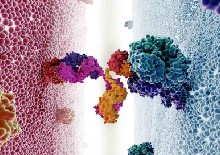 Alison Betts, Piet H. van der Graaf
Mechanistic Quantitative Pharmacology Strategies for the Early Clinical Development of Bispecific Antibodies in Oncology
bispecific antibodies, mechanistic quantitative, pharmacology, strategies, bsAbs, immune cells, MABEL aproach
Bi-specific antibodies (bsAbs) are crucial in cancer therapy research. BsAbs offer advantages such as enhanced efficacy and reduced systemic toxicity. Early clinical trials face challenges with dose selection and predicting effective doses. Clinical variability is influenced by factors like fun…
Jun 24th • 18 mins read