
Results for 'physician'
 K. Ribi, N. Kalbermatten, M. Eicher, F. Strasser
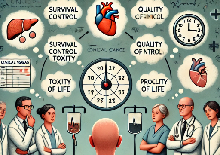
Towards a novel approach guiding the decision-making process for anticancer treatment in patients with advanced cancer: framework for systemic anticancer treatment with palliative intent
Patient-centered cancer care, Advanced cancer decision-making, Stepwise decisional process, Palliative care domains, Illness understanding in oncology, Symptom control in cancer, End-of-life preparation, Patient-physician interaction, SACT-PI Decision Fra
Patient-centered decisions in advanced cancer care demand a step-wise decisional process, not a single decision act. The decision process includes key palliative care domains, e.g. illness understanding, symptom control, or end-of-life preparation. Patients' attitudes, beliefs, hopes, patient-ph…
Jun 1st • 25 mins read
 Qiyou Wu, Zhiwei Lian, Xin Wang, Hanchao Cheng, Jing Sun, Hui Yu, Gong Zhang, Fan Wu, Jian Liu and Chuanben Chen
Factors associated with the uptake of biosimilars for breast cancer treatment from the perspectives of physicians and patients-Evidence from China
biosimilar, breast cancer, uptake, physician, patient
In 2021, the trastuzumab biosimilar entered clinical use in the research setting with less than 20% uptake in China, significantly lower than in the EU. Older patients are more likely to adopt biosimilars due to price sensitivity and financial concerns. Only 11.3% of patients switched from …
Jan 12th • 13 mins read
 Omer Ben‐Aharon, Racheli Magnezi, Moshe Leshno, and Daniel A. Goldstein
Median Survival or Mean Survival: Which Measure Is the Most Appropriate for Patients, Physicians, and Policymakers?
Immunotherapies, Median survival, Mean survival, Weibull
The average Restricted Mean Survival Time (RMST) for modern oncology agents approved by the FDA from 2013 to 2017 is 3.6 months, which is lower than the average median Overall Survival (OS) or Progression-Free Survival (PFS) of 4.6 months. When assuming a Weibull distribution post-trial, t…
Jul 18th • 15 mins read

 Tom Caravela
MSL Evolution: New Trends and Titles That May Emerge
digital marketing strategies, SEO best practices, content marketing tips, social media optimization, keyword research tools
The COVID-19 pandemic has clearly had a profound impact on Field Medical Affairs. Has the Medical Science Liaison role changed forever? What new titles, trends and opportunities might emerge as a result of the new age for Field Medical and the evolution of the Medical Science Liaison? Is virtual en…
Apr 5th • 1 min read
 Bridget Rasmusson
Positioning Yourself to Become an MSL in 2022
MSL role, clinical background, academic background, research background, industry, MSL Society, conference, scientific expert, therapeutic expertise, pharma companies
After attending the MSL Society’s 9th annual conference in Vegas Last week, I have taken some time to reflect on inquiries our team received about how to effectively step into the MSL role from a clinical, academic, or research background. Industry is a tough nut to crack, but it is absolutely…
Dec 21st • 10 mins read

 iNIZIO
Virtual Oncology MSL Team Increases KOL Engagement by 120%
Case Study (US) The Challenge Client needed comprehensive, scalable and innovative model. Goal: Cost-effectively supplement field based MSL team to provide national coverage. Objective: Share newly published guidelines with KOLs and gain key strategic insights. The Approach Highly …
Sep 3rd • 1 min read
 Karen Geary
Finding the Right Drug at the Right Dose the First Time: Has the Era of Personalized Formularies Finally Arrived?
drug dose, dose, pharmacogenomics, Personalized medicine
Many Americans take medications that are ineffective or cause adverse reactions due to genetic differences in drug metabolism. Pharmacogenomics, the study of how genes affect drug response, can help tailor medications to individual genetic profiles, reducing trial and error in prescriptions. A s…
Sep 27th • 1 min read
 Carrie Printz
Precision medicine for pediatric cancers lags behind that for adult cancers: Citing hurdles in clinical trial recruitment and drug development, researchers are exploring ways to close gaps
Precision Medicine, pediatrics, clinical trials
Pediatric precision oncology faces challenges due to the rarity of pediatric cancers, which limits research and funding compared to adult cancers. Dr. Katherine Janeway highlights the need for more validated pre-clinical models and pharmaceutical interest in pediatric cancers. The RACE Act, effe…
Jan 9th • 2 mins read
 Timothy Qi, Tyler Dunlap, Yanguang Cao1
Embracing Project Optimus: Can we Leverage Evolutionary Theory to Optimize Dosing in Oncology?
oncology, precision medicine, tumor evolution, dosing, FDA
Focus on tumor evolution, which leads to therapeutic failure and disease relapse. Emphasis on the effect of tumor evolution on the exposure-response (E-R) relationships of oncology drugs. Advocacy for prioritizing tumor evolution during clinical development to select optimal doses for targeted t…
Sep 2nd • 10 mins read
 Gracy Crane, John C. W. Lim, Churn-Shiouh Gau, Jipan Xie & Laura Chu
The challenges and opportunities in using real-world data to drive advances in healthcare in East Asia: expert panel recommendations
Real-world data, real-world evidenc, East Asia, policy recommendations, decision-making support, East Asia, expert, RWD, RWE
Recommend approaches to improve the use of Real-World Evidence (RWE) in healthcare decision-making in East Asia and beyond. Encourage large-scale collaborations involving diverse stakeholders. Key stakeholders include government agencies, hospitals, research organizations, patient groups, and th…
Jun 28th • 13 mins read
 Nora Hutchinson, MD, CM, MPhil, Benjamin Carlisle, PhD, Adelaide Doussau, MD, PhD
Patient Participation in Clinical Trials of Oncology Drugs and Biologics Preceding Approval by the US Food and Drug Administration
clinical trials, biologics, FDA approval, drug development
The study provides a crucial understanding of the role and impact of patient contributions in oncology drug development, focusing on their association with clinically impactful drug outcomes. Successful oncology drugs required an average of 12,217 patients in pre-license trials, with higher numbers …
May 18th • 5 mins read
 Paul G. Kluetz, Patricia Keegan, George D. Demetri, Katherine Thornton, Joohee Sul, Janice Kim, Harvey Katzen, Laurie Beth Burke, R. Donald Harvey, Elleni Alebachew, Sundeep Agrawal, Abhilasha Nair, Martha Donoghue
FDA Oncology Center of Excellence Project Renewal: Engaging the Oncology Community to Update Product Labeling for Older Oncology Drugs
FDA labeling format, PLR format, oncology drugs, FDA
The FDA conducts independent reviews of scientific data to ensure the safety and efficacy of investigational drug products. FDA-approved product labeling is a highly trusted source of information for approved drug use. FDA approval is only the beginning of a drug's lifecycle, with ongoing c…
Feb 15th • 13 mins read
 Di Maria Jiang, Kelvin K. W. Chan, Raymond W. Jang, Christopher Booth, Geoffrey Liu, Eitan Amir, Robert Mason, Louis Everest, Elena Elimova
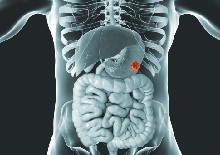
Anticancer drugs approved by the Food and Drug Administration for gastrointestinal malignancies: Clinical benefit and price considerations
ASCO VF, ESMO MCBS, gastrointestinal malignancies, anticancer drugs
Drugs approved between 2006 and 2017 were analyzed. Clinical benefit was measured using ESMO Magnitude of Clinical Benefit Scale and ASCO Value Framework. 16 GI cancer drugs received FDA approval for 24 indications, including various drug classes such as monoclonal antibodies, oral targeted …
Mar 7th • 8 mins read
 Carina Dolan, PharmD, BCOP
Opportunities and challenges in biosimilar uptake in oncology
Trastuzumab, Rituximab, biosimiliar agents, emerging agents, cetuximab, bevacizumab, clinical trials, biosimiliars
The U.S. has 10 approved biosimilars, including 3 for oncology, with many more in development, potentially increasing access to expensive biologics. Acceptance by healthcare providers and patients requires extensive education, resolving concerns about immunogenicity, and ensuring interchangeability.…
Jun 26th • 7 mins read