
Results for 'Europe'
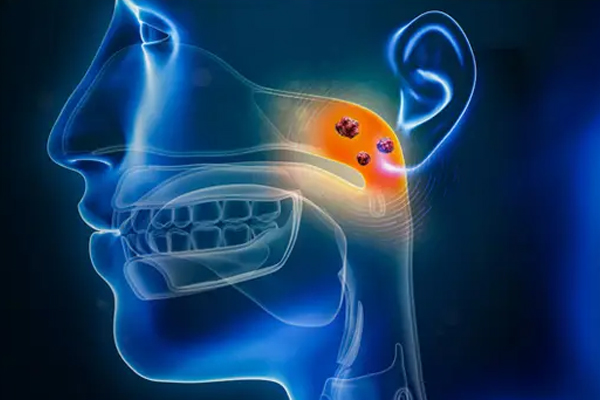
 Yuan Zhang, Xu Liu, Ying-Qin Li, Ling-Long Tang, Lei Chen, Jun Ma
A Field Test of Major Value Frameworks in Chemotherapy of Nasopharyngeal Carcinoma-To Know, Then to Measure
value framework, European Society for Medical Oncology, Magnitude of Clinical Benefit Scale, American Society of Clinical Oncology, drug therapy, nasopharyngeal neoplasms
The European Society for Medical Oncology (ESMO) and the American Society of Clinical Oncology (ASCO) have developed frameworks to evaluate cancer treatments, particularly for nasopharyngeal carcinoma. A study compared these frameworks using data from 15 randomized controlled trials of systemic c…
Aug 12th • 10 mins read
 Stefanie Broes, Robbe Saesen, Denis Lacombe, Isabelle Huys
Past, Current, and Future Cancer Clinical Research Collaborations: The Case of the European Organisation for Research and Treatment of Cancer
European organisation for Research and Treatment of Cancer, EORTC, clinical research
Collaborations between academic institutions and industry have led to significant scientific breakthroughs in pharmaceutical research, particularly in the discovery phase. The role of multi-stakeholder partnerships in the clinical development of anticancer medicines requires further clarification…
Aug 16th • 8 mins read
 Robbe Saesen, Georgios Kantidakis, Ann Marinus, Denis Lacombe, Isabelle Huys
How do cancer clinicians perceive real-world data and the evidence derived therefrom? Findings from an international survey of the European Organisation for Research and Treatment of Cancer
real-world evidence, real-world data, oncology, cancer, survey, clinicians, randomized controlled trials, Europe
Real-world evidence (RWE) is increasingly being used in the development and decision-making processes for anticancer therapies, but clinician views on its use are unclear. A survey conducted between May and July 2021 involved 557 clinicians from 30 countries and 13 cancer domains. Most clinician…
Aug 1st • 45 mins read
 J. Mulder, S. Teerenstra, P. B. van Hennik, A. M. G. Pasmooij, V. Stoyanova-Beninska, E. E. Voest & A. de Boer
Single-arm trials supporting the approval of anticancer medicinal products in the European Union: contextualization of trial results and observed clinical benefit
single-arm trials, anticancer medicinal products, EU, trial, SAT's, oncology, European Medicines Agency, clinical benefit, contextualization
Between 2012 and 2021, 18 anticancer medicinal products for solid tumors were approved in the EU based on 21 SATs (single-arm trials). Pivotal SAT-based applications often included additional information for contextualization, such as supportive studies and external evidence. Thresholds for…
Apr 11th • 14 mins read
 MAXIMILIAN SALCHER-KONRAD, HUSEYIN NACI, COURTNEY DAVIS
Approval of Cancer Drugs With Uncertain Therapeutic Value: A Comparison of Regulatory Decisions in Europe and the United States
pharmaceutical regulation, US Food and Drug Administration, European Medicines Agency, cancer.
Regulatory agencies often have limited evidence on the clinical benefits and harms of new drugs at the time of market approval. There is frequent discordance between the FDA and EMA in regulatory outcomes and the use of special regulatory pathways for cancer drugs of uncertain therapeutic value. …
Oct 6th • 48 mins read
 Vanessa Arciero, BS, Seanthel Delos Santos, Liza Koshy
Assessment of Food and Drug Administration- and European Medicines Agency-Approved Systemic Oncology Therapies and Clinically Meaningful Improvements in Quality of Life: A Systematic Review
ESMO, MCBS, FDA, ASCO-VF, EMA, QOL
Recent oncology therapies approved by the FDA and EMA often lack evidence of clinically meaningful improvements in quality of life (QOL). Only 40% of FDA-approved and 58% of EMA-approved oncology therapies had published QOL evidence. Clinically meaningful QOL improvements beyond minimal dif…
Feb 11th • 4 mins read
 Ioannis Tsagakis and Maria Papatriantafyllou
Safeguarding cancer research funding by European charities amidst the COVID-19 pandemic
cancer charities, cancer research, COVID‐19, funding, pandemic, policy, AECC, AIRC
The COVID-19 outbreak has had a significant impact on cancer research and cancer care. European cancer charities are required to reassess their strategies. There is a need to safeguard income and provide support to cancer researchers. It is crucial to sustain cancer research funding during thes…
Nov 22nd • 3 mins read
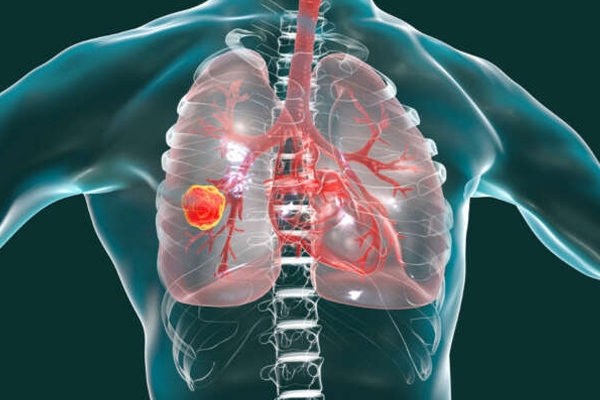 Tanja Cufer, Tudor E. Ciuleanu, Peter Berzinec, Gabriela Galffy, Marko Jakopovic, Jacek Jassem, Dragana Jovanovic, Zhasmina Mihaylova, Gyula Ostoros, Christiane Thallinger, Milada Zemanova, Christoph Zielinski
Access to Novel Drugs for Non-Small Cell Lung Cancer in Central and Southeastern Europe: A Central European Cooperative Oncology Group Analysis
Health Outcomes and Economics of Cancer Care, Lung Cancer, NSCLC, EMA
Treatment for non-small cell lung cancer (NSCLC) has significantly improved with the introduction of targeted and immune-oncologic drugs. Despite rapid development and European Medicinal Agency (EMA) registration, these novel drugs are not easily accessible in Central and Eastern European (CEE) c…
Nov 24th • 10 mins read
 Nicole Grossmann, Martin Robausch, Eleen Rothschedl, Claudia Wild, Judit Simon
Publicly accessible evidence of health-related quality of life benefits associated with cancer drugs approved by the European Medicines Agency between 2009 and 2015
Antineoplastic agents, Health-related quality of life, Clinical efficacy, Drug approvals, Patient-relevant outcomes
The study investigates cancer drugs approved by the European Medicines Agency (EMA) that initially lack Health-related Quality of Life (HRQoL) information. Data was collected for cancer indications approved between January 2009 and October 2015, using sources like the EMA website, clinical…
Feb 23rd • 12 mins read
 Christopher A. Busch, MSC; Johannes Krisam, PhD; Meinhard Kieser, PhD
A Comprehensive Comparison of Additional Benefit Assessment Methods Applied by Institute for Quality and Efficiency in Health Care and European Society for Medical Oncology for Time-to-Event Endpoints After Significant Phase III Trials—A Simulation Study
cancer drug trials, time-to-event endpoints, overall survival, added benefit assessment, IQWiG, hazard ratio thresholds
The European Society for Medical Oncology (ESMO) and the German Institute for Quality and Efficiency in Health Care (IQWiG) use different methods for assessing additional benefit in cancer therapies, with ESMO considering both relative and absolute benefits, while IQWiG focuses on the upper limit …
Jun 28th • 30 mins read
 S.F. Oosting, J. Barriuso, A. Bottomley, M. Galotti, B. Gyawali, B. Kiesewetter, N.J. Latino, F. Martinelli, M. Pe, G. Pentheroudakis, F. Roitberg, H. Vachon, E.G.E. de Vries, M. Piccart, N.I. Cherny
Methodological and reporting standards for quality-of-life data eligible for European Society for Medical Oncology-Magnitude of Clinical Benefit Scale
Benefit Scale, MCBS, Quality of Life, Health Assessment, Oncology Scale, Cancer Guidelines, Treatment Evaluation, Medicine Scoring
The ESMO-Magnitude of Clinical Benefit Scale (ESMO-MCBS) was introduced in 2015 to standardize the assessment of clinical benefits from cancer treatments. ESMO-MCBS helps in health-technology assessment, especially given the increasing number of treatment options and rising cancer care costs. Ne…
Apr 1st • 30 mins read
 Peter Varnai, Anoushka Davé, Kristine Farla, Anke Nooijen, Liana Petrosova
The Evidence REVEAL Study: Exploring the Use of Real-World Evidence and Complex Clinical Trial Design by the European Pharmaceutical Industry
real world evidence, CCT, complex clinical trial
The European Medicines Agency (EMA) should develop an RWE framework for premarketing authorization in Europe. EMA and the European Medicines Regulatory Network (EMRN) could lead the development of RWE standards in the EU and beyond. Joint demonstration projects by the European Commission and ind…
Nov 20th • 10 mins read
 Ronak Saluja, BS, Louis Everest, Sierra Cheng, Matthew Cheung, MD; Kelvin K. W. Chan, MD, MSc, PhD
Assessment of Whether the American Society of Clinical Oncology's Value Framework and the European Society for Medical Oncology's Magnitude of Clinical Benefit
ASCO, ESMO, value frameworks, randomized controlled trials, ASCO-CBS, ESMO-PMCBG
The ASCO-VF and ESMO-MCBS frameworks currently lack the ability to measure absolute survival benefit, which limits their effectiveness in comparing clinical benefits across different drugs and in establishing value. The authors of the ASCO framework have acknowledged the need for both relative and a…
May 16th • 15 mins read

 iNIZIO
Transforming oncology: Five frontiers driving progress in cancer care
From biomarker-driven breakthroughs to AI-powered early detection and a renewed commitment to equity and patient centricity, the past 12 months have seen major strides across cancer research, treatment, and communication. At Inizio, we’ve had a front-row seat to this transformation, supporting…
May 16th • 5 mins read
 Shubham Sharma, J Connor Wells, Wilma M Hopman, Joseph C Del Paggio, Bishal Gyawali, Nazik Hammad, Annette E Hay, Christopher M Booth
Cancer, Clinical Trials, and Canada: Our Contribution to Worldwide Randomized Controlled Trials
cancer, clinical trials, research funding, Canada, high-income countries
This document reviews Canadian involvement in oncology randomized controlled trials (RCTs) from 2014-2017, comparing them to those from other high-income countries (HICs). Canada contributed to 155 (24%) of 636 HIC-led RCTs. Canadian RCTs focused more on palliative care (72%) compared to 62% in …
Apr 13th • 10 mins read
 B. Gyawali, E. G. E. de Vries, U. Dafni, T. Amaral, J. Barriuso, J. Bogaerts, A. Calles, G. Curigliano, C. Gomez-Roca, B. Kiesewetter, S. Oosting, A. Passaro, G. Pentheroudakis, M. Piccart, F. Roitberg, J. Tabernero, N. Tarazona, D. Trapani, R. Wester, G.
Biases in study design, implementation, and data analysis that distort the appraisal of clinical benefit and ESMO-Magnitude of Clinical Benefit Scale (ESMO-MCBS) scoring
ESMO-MCBS, bias, clinical trial design, clinical trial implementation, clinical trial reporting, clinical trial analysis
The ESMO-MCBS is a tool used for scoring the clinical benefit of cancer medicines as reported in clinical trials, assuming valid research methodologies and quality implementation. The tool's effectiveness is compromised by studies with flawed design, implementation, or data analysis, w…
Apr 20th • 8 mins read
 Emmanuelle Jacqueta, Ghania Kerouani-Lafayeb, Francoise Grudeb, Sergio Goncalvesb, Annie Lorenced, Florence Turcryb, Liora Brunelb, Laetitia Belgodereb, Adrien Monardc, Gaëlle Guyaderb, Lotfi Boudalib, Nicolas Albin
Comparative study on anticancer drug access times between FDA, EMA and the French temporary authorisation for use program over 13 years
Innovation, Expanded access, Early drug access, Cancer, FDA, EMA
Cancer incidence is increasing globally, and while medical innovation significantly impacts patient survival, the drug development process is lengthy, often exceeding 10 years for marketing authorization (MA). France has implemented the ATU (Temporary Authorization for Use) program to facil…
Apr 7th • 12 mins read
 Adela Rodriguez, Francis Esposito, Helena Oliveres, Ferran Torres and Joan Maurel
Are Quality of Randomized Clinical Trials and ESMO-Magnitude of Clinical Benefit Scale Two Sides of the Same Coin, to Grade Recommendations for Drug Approval?
quality randomized studies, ESMO-MCBS, drug approval
The approval of new cancer drugs by the FDA and EMA is primarily based on positive results from well-designed randomized phase III clinical trials (RCTs). Not all RCTs are analyzed to support drug approval recommendations, highlighting the need for scales to evaluate RCT quality and clinical…
Feb 11th • 3 mins read
 Charles L. Bennett , Sumimasa Nagai , Andrew C. Bennett , Shamia Hoque , Chadi Nabhan , Martin W. Schoen , William J. Hrushesky , Stefano Luminari , Paul Ray , Paul R. Yarnold , Bart Witherspoon , Josh Riente , Laura Bobolts , John Brusk , Rebecca Tombles
The First 2 Years of Biosimilar Epoetin for Cancer and Chemotherapy-Induced Anemia in the U.S.: A Review from the Southern Network on Adverse Reactions
Epoetin, Biosimilars, Interchangeable, Substitution, Guidelines
Biosimilars are biologic drug products similar to reference drugs in various attributes, including safety and efficacy. Biosimilar epoetin was approved by the FDA in 2018 after previous non-approval letters in 2015 and 2017 despite positive reviews by the FDA's Oncologic Drugs Advisory Committee …
Mar 12th • 7 mins read
 Shani Paluch-Shimon, Nathan I. Cherny, Elisabeth G.E. de Vries, Urania Dafni, Martine J. Piccart, Nicola Jane Latino, Fatima Cardoso
Application of the ESMO-Magnitude of Clinical Benefit Scale (V.1.1) to the field of early breast cancer therapies
early breast cancer, magnitude of clinical benefit scale, ESMO-MCBS
The ESMO-MCBS is a validated value scale for assessing solid tumour anticancer treatments, specifically for therapies with curative intent. This document represents the first large-scale field testing of the ESMO-MCBS in early breast cancer to assess its applicability and identify any sh…
Sep 6th • 20 mins read