
Results for 'medical oncology'
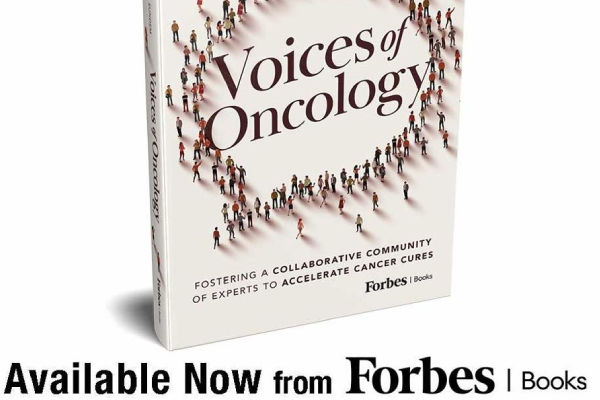
 Forbes Books Press Release Official
New Book Unites Oncology’s Brightest Minds To Innovate Cancer Cures
Voices of Oncology, Cancer cures, Oncology Voice Network, Kirk V. Shepard, Ramin Farhood, Forbes Books, Cancer treatment innovation, Oncology collaboration, Patient engagement in oncology, Precision medicine cancer
Voices of Oncology: Fostering a Collaborative Community of Experts to Accelerate Cancer Cures is a book by Kirk V. Shepard, M.D., and Ramin Farhood, PharmD, M.B.A., featuring insights from 33 contributors in the oncology field. It is available on platforms like Amazon and Barne…
Sep 9th • 5 mins read

 Tom Caravela
Job Search Checklist for Aspiring Medical Science Liaisons
Medical Science Liaison, MSL role, MSL career tips, Pharmaceutical industry jobs, Break into MSL career
Tips to Help Break into Your First MSL Role The Medical Science Liaison (MSL) role, has become one of the most sought-after career paths in the Pharmaceutical and Biotech industry. What does it take to land a role as a Medical Science Liaison? As an MSL Recruiter, this is a question that I am…
May 17th • 2 mins read
 Bridget Rasmusson
Presentation Nails and Fails: 7 Tips to Ace Your Next MSL Presentation
MSL interview tips, scientific presentation skills, hiring managers expectations, medical science liaison communication, virtual interview preparation
The presentation portion of the MSL interview is truly “make or break,” and more often than not, the most highly weighted category of the entire interview process. Countless Hiring Managers have passed on MSL candidates that do not perform well on their scientific presentation – re…
Oct 12th • 1 min read

 iNIZIO
Virtual Oncology MSL Team Increases KOL Engagement by 120%
Case Study (US) The Challenge Client needed comprehensive, scalable and innovative model. Goal: Cost-effectively supplement field based MSL team to provide national coverage. Objective: Share newly published guidelines with KOLs and gain key strategic insights. The Approach Highly …
Sep 3rd • 1 min read
 iNIZIO
Transforming oncology: Five frontiers driving progress in cancer care
From biomarker-driven breakthroughs to AI-powered early detection and a renewed commitment to equity and patient centricity, the past 12 months have seen major strides across cancer research, treatment, and communication. At Inizio, we’ve had a front-row seat to this transformation, supporting…
May 16th • 5 mins read
 iNIZIO
Expert perspectives live from ASCO® 2025
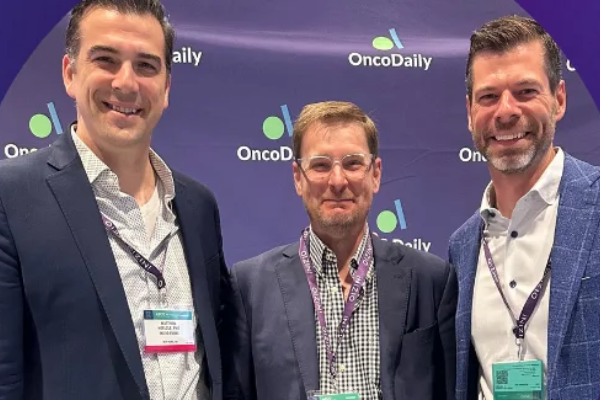
At the 2025 ASCO® Annual Meeting, three of our experts sat down with OncoDaily to share their unique perspectives in oncology – from amplifying the patient voice to unlocking real-world impact through data and AI. Watch the videos below. Matthew Hoelzle | Medical strategy, AI and real-wor…
Jul 2nd • 1 min read
 Thakur, Sayanta & Lahiry, Sandeep
Accelerated drug approvals in oncology: Pros and cons
Clinical study, drug approval, medical oncology
The summary of the content highlights the success of the accelerated approval process, especially for oncology drugs. Key points include: The rise of accelerated approval processes is significant, particularly in oncology. The use of surrogate endpoints and their validation has been debated. Th…
Sep 14th • 4 mins read
 J. Remon, R. García-Campelo, E. de Álava, R. Vera, J. L. Rodríguez-Peralto, Á. Rodríguez-Lescure, B. Bellosillo, P. Garrido, F. Rojo & R. Álvarez-Alegret
Liquid biopsy in oncology: a consensus statement of the Spanish Society of Pathology and the Spanish Society of Medical Oncology
Liquid biopsy, ctDNA, Oncology, Genomic profling, Precision medicine
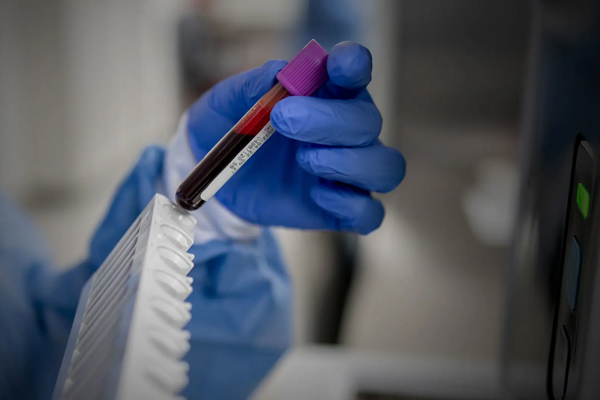
The proportion of cancer patients with tumors having potentially targetable genomic alterations is increasing. Diagnosing these alterations can lead to tailored treatments and provide additional predictive information on immunotherapy efficacy. In many cases, initial tissue biopsies are ina…
Sep 26th • 17 mins read
 Yuan Zhang, Xu Liu, Ying-Qin Li, Ling-Long Tang, Lei Chen, Jun Ma
A Field Test of Major Value Frameworks in Chemotherapy of Nasopharyngeal Carcinoma-To Know, Then to Measure
value framework, European Society for Medical Oncology, Magnitude of Clinical Benefit Scale, American Society of Clinical Oncology, drug therapy, nasopharyngeal neoplasms
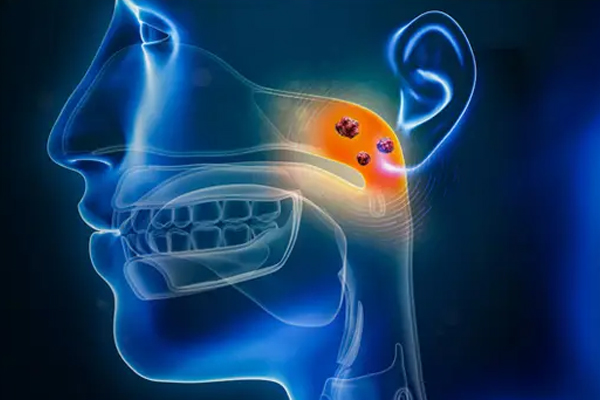
The European Society for Medical Oncology (ESMO) and the American Society of Clinical Oncology (ASCO) have developed frameworks to evaluate cancer treatments, particularly for nasopharyngeal carcinoma. A study compared these frameworks using data from 15 randomized controlled trials of systemic c…
Aug 12th • 10 mins read
 Ramez Kouzy , Joseph Abi Jaoude , Walker Mainwaring , Timothy A. Lin , Austin B. Miller , Amit Jethanandani , Andres F. Espinoza , Vivek Verma , Clifton D. Fuller , Bruce D. Minsky , Claus Rödel , Cullen M. Taniguchi , Ethan B. Ludmir
Professional Medical Writer Assistance in Oncology Clinical Trials
PMW usage, phase III oncology trials, professional medical writer assistance
The use of professional medical writers (PMWs) in oncologic phase III randomized controlled trials (RCTs) has been historically low, but recent data on their usage is limited. This study aimed to quantify the usage of PMWs in cancer-specific phase III RCTs by analyzing trial manuscripts on Clinic…
Sep 17th • 7 mins read
 Mateusz T. Wasylewski, Karolina Strzebonska, Magdalena Koperny, Maciej Polak, Jonathan Kimmelman, Marcin Waligora
Clinical development success rates and social value of pediatric Phase 1 trials in oncology
pediatric oncology, clinical development, trials, success rates
Pediatric Phase 1 trials in oncology aim to assess social value, focusing on rates of approval, transition to further phases, and citation in research. The study analyzed trials from 2004 to 2013, utilizing data from FDA, EMA, ClinicalTrials.gov, EU Clinical Trials Register, and Google Scholar. …
Jun 21st • 28 mins read
 Eric Q. Konnick
The regulatory landscape of precision oncology laboratory medicine in the United States - Perspective on the past 5 years and considerations for future regulation
Oncology, Regulation, Testing, LDTs, FDA, CLIA, CMS
The regulatory landscape for precision oncology in the United States is complex, involving multiple governmental agencies with varying jurisdictions. Since 2014, several regulatory proposals have been introduced following the FDA's draft guidance on laboratory-developed tests. There are ongoing …
May 22nd • 8 mins read
 Sean X Zhang, MSc , Dean Fergusson, PhD , Jonathan Kimmelman, PhD
Proportion of Patients in Phase I Oncology Trials Receiving Treatments That Are Ultimately Approved
cancer, biological markers, phase 1 clinical trials, drug approval, medical oncology, united states food and drug administration guidelines, adverse event, national comprehensive cancer network, American society of clinical oncology
Phase I oncology trials are often considered a therapeutic option, but this claim is primarily based on surrogate measures like objective response rates. A systematic search was conducted to evaluate the therapeutic value of phase I cancer trial participation, focusing on the likelihood of patien…
Apr 1st • 14 mins read
 J. Remon, R. García-Campelo, E. de Álava, R. Vera, J. L. Rodríguez-Peralto, Á. Rodríguez-Lescure, B. Bellosillo, P. Garrido, F. Rojo & R. Álvarez-Alegret
Liquid biopsy in oncology: a consensus statement of the Spanish Society of Pathology and the Spanish Society of Medical Oncology
Liquid biopsy, ctDNA, Oncology, Genomic profling, Precision medicine
The proportion of cancer patients with tumours that have targetable genomic alterations is increasing, which is crucial for tailored treatment and predicting immunotherapy efficacy. Initial tissue biopsies are often inadequate for precision oncology, and obtaining new tumour tissues at pr…
Sep 26th • 16 mins read
 Roman Adam, Ariadna Tibau, Consolación Molto Valiente, Boštjan Šeruga, Alberto Ocaña, Eitan Amir, Arnoud J. Templeton
Clinical benefit of cancer drugs approved in Switzerland 2010–2019
cancer drug approval, clinical benefit criteria, ESMO-MCBS, ASCO-VF, OLUtool, Switzerland oncology drugs
The study evaluates the clinical benefit of cancer drugs approved in Switzerland between 2010 and 2019 using three different frameworks: ESMO-MCBS, ASCO-VF, and OLUtool. A total of 48 drugs for 92 indications were assessed based on 100 studies, with each study evaluated according to the criteria …
Jun 10th • 35 mins read
 S.F. Oosting, J. Barriuso, A. Bottomley, M. Galotti, B. Gyawali, B. Kiesewetter, N.J. Latino, F. Martinelli, M. Pe, G. Pentheroudakis, F. Roitberg, H. Vachon, E.G.E. de Vries, M. Piccart, N.I. Cherny
Methodological and reporting standards for quality-of-life data eligible for European Society for Medical Oncology-Magnitude of Clinical Benefit Scale
Benefit Scale, MCBS, Quality of Life, Health Assessment, Oncology Scale, Cancer Guidelines, Treatment Evaluation, Medicine Scoring
The ESMO-Magnitude of Clinical Benefit Scale (ESMO-MCBS) was introduced in 2015 to standardize the assessment of clinical benefits from cancer treatments. ESMO-MCBS helps in health-technology assessment, especially given the increasing number of treatment options and rising cancer care costs. Ne…
Apr 1st • 30 mins read
 K. Ribi, N. Kalbermatten, M. Eicher, F. Strasser
Towards a novel approach guiding the decision-making process for anticancer treatment in patients with advanced cancer: framework for systemic anticancer treatment with palliative intent
Patient-centered cancer care, Advanced cancer decision-making, Stepwise decisional process, Palliative care domains, Illness understanding in oncology, Symptom control in cancer, End-of-life preparation, Patient-physician interaction, SACT-PI Decision Fra
Patient-centered decisions in advanced cancer care demand a step-wise decisional process, not a single decision act. The decision process includes key palliative care domains, e.g. illness understanding, symptom control, or end-of-life preparation. Patients' attitudes, beliefs, hopes, patient-ph…
Jun 1st • 25 mins read
 E Dawn Flick, Howard R Terebelo, Susan Fish, Amani Kitali, Vrinda Mahajan, Melissa Nifenecker, Kristen Sullivan, Paul Thaler, Sarah Ussery, David L Grinblatt
The Value of Pharmaceutical Industry-Sponsored Patient Registries in Oncology Clinical Research
registry, oncology, observational study, prospective cohort study, real-world evidence
Oncology patient registries are valuable for generating Real-World Evidence (RWE) due to: Prospective, primary data collection Characterizing smaller patient populations not typically included in clinical trials Providing insights into the rapidly changing disease course Allowing for longitudi…
Jun 7th • 8 mins read
 Cinzia Dello Russo, Pierluigi Navarra
What is the weight of expectation bias in oncology trials?
trials, bias, oncology, expectation bias
Expectation bias, also known as the Rosenthal effect, can distort experiment results due to the expectations of investigators or patients. Blinding or masking treatments is a classical method to reduce expectation bias in biomedical research. Expectation bias is considered an important conf…
Feb 11th • 3 mins read
 Laurent Azoulay
Rationale, Strengths, and Limitations of Real-World Evidence in Oncology: A Canadian Review and Perspective
real-world evidence; RWE, real-world studies, RWS, oncology, real-world evidence, RWE, randomized controlled trial, RCT
Data obtained from real-world studies have an integral role in evidence-based medicine, serving as an essential source of safety information and a complement to efficacy data from RCTs. RWE is particularly useful for expanding the evidence base to encompass populations of patients who are not well r…
Apr 26th • 9 mins read