
Results for 'Cancer indication'

 Charles Oo, Barbara Ameer
Revamping the ever-changing landscape of drug development processes in the midst of COVID-19 pandemic
Oncology drug class, Cancer indication, Molecularly targeted, Drug Development
Oncology is the front-line of drug development. The current pharmaceutical pipeline is disproportional focused on oncology, where about 1/3 of all phases of development is in this therapeutic area. The emphasis brings about substantial breakthroughs and has made positive impact on the quality of lif…
Apr 29th • 2 mins read
 Benjamin Gregory Carlisle, Adélaïde Doussau, Jonathan Kimmelman
Patient burden and clinical advances associated with post approval monotherapy cancer drug trials: a retrospective cohort study
clinical advances, monotherapy cancer drug trials, FDA
Objective: The study investigates the efforts to extend the uses of new drugs by testing them for new, non-approved indications and examines the patient burden and clinical impact. Design and Setting: A retrospective cohort study focused on post-approval trials of anticancer drugs approved betwee…
Feb 17th • 7 mins read
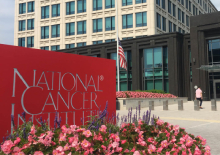 Joseph M. Unger, PhD, MS, Van T. Nghiem, PhD, Dawn L. Hershman, MD, MS
Association of National Cancer Institute-Sponsored Clinical Trial Network Group Studies With Guideline Care and New Drug Indications
NCIS, clinical trials, NCTN, drug indications
Importance: NCTN groups are vital in identifying effective new antineoplastic regimens, but their clinical impact has not been systematically evaluated until now. Objective: To determine the association of NCTN trials with guideline care and new drug indications. Design, Setting, and Participant…
Sep 4th • 17 mins read
 YuQian Liu, PharmD
Uptake of Oncology Biosimilars: Managed Care Strategies to Improve Value-Based Care Systems
biosimilars in oncology, cost-effective cancer care, healthcare education, bioequivalence studies, biosimilar adoption, cancer treatment protocols
Biosimilars offer a cost-effective alternative in oncology, expanding access to cancer care, but their utilization is inconsistent due to varying perceptions and knowledge among stakeholders. Increasing the adoption of biosimilars requires improved education and understanding among healthcare pro…
Jul 7th • 25 mins read
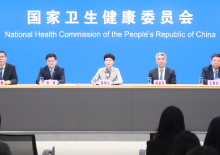 Yichen Zhang, MSc; Huseyin Naci, PhD; Anita K. Wagner, PharmD, DrPH
Overall Survival Benefits of Cancer Drugs Approved in China From 2005 to 2020
cancer drug therapy, overall survival, FDA approvals, surrogate endpoints, EMA approvals, quality of life
The study evaluates the overall survival (OS) benefit of cancer drugs approved in China between 2005 and 2020. Out of 141 cancer drug indications approved, 68 showed a documented overall survival benefit, while 34 did not prolong life. Recent regulatory reforms in China aim to improve the availa…
Aug 10th • 30 mins read
 Robbe Saesen, Georgios Kantidakis, Ann Marinus, Denis Lacombe, Isabelle Huys
How do cancer clinicians perceive real-world data and the evidence derived therefrom? Findings from an international survey of the European Organisation for Research and Treatment of Cancer
real-world evidence, real-world data, oncology, cancer, survey, clinicians, randomized controlled trials, Europe
Real-world evidence (RWE) is increasingly being used in the development and decision-making processes for anticancer therapies, but clinician views on its use are unclear. A survey conducted between May and July 2021 involved 557 clinicians from 30 countries and 13 cancer domains. Most clinician…
Aug 1st • 45 mins read
 Ravi B. Parikh, MD, MPP Rebecca A. Hubbard, PhD Erkuan Wang, MA Trevor J. Royce, MD, MPH Aaron B. Cohen, MD, MSCE Amy S. Clark, MD, MSCE Ronac Mamtani, MD, MSCE
Exposure to US Cancer Drugs With Lack of Confirmed Benefit After US Food and Drug Administration Accelerated Approval
US, FDA, approval, drugs, benefits, cancer
Among 5 oncology indications, 26.1% of eligible treatment initiations involved an Accelerated Approval (AA) indication that was later withdrawn due to lack of benefit. There is an inherent trade-off between expediting access to promising cancer drugs and the potential withdrawal of some indicatio…
Dec 8th • 2 mins read
 J. Mulder, S. Teerenstra, P. B. van Hennik, A. M. G. Pasmooij, V. Stoyanova-Beninska, E. E. Voest & A. de Boer
Single-arm trials supporting the approval of anticancer medicinal products in the European Union: contextualization of trial results and observed clinical benefit
single-arm trials, anticancer medicinal products, EU, trial, SAT's, oncology, European Medicines Agency, clinical benefit, contextualization
Between 2012 and 2021, 18 anticancer medicinal products for solid tumors were approved in the EU based on 21 SATs (single-arm trials). Pivotal SAT-based applications often included additional information for contextualization, such as supportive studies and external evidence. Thresholds for…
Apr 11th • 14 mins read
 Yafang Huanga, Weiyi Xiongb, Jingwei Zhaoa, Wentao Lia, Li Mac, Hao Wua
Early phase clinical trial played a critical role in the Food and Drug Administration-approved indications for targeted anticancer drugs: a cross-sectional study from 2012 to 2021
Early phase clinical trial, Dose-expansion cohort, Single-arm trial, Pivotal trial, FDA approved indications, Targeted anticancer drugs
Analysis of 188 FDA-approved indications for 95 molecular targeted anticancer drugs between 2012 and 2021. 59.6% of indications were approved based on Early Phase Clinical Trials (EPCTs). There was a notable annual increase of 22.2% in approvals based on EPCTs, compared to a 5.0% increase for ph…
Mar 9th • 10 mins read
 G. Zarkavelis A.L. Amylidi C. Verbaanderd N.I. Cherny Y. Metaxas E.G.E. de Vries P. Zygoura T. Amaral K. Jordan M. Strijbos U. Dafni N. Latino M. Galotti F. Lordick R. Giuliani F. Pignatti G. Pentheroudakis
Off-label despite high-level evidence: a clinical practice review of commonly used off-patent cancer medicines
off-label, ESMO-MCBS, EMA, cancer, ESMO Clinical Practice Guidelines
Several 'old' cancer medicines remain off-label despite strong scientific evidence supporting their use in specific settings. Off-label prescriptions often carry administrative and legal burdens for physicians, affecting workflows and potentially patient access to safe and effective therapies. R…
Nov 14th • 21 mins read
 Mahnum Shahzad, BA, Huseyin Naci, MHS, PhD, Anita K. Wagner, PharmD, MPH, DrPH
Estimated Medicare Spending on Cancer Drug Indications With a Confirmed Lack of Clinical Benefit After US Food and Drug Administration Accelerated
medicare spending, drug indications, AA, FDA, medicare, ODAC
Medicare Parts B and D spent at least $569 million between 2017 and 2019 on 10 cancer drug indications without confirmed overall survival (OS) benefit after accelerated approval (AA). Approximately $224 million was spent on drug indications that were either voluntarily withdrawn or recommended fo…
Oct 18th • 5 mins read
 Thomas J. Hwang, Liat Orenstein, Steven G. DuBois, Katherine A. Janeway, Florence T. Bourgeois
Pediatric Trials for Cancer Therapies With Targets Potentially Relevant to Pediatric Cancers
antineoplastic agents, adult, child, pediatrics, continental population groups, united states food and drug administration, statutes and laws, cancer therapy, childhood cancer, molecular target
The Research to Accelerate Cures and Equity (RACE) for Children Act was enacted in 2017. The Act authorizes the US FDA to require pediatric studies for new cancer drugs with molecular targets relevant to pediatric cancers. An examination of 78 adult cancer drugs approved by the FDA from 2007 to …
Oct 29th • 10 mins read
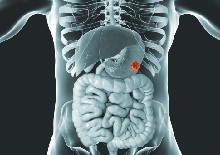 Di Maria Jiang, Kelvin K. W. Chan, Raymond W. Jang, Christopher Booth, Geoffrey Liu, Eitan Amir, Robert Mason, Louis Everest, Elena Elimova
Anticancer drugs approved by the Food and Drug Administration for gastrointestinal malignancies: Clinical benefit and price considerations
ASCO VF, ESMO MCBS, gastrointestinal malignancies, anticancer drugs
Drugs approved between 2006 and 2017 were analyzed. Clinical benefit was measured using ESMO Magnitude of Clinical Benefit Scale and ASCO Value Framework. 16 GI cancer drugs received FDA approval for 24 indications, including various drug classes such as monoclonal antibodies, oral targeted …
Mar 7th • 8 mins read
 A. Haslam, M.S. Kim, V. Prasad
Updated estimates of eligibility for and response to genome-targeted oncology drugs among US cancer patients, 2006-2020
genome-targeted therapy, eligibility, response
Recent studies have been conducted to update the estimates of eligibility and response rates to genome-targeted therapies among US cancer patients, reflecting data up to 2020. The number of FDA-approved drugs targeting genetic indications has increased significantly since prior assessments. …
Apr 20th • 7 mins read
Avi Cherla, MSc; Huseyin Naci, MHS, PhD; Aaron S. Kesselheim, MD, JD, MPH; Bishal Gyawali, MD, PhD; Elias Mossialos, MD, PhD
Assessment of Coverage in England of Cancer Drugs Qualifying for US Food and Drug Administration Accelerated Approval
FDA, NHS, accelerated approval, NICE, clinical trial findings
The study evaluates the acceptance and coverage of FDA-accelerated approved cancer drugs by the National Health Service (NHS) in England, focusing on decisions made by the National Institute for Health and Care Excellence (NICE). A total of 93 cancer drug indications received accelerated approval…
Feb 22nd • 10 mins read
 Cheryl Ho, MD, Howard J. Lim, MD, Dean A. Regier, PhD
Canadian Regulatory and Health Technology Assessment for Malignant Hematology and Oncology Indications Compared With the US Food and Drug Administration Accelerated Approval Program
canada, oncology, malignant, hematology, HTC
Canadian regulatory approvals align with FDA decisions, but submission numbers to Health Canada (HC) and Health Technology Assessment (HTA) processes are lower in Canada. There is a nearly 3-year delay between Accelerated Approval (AA) and funded access to treatment for Canadians. HTA in Canada …
Jun 5th • 6 mins read
 Alyson Haslam, PhD; Vinay Prasad, MD, MPH
Estimation of the Percentage of US Patients With Cancer Who Are Eligible for and Respond to Checkpoint Inhibitor Immunotherapy Drugs
checkpoint inhibitor drugs, immunotherapy drugs, FDA, checkpoint, inhibitor, drugs
If FDA-approved checkpoint inhibitor drugs are universally available, we estimated that the proportion of US patients with cancer who could be eligible for such drugs is approximately 44%, while approximately 13% have a response to these drugs. These estimates, although modest, are better than estim…
May 3rd • 10 mins read
 Ali Raza Khaki
Loose Regulatory Standards Portend a New Era of Imprecision Oncology
precision oncology, TMB-high, homologous recombination deficiency, Olaparib, pembrolizumab
Precision oncology aims to tailor cancer treatment based on genetic understanding, revolutionizing oncology. The FDA has been approving drugs under precision oncology with broad indications that may not align with studied populations. Examples include the approval of pembrolizumab for a wide ran…
Dec 1st • 4 mins read
 Vishwanath Sathyanarayanan, MD, DM, Christopher R. Flowers, MD, MSc, and Swaminathan P. Iyer, MD, MBBS
Comparison of Access to Novel Drugs for Lymphoma and Chronic Lymphocytic Leukemia Between India and the United States
lymphoma, leukemia, India, United States, biosimiliars
The review examines the costs and access to novel drugs for treating chronic lymphocytic leukemia (CLL) and lymphoma in the United States and India over the last 5 years. Clinical outcomes for patients with hematologic malignancies have improved significantly due to immunotherapeutic and tar…
Jul 21st • 12 mins read
 Deeksha Joshi, Rubiya Khursheed, Saurabh Gupta, Diksha Wadhwa, Thakur Gurjeet Singh, Sumit Sharma, Sejal Porwal, Swati Gauniyal, Sukriti Vishwas, Sanjay Goyal, Gaurav Gupta, Rajaraman D. Eri, Kylie A. Williams, Kamal Dua, Sachin Kumar Singh
Biosimilars in Oncology: Latest Trends and Regulatory Status
oncology, biologics, biosimilars, regulatory framework, traceability
Biologic-based medicines are crucial in treating various diseases, particularly cancer, and hold a significant portion of the global pharmaceutical market. Biosimilars, which are highly similar to biologic drugs but not identical, offer potential benefits such as enhanced access and cost savings,…
Dec 5th • 20 mins read