
Results for 'advances'
 Pai, Rekha
Advances in basic research in oncology in 2020: Bridging basic science and clinical care
advances, research, oncology, PCAWG, 2020
Cancer research is advancing with an understanding of the disease at the genetic level, facilitated by massive parallel sequencing. The pan-cancer analysis of the whole genome (PCAWG) in 2020 documented genomic changes across 38 cancer types, involving 2658 cancer genomes. An average of four to …
Mar 24th • 1 min read
 Benjamin Gregory Carlisle, Adélaïde Doussau, Jonathan Kimmelman
Patient burden and clinical advances associated with post approval monotherapy cancer drug trials: a retrospective cohort study
clinical advances, monotherapy cancer drug trials, FDA
Objective: The study investigates the efforts to extend the uses of new drugs by testing them for new, non-approved indications and examines the patient burden and clinical impact. Design and Setting: A retrospective cohort study focused on post-approval trials of anticancer drugs approved betwee…
Feb 17th • 7 mins read
 Siddharth Agrawal, Nidhi Bansal
Advances and Challenges in Pediatric and Childhood Cancers
CNS, central nervous system, ES, Ewing sarcoma, MB, medulloblastoma, PTSD, post traumatic stress disorder, RB, retinoblastoma
Pediatric cancers, while uncommon compared to adult cancers, include leukemia, CNS tumors, lymphoma, Wilms' tumor, and retinoblastoma. Challenges in pediatric cancer treatment encompass late diagnosis, varied immune responses, preserving fertility, minimizing late effects, and considering lo…
Jun 27th • 2 mins read
 Gracy Crane, John C. W. Lim, Churn-Shiouh Gau, Jipan Xie & Laura Chu
The challenges and opportunities in using real-world data to drive advances in healthcare in East Asia: expert panel recommendations
Real-world data, real-world evidenc, East Asia, policy recommendations, decision-making support, East Asia, expert, RWD, RWE
Recommend approaches to improve the use of Real-World Evidence (RWE) in healthcare decision-making in East Asia and beyond. Encourage large-scale collaborations involving diverse stakeholders. Key stakeholders include government agencies, hospitals, research organizations, patient groups, and th…
Jun 28th • 13 mins read
 Carrie Printz
Cancer experts point to new advances in research and treatment: A recent report by the American Association for Cancer Research highlights unprecedented successes as well as ongoing challenges in the cancer field
FDA, AACR, immunotherapeutics, immunotherapy, precision therapies, ALK, EGFR, BRAF
Within the last few years, cancer research has made significant strides, leading to the approval of 22 new cancer treatments by the FDA between August 1, 2017, and July 31, 2018. Among these, notable advancements include 14 anticancer therapeutics, such as CAR T-cell therapies for non-Hodgkin lympho…
Apr 1st • 2 mins read

 iNIZIO
Transforming oncology: Five frontiers driving progress in cancer care
From biomarker-driven breakthroughs to AI-powered early detection and a renewed commitment to equity and patient centricity, the past 12 months have seen major strides across cancer research, treatment, and communication. At Inizio, we’ve had a front-row seat to this transformation, supporting…
May 16th • 5 mins read
 Emmanuelle Jacqueta, Ghania Kerouani-Lafayeb, Francoise Grudeb, Sergio Goncalvesb, Annie Lorenced, Florence Turcryb, Liora Brunelb, Laetitia Belgodereb, Adrien Monardc, Gaëlle Guyaderb, Lotfi Boudalib, Nicolas Albin
Comparative study on anticancer drug access times between FDA, EMA and the French temporary authorisation for use program over 13 years
Innovation, Expanded access, Early drug access, Cancer, FDA, EMA
Cancer incidence is increasing globally, and while medical innovation significantly impacts patient survival, the drug development process is lengthy, often exceeding 10 years for marketing authorization (MA). France has implemented the ATU (Temporary Authorization for Use) program to facil…
Apr 7th • 12 mins read
 J. Remon, R. García-Campelo, E. de Álava, R. Vera, J. L. Rodríguez-Peralto, Á. Rodríguez-Lescure, B. Bellosillo, P. Garrido, F. Rojo & R. Álvarez-Alegret
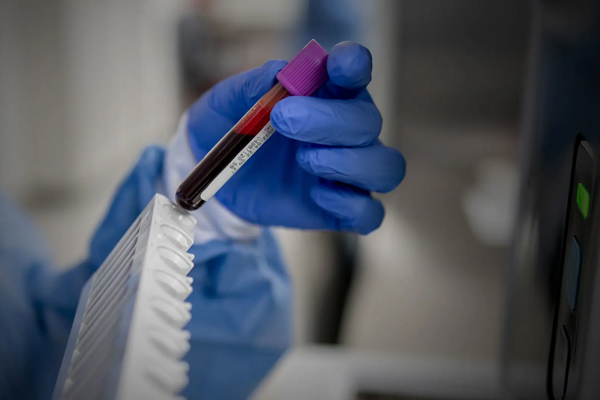
Liquid biopsy in oncology: a consensus statement of the Spanish Society of Pathology and the Spanish Society of Medical Oncology
Liquid biopsy, ctDNA, Oncology, Genomic profling, Precision medicine
The proportion of cancer patients with tumors having potentially targetable genomic alterations is increasing. Diagnosing these alterations can lead to tailored treatments and provide additional predictive information on immunotherapy efficacy. In many cases, initial tissue biopsies are ina…
Sep 26th • 17 mins read
 Stefanie Broes, Robbe Saesen, Denis Lacombe, Isabelle Huys
Past, Current, and Future Cancer Clinical Research Collaborations: The Case of the European Organisation for Research and Treatment of Cancer
European organisation for Research and Treatment of Cancer, EORTC, clinical research
Collaborations between academic institutions and industry have led to significant scientific breakthroughs in pharmaceutical research, particularly in the discovery phase. The role of multi-stakeholder partnerships in the clinical development of anticancer medicines requires further clarification…
Aug 16th • 8 mins read
 Ashley Woolmore , Dirk Arnold , Jean‐Yves Blay , Christian Buske , Alfredo Carrato , Winald Gerritsen , Marc Peeters , Jesus Garcia‐Foncillas , David Kerr
The Oncology Data Network (ODN): Methodology, Challenges, and Achievements
The oncology data network, ODN
The Oncology Data Network (ODN) aims to create a collaborative infrastructure for precision medicine, established in over seven European countries with 124 cancer centers. The ODN collects concise data on cancer medicine use, adhering to EU GDPR regulations, and has a central European Data Wareho…
May 21st • 8 mins read
 J. Remon, R. García-Campelo, E. de Álava, R. Vera, J. L. Rodríguez-Peralto, Á. Rodríguez-Lescure, B. Bellosillo, P. Garrido, F. Rojo & R. Álvarez-Alegret
Liquid biopsy in oncology: a consensus statement of the Spanish Society of Pathology and the Spanish Society of Medical Oncology
Liquid biopsy, ctDNA, Oncology, Genomic profling, Precision medicine
The proportion of cancer patients with tumours that have targetable genomic alterations is increasing, which is crucial for tailored treatment and predicting immunotherapy efficacy. Initial tissue biopsies are often inadequate for precision oncology, and obtaining new tumour tissues at pr…
Sep 26th • 16 mins read
 R. Kurzrock, L.A. Gurski, R.W. Carlson, D.S. Ettinger, S.M. Horwitz, S.K. Kumar, L. Million, M. von Mehren, A.B. Benson III
Level of evidence used in recommendations by the National Comprehensive Cancer Network (NCCN) guidelines beyond Food and Drug Administration approvals
oncology, guidelines, off-label drug use
The analysis reviewed 113 NCCN recommendations, focusing on 44 off-label uses of drugs. 14 of these off-label recommendations were later FDA-approved or backed by RCT data. 13 recommendations were minor extrapolations from the FDA label or actually on-label. Of the remaining 17 extrapolations…
Aug 2nd • 8 mins read
 Roman Adam, Ariadna Tibau, Consolación Molto Valiente, Boštjan Šeruga, Alberto Ocaña, Eitan Amir, Arnoud J. Templeton
Clinical benefit of cancer drugs approved in Switzerland 2010–2019
cancer drug approval, clinical benefit criteria, ESMO-MCBS, ASCO-VF, OLUtool, Switzerland oncology drugs
The study evaluates the clinical benefit of cancer drugs approved in Switzerland between 2010 and 2019 using three different frameworks: ESMO-MCBS, ASCO-VF, and OLUtool. A total of 48 drugs for 92 indications were assessed based on 100 studies, with each study evaluated according to the criteria …
Jun 10th • 35 mins read
 YuQian Liu, PharmD
Uptake of Oncology Biosimilars: Managed Care Strategies to Improve Value-Based Care Systems
biosimilars in oncology, cost-effective cancer care, healthcare education, bioequivalence studies, biosimilar adoption, cancer treatment protocols
Biosimilars offer a cost-effective alternative in oncology, expanding access to cancer care, but their utilization is inconsistent due to varying perceptions and knowledge among stakeholders. Increasing the adoption of biosimilars requires improved education and understanding among healthcare pro…
Jul 7th • 25 mins read
 Consolacion Molto, Ariadna Tibau, Aida Bujosa, Jose Carlos Tapia, Abhenil Mittal, Faris Tamimi & Eitan Amir
Association between control group therapy and magnitude of clinical benefit of cancer drugs
control group therapy, clinical benefit scales, ESMO-MCBS, ASCO-VF, randomized trials
The study investigated the impact of control group therapy on various clinical benefit scales like ASCO-VF, ESMO-MCBS, NCCN Evidence Blocks, and ASCO-CRC. Researchers analyzed cancer drugs approved between 2012 and 2021 using data from randomized controlled trials (RCTs) listed on Drugs@FDA. Sig…
Dec 9th • 20 mins read
 Gregory S. Calip, PharmD, MPH, PhD, Ivy P. Altomare, MD, Jenny S. Guadamuz, MSPH, PhD
Evaluating External Validity of Oncology Biosimilar Safety Studies
biologics, external validity, FDA, biosimilars, trastuzumab
Biologics are the fastest growing medication class in the US, significantly contributing to healthcare costs. The Biologics Price Competition and Innovation Act of 2009 created an abbreviated approval pathway to make biological products more accessible. A phase 3 randomized trial of SB3, a trast…
Apr 6th • 2 mins read
 Patrick C. DeMartino, MD, Miloš D. Miljković, MD, MS, Vinay Prasad, MD
Potential Cost Implications for All US Food and Drug Administration Oncology Drug Approvals in 2018
FDA, drug approvals, oncology, cancer drugs
The new, expensive cancer drugs approved by the FDA in 2018 could drastically increase U.S. healthcare spending if widely adopted, but industry forecasts suggest low-level market uptake, maintaining current budget trends. The healthcare system's financial stability partially relies on many eligible …
Aug 31st • 7 mins read
 Alison Betts, Piet H. van der Graaf
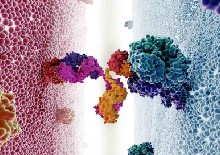
Mechanistic Quantitative Pharmacology Strategies for the Early Clinical Development of Bispecific Antibodies in Oncology
bispecific antibodies, mechanistic quantitative, pharmacology, strategies, bsAbs, immune cells, MABEL aproach
Bi-specific antibodies (bsAbs) are crucial in cancer therapy research. BsAbs offer advantages such as enhanced efficacy and reduced systemic toxicity. Early clinical trials face challenges with dose selection and predicting effective doses. Clinical variability is influenced by factors like fun…
Jun 24th • 18 mins read
 Dylan V. Neel, MPhil, David S. Shulman, MD, and Steven G. DuBois, MD
Timing of first-in-child trials of FDA-approved oncology drugs
pediatric cancer; phase 1 trials; drug development; targeted therapy; disparity
Aim: To define the lag time between initial human studies and first-in-child clinical trials of oncology agents. Methods: Systematic analysis of time from first-in-human trials to first-in-child trials for agents approved by the FDA from 1997 to 2017. Dat…
Mar 18th • 10 mins read
 Hagop M. Kantarjian MD, Ferran Prat PhD, JD, David P. Steensma MD, Razelle Kurzrock MD, David J. Stewart MD, Mikkael A. Sekeres MD, Joseph Leveque MD
Cancer research in the United States: A critical review of current status and proposal for alternative models
cancer research, research, NCI, Drug industry-driven research model, development in research, 2018 cancer model
Early research focused on tissue histology and animal models, with surgery and radiotherapy as primary treatments. 1950s: Introduction of cell lines (e.g., HeLa cells) and first anticancer drugs (antifolates, thiopurines), leading to the establishment of the Cancer Chemotherapy National Service C…
May 14th • 10 mins read