
Results for 'Oncology drug class'

 Charles Oo, Barbara Ameer
Revamping the ever-changing landscape of drug development processes in the midst of COVID-19 pandemic
Oncology drug class, Cancer indication, Molecularly targeted, Drug Development
Oncology is the front-line of drug development. The current pharmaceutical pipeline is disproportional focused on oncology, where about 1/3 of all phases of development is in this therapeutic area. The emphasis brings about substantial breakthroughs and has made positive impact on the quality of lif…
Apr 29th • 2 mins read
 Adela Rodriguez, Francis Esposito, Helena Oliveres, Ferran Torres and Joan Maurel
Are Quality of Randomized Clinical Trials and ESMO-Magnitude of Clinical Benefit Scale Two Sides of the Same Coin, to Grade Recommendations for Drug Approval?
quality randomized studies, ESMO-MCBS, drug approval
The approval of new cancer drugs by the FDA and EMA is primarily based on positive results from well-designed randomized phase III clinical trials (RCTs). Not all RCTs are analyzed to support drug approval recommendations, highlighting the need for scales to evaluate RCT quality and clinical…
Feb 11th • 3 mins read
 Muneera Al Hussain
Comment on: Oncology research in Saudi Arabia over a 10-year period. A synopsis
oncology research, saudi arabia
An article in the Saudi Medical Journal by Alghamdi et al reported on oncology research progress in Saudi Arabia. The study compared research quantity and quality between two periods: 2008-2012 and 2013-2017. There was an increase in the amount of research over time, but quality and scienti…
Jun 24th • 3 mins read
 Sean X Zhang, MSc , Dean Fergusson, PhD , Jonathan Kimmelman, PhD
Proportion of Patients in Phase I Oncology Trials Receiving Treatments That Are Ultimately Approved
cancer, biological markers, phase 1 clinical trials, drug approval, medical oncology, united states food and drug administration guidelines, adverse event, national comprehensive cancer network, American society of clinical oncology
Phase I oncology trials are often considered a therapeutic option, but this claim is primarily based on surrogate measures like objective response rates. A systematic search was conducted to evaluate the therapeutic value of phase I cancer trial participation, focusing on the likelihood of patien…
Apr 1st • 14 mins read
 Christopher A. Busch, MSC; Johannes Krisam, PhD; Meinhard Kieser, PhD
A Comprehensive Comparison of Additional Benefit Assessment Methods Applied by Institute for Quality and Efficiency in Health Care and European Society for Medical Oncology for Time-to-Event Endpoints After Significant Phase III Trials—A Simulation Study
cancer drug trials, time-to-event endpoints, overall survival, added benefit assessment, IQWiG, hazard ratio thresholds
The European Society for Medical Oncology (ESMO) and the German Institute for Quality and Efficiency in Health Care (IQWiG) use different methods for assessing additional benefit in cancer therapies, with ESMO considering both relative and absolute benefits, while IQWiG focuses on the upper limit …
Jun 28th • 30 mins read
 John Hair, Thomas Maryon, and Cristian Lieneck
Identification of Barriers Preventing Biosimiliar Oncology Medication Adoption
oncology, cancer, biosimilar, barriers, access, obstacles
Biosimilars are biologic medical products that are almost identical to original biologics but are produced by different companies. They are safe, effective, and can reduce costs for insurers and patients. Despite the benefits, barriers exist for oncologists and cancer centers in prescribing biosi…
Oct 27th • 30 mins read
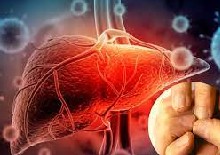 Mohamed Elmeliegy PhD, Derek Z. Yang BS, Engie Salama PharmD, Kourosh Parivar MPharm, Diane D. Wang PhD
Discordance Between Child-Pugh and National Cancer Institute Classifications for Hepatic Dysfunction: Implications on Dosing Recommendations for Oncology Compounds
FDA, hepatic dysfunction, child-pugh, national cancer institute, dosing, oncology compounds
The FDA and European Medicines Agency recommend using Child-Pugh classification for pharmacokinetic evaluation in noncancer subjects with hepatic impairment (HI). Dosing recommendations for oncology compounds for patients with HI are commonly based on Child-Pugh classification. In oncology …
Jul 20th • 18 mins read
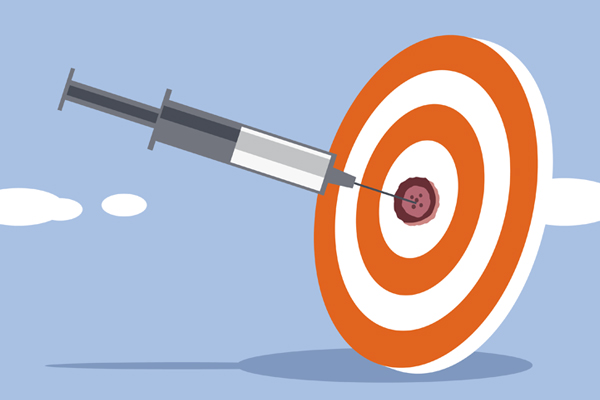 A. Haslam, M.S. Kim, V. Prasad
Updated estimates of eligibility for and response to genome-targeted oncology drugs among US cancer patients, 2006-2020
genome-targeted therapy, eligibility, response
Recent studies have been conducted to update the estimates of eligibility and response rates to genome-targeted therapies among US cancer patients, reflecting data up to 2020. The number of FDA-approved drugs targeting genetic indications has increased significantly since prior assessments. …
Apr 20th • 7 mins read
 Guillaume Beinse, MD, Virgile Tellier, Valentin Charvet, MSc, Eric Deutsch, MD, PhD, Isabelle Borget, PharmD, PhD, Christophe Massard, MD, PhD., Antoine Hollebecque, MD, PhD, and Loic Verlingue, MD
Prediction of Drug Approval After Phase I Clinical Trials in Oncology: RESOLVED2
clinical trials, RESOLVED2, FDA
Challenge in Oncology Drug Development: The field is currently facing an increase in the number of antineoplastic agents (ANAs) entering phase I clinical trials (P1CTs) and a high attrition rate for final FDA approval. Objective: Development of a machine learning algorithm, RESOLVED2, to …
Sep 20th • 12 mins read
 Gregory S. Calip, PharmD, MPH, PhD, Ivy P. Altomare, MD, Jenny S. Guadamuz, MSPH, PhD
Evaluating External Validity of Oncology Biosimilar Safety Studies
biologics, external validity, FDA, biosimilars, trastuzumab
Biologics are the fastest growing medication class in the US, significantly contributing to healthcare costs. The Biologics Price Competition and Innovation Act of 2009 created an abbreviated approval pathway to make biological products more accessible. A phase 3 randomized trial of SB3, a trast…
Apr 6th • 2 mins read
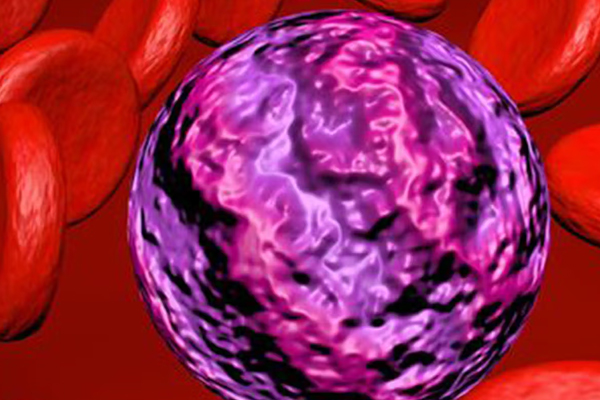 Peter N Morcos, Junyi Li, Iraj Hosseini, Chi‐Chung Li
Quantitative Clinical Pharmacology of T‐Cell Engaging Bispecifics: Current Perspectives and Opportunities
quantitative clinical pharmacology, T-Cell, TDB, bispecificss
The pharmacological response of TDBs involves complex interactions between T-cells, tumor cells, and TDBs, posing challenges in understanding pharmacokinetics, tissue distribution, target engagement, and exposure-response relationships. Dosing strategy is crucial for determining the therapeu…
Nov 18th • 15 mins read