
Results for 'AE'

 Ioannis Tsagakis and Maria Papatriantafyllou
Safeguarding cancer research funding by European charities amidst the COVID-19 pandemic
cancer charities, cancer research, COVID‐19, funding, pandemic, policy, AECC, AIRC
The COVID-19 outbreak has had a significant impact on cancer research and cancer care. European cancer charities are required to reassess their strategies. There is a need to safeguard income and provide support to cancer researchers. It is crucial to sustain cancer research funding during thes…
Nov 22nd • 3 mins read
 Jason J. Yang, BS Naomi So, MD Nolan J. Maloney, MD Julia Arzeno, MD Katherine K. Clifton, MD Daniel Q. Bach, MD, MPH
Inadequate and delayed characterization of cutaneous reactions for US Food and Drug Administration-approved oncologic drugs from 2011-2020 leading to medication discontinuation
cutaneous, cutaneous reactions, FDA, oncologic drugs, AE, CenterWatch
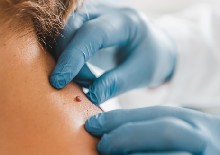
Half of clinical trials lack detailed descriptions of rashes; over half discontinue therapy due to rash. There's a 1- to 2-year delay from identifying a rash to fully characterizing it, although this has improved over the last decade. Oncologic therapies are often discontinued without consulti…
Oct 23rd • 4 mins read

 Tom Caravela
Job Search Checklist for Aspiring Medical Science Liaisons
Medical Science Liaison, MSL role, MSL career tips, Pharmaceutical industry jobs, Break into MSL career
Tips to Help Break into Your First MSL Role The Medical Science Liaison (MSL) role, has become one of the most sought-after career paths in the Pharmaceutical and Biotech industry. What does it take to land a role as a Medical Science Liaison? As an MSL Recruiter, this is a question that I am…
May 17th • 2 mins read
 Tom Caravela
Resume Writing and Editing Tips for Pharma Professionals
Pharmaceutical recruiter, Resume writing tips, Professional CV, LinkedIn profile optimization, Job application keywords
As a Professional Pharmaceutical Recruiter, I read and evaluate resumes (as well as CVs), every day. While I am not a professional resume writer, I have a very strong understanding of what a good resume or CV looks like and what should be included. More importantly, I keep track of what is most effe…
Aug 8th • 1 min read
 Tom Caravela
Promotability: How to Land Your Next Promotion
professional visibility, career advancement, promotion tips, career progression, networking strategies, mentorship benefits, resume upgrades, servant leadership, problem-solving skills, personal branding
“Promotability” may be defined as one’s suitability for being promoted. Is it your goal to obtain a promotion this year? If so, how suitable or promotable are you for that next step? Job-seekers and professionals often ask me what steps are necessary for advancement. I have broken …
May 5th • 10 mins read
 Barbara Kiesewetter , Nathan I Cherny, Nicolas Boissel, Francesco Cerisoli, Urania Dafni, Elisabeth G E de Vries, Paolo Ghia, Nicola Gökbuget, Verónica González-Calle, Brian Huntly, Ulrich Jäger, Nicola Jane Latino, Jean-Yves Douillard, Luca Malcovati, Ma
EHA evaluation of the ESMO-Magnitude of Clinical Benefit Scale version 1.1 (ESMO-MCBS v1.1) for hematological malignancies
ESMO, hematological malignancies, Clinical benefit scale, EHA
The ESMO-MCBS v1.1 has not been previously validated for haematological malignancies, but it is being explored to avoid duplication of efforts. A feasibility test was conducted using 80 studies related to various haematological malignancies such as acute and chronic leukaemia, lymphoma, myel…
Jan 20th • 20 mins read
 Meena N Murugappan, PharmD, MPH, PhD(c), Bellinda L King-Kallimanis, PhD, Gregory H Reaman, MD, Vishal Bhatnagar, MD, Erica G Horodniceanu, MPH, Najat Bouchkouj, MD, Paul G Kluetz, MD
Patient-Reported Outcomes in Pediatric Cancer Registration Trials: A US Food and Drug Administration Perspective
cancer, pediatrics, product labeling, united states food and drug administration, childhood cancer, denosumab, surrogate endpoints, adverse event, patient self-report, pediatric oncology, selumetinib, benefit-risk assessment, tisagenlecleucel, statistica
PROs have been feasible to collect from patients as young as 7 years old and were included in trials from 2013 onward. PROs were used as exploratory endpoints in four product applications but not included in product labeling. To include PRO data in FDA labeling, early interaction with the FDA, c…
Apr 30th • 12 mins read
 Laura A. Levit, Raymond P. Perez, David C. Smith, Richard L. Schilsky, Daniel F. Hayes, and Julie M. Vose
Streamlining Adverse Events Reporting in Oncology: An American Society of Clinical Oncology Research Statement
oncology, research, reporting, adverse events, clinical trials
Monitoring patient safety during clinical trials is crucial to protect research participants and future patients. Under current regulations for investigational new drugs (INDs), sponsors must report certain serious adverse events (AEs) to the FDA and all participating investigators quickly.…
Feb 20th • 3 mins read