
Results for 'effectiveness'
 Rajat Thawani, Neha Agrawal, Nicholas F Taflin, Adel Kardosh, Emerson Y Chen
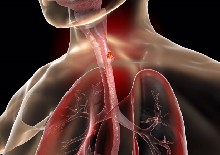
Application of Value Framework to Phase III Trials of Immune Checkpoint Inhibitors in Esophageal and Gastric Cancer
esophageal cancer, gastric cancer, comparative effectiveness research, outcome assessment, antineoplastic agents, immunotherapy
Immunotherapy checkpoint inhibitors are FDA-approved for first-line metastatic esophageal and gastric cancer, but not all scenarios benefit from non-selective chemo-immunotherapy application. ASCO Net Health scores were consistently higher in esophageal cancer trials compared to gastric cancer tr…
Jan 13th • 8 mins read
 Fernando Petracci, Chirag Ghai, Andrew Pangilinan, Luis Alberto Suarez, Roberto Uehara, Marwan Ghosn
Use of real-world evidence for oncology clinical decision making in emerging economies
Asia-Pacific, effectiveness, electronic database, health policy, Latin America, Middle East, randomized clinical trials, real-world data, real-world evidence, safety
Despite RWE being a relatively nascent concept in emerging economies, we have seen evidence of increasing use over the past 5 years growing at 11% per year. That said, barriers specific to emerging economies need to be overcome through collaborative efforts, with regulatory agencies at the forefront…
May 5th • 12 mins read
 Emmanuelle Jacqueta, Ghania Kerouani-Lafayeb, Francoise Grudeb, Sergio Goncalvesb, Annie Lorenced, Florence Turcryb, Liora Brunelb, Laetitia Belgodereb, Adrien Monardc, Gaëlle Guyaderb, Lotfi Boudalib, Nicolas Albin
Comparative study on anticancer drug access times between FDA, EMA and the French temporary authorisation for use program over 13 years
Innovation, Expanded access, Early drug access, Cancer, FDA, EMA
Cancer incidence is increasing globally, and while medical innovation significantly impacts patient survival, the drug development process is lengthy, often exceeding 10 years for marketing authorization (MA). France has implemented the ATU (Temporary Authorization for Use) program to facil…
Apr 7th • 12 mins read
 Vanessa Arciero, BS, Seanthel Delos Santos, Liza Koshy
Assessment of Food and Drug Administration- and European Medicines Agency-Approved Systemic Oncology Therapies and Clinically Meaningful Improvements in Quality of Life: A Systematic Review
ESMO, MCBS, FDA, ASCO-VF, EMA, QOL
Recent oncology therapies approved by the FDA and EMA often lack evidence of clinically meaningful improvements in quality of life (QOL). Only 40% of FDA-approved and 58% of EMA-approved oncology therapies had published QOL evidence. Clinically meaningful QOL improvements beyond minimal dif…
Feb 11th • 4 mins read
 Fei Liang, Sheng Zhang, Qin Wang, Wenfeng Li
Clinical benefit of immune checkpoint inhibitors approved by US Food and Drug Administration
Randomized trials, Clinical benefits, Immune checkpoint inhibitors, Cancer, Food and drug administration agency
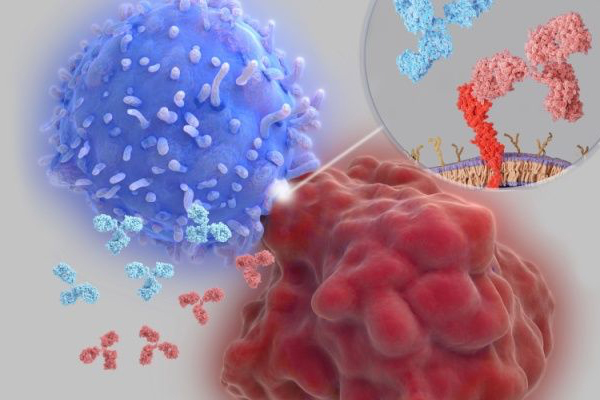
The study evaluates the clinical benefits of immune checkpoint inhibitors using the ESMO-MCBS and ASCO VF scales. 18 indications for these inhibitors were approved based on RCTs conducted between 2011 and 2018. All indications meet the ESMO-MCBS 1.1 threshold for meaningful bene…
Aug 31st • 16 mins read
 Ashley Woolmore , Dirk Arnold , Jean‐Yves Blay , Christian Buske , Alfredo Carrato , Winald Gerritsen , Marc Peeters , Jesus Garcia‐Foncillas , David Kerr
The Oncology Data Network (ODN): Methodology, Challenges, and Achievements
The oncology data network, ODN
The Oncology Data Network (ODN) aims to create a collaborative infrastructure for precision medicine, established in over seven European countries with 124 cancer centers. The ODN collects concise data on cancer medicine use, adhering to EU GDPR regulations, and has a central European Data Wareho…
May 21st • 8 mins read
 R. Kurzrock, L.A. Gurski, R.W. Carlson, D.S. Ettinger, S.M. Horwitz, S.K. Kumar, L. Million, M. von Mehren, A.B. Benson III
Level of evidence used in recommendations by the National Comprehensive Cancer Network (NCCN) guidelines beyond Food and Drug Administration approvals
oncology, guidelines, off-label drug use
The analysis reviewed 113 NCCN recommendations, focusing on 44 off-label uses of drugs. 14 of these off-label recommendations were later FDA-approved or backed by RCT data. 13 recommendations were minor extrapolations from the FDA label or actually on-label. Of the remaining 17 extrapolations…
Aug 2nd • 8 mins read
 Roman Adam, Ariadna Tibau, Consolación Molto Valiente, Boštjan Šeruga, Alberto Ocaña, Eitan Amir, Arnoud J. Templeton
Clinical benefit of cancer drugs approved in Switzerland 2010–2019
cancer drug approval, clinical benefit criteria, ESMO-MCBS, ASCO-VF, OLUtool, Switzerland oncology drugs
The study evaluates the clinical benefit of cancer drugs approved in Switzerland between 2010 and 2019 using three different frameworks: ESMO-MCBS, ASCO-VF, and OLUtool. A total of 48 drugs for 92 indications were assessed based on 100 studies, with each study evaluated according to the criteria …
Jun 10th • 35 mins read
 Robbe Saesen, Georgios Kantidakis, Ann Marinus, Denis Lacombe, Isabelle Huys
How do cancer clinicians perceive real-world data and the evidence derived therefrom? Findings from an international survey of the European Organisation for Research and Treatment of Cancer
real-world evidence, real-world data, oncology, cancer, survey, clinicians, randomized controlled trials, Europe
Real-world evidence (RWE) is increasingly being used in the development and decision-making processes for anticancer therapies, but clinician views on its use are unclear. A survey conducted between May and July 2021 involved 557 clinicians from 30 countries and 13 cancer domains. Most clinician…
Aug 1st • 45 mins read

 Envision Pharma Group
Empowering people to drive medical affairs performance with AI
AI in medical affairs, 4Sight approach to AI, empowering medical teams with AI, AI-driven medical affairs performance, enhancing medical affairs through AI, AI integration in healthcare, training for AI adoption, change management in healthcare AI, AI too
Artificial intelligence (AI) is transforming the pharmaceutical industry and continues to be a key topic of discussion in the field. As medical affairs grow more complex, AI can significantly reduce the time required to analyze and extract valuable insights, thereby accelerating the generation of ac…
Aug 14th • 5 mins read
 E Dawn Flick, Howard R Terebelo, Susan Fish, Amani Kitali, Vrinda Mahajan, Melissa Nifenecker, Kristen Sullivan, Paul Thaler, Sarah Ussery, David L Grinblatt
The Value of Pharmaceutical Industry-Sponsored Patient Registries in Oncology Clinical Research
registry, oncology, observational study, prospective cohort study, real-world evidence
Oncology patient registries are valuable for generating Real-World Evidence (RWE) due to: Prospective, primary data collection Characterizing smaller patient populations not typically included in clinical trials Providing insights into the rapidly changing disease course Allowing for longitudi…
Jun 7th • 8 mins read
 Marc Clausen MA, Chloe Mighton MS, Ruhi Kiflen MPH, Agnes Sebastian MSc, Wei Fang Dai MPH, Rebecca E. Mercer PhD, Jaclyn M. Beca MSc, Wanrudee Isaranuwatchai PhD, Kelvin K.W. Chan MD PhD, Yvonne Bombard PhD
Use of real-world evidence in cancer drug funding decisions in Canada: a qualitative study of stakeholders’ perspectives
RWE, RCT's, Canada, drug funding, Canadian Real-World Evidence, Data
The study emphasizes the need for a cultural shift, enhanced data infrastructure, investment in capacity building, and stakeholder collaboration for effective use of Real-World Evidence (RWE) in drug funding decisions. Cancer drug costs are escalating, with some offering substantial benefit…
Nov 4th • 12 mins read
 Peter Varnai, Anoushka Davé, Kristine Farla, Anke Nooijen, Liana Petrosova
The Evidence REVEAL Study: Exploring the Use of Real-World Evidence and Complex Clinical Trial Design by the European Pharmaceutical Industry
real world evidence, CCT, complex clinical trial
The European Medicines Agency (EMA) should develop an RWE framework for premarketing authorization in Europe. EMA and the European Medicines Regulatory Network (EMRN) could lead the development of RWE standards in the EU and beyond. Joint demonstration projects by the European Commission and ind…
Nov 20th • 10 mins read
 Chad Williamson, MBA, MS Leanne Berger, BS, Thomas P. Sullivan, BS SHOW
Addressing oncologists' gaps in the use of biosimilar products
biosimilar products, FDA, biosimilars, COA
The study highlights significant gaps in knowledge, competence, and confidence among oncologists regarding biosimilars. Educational interventions notably improved clinicians' understanding of the biosimilar approval process and familiarity with approved products. Post-education familiarity with the …
Jun 19th • 5 mins read
 Envision Pharma Group
AI-powered real-world evidence: Strategically enhancing value and access
Oncology, Clinical Development, Targeted Therapy, Immunotherapy, Genomic Profiling, CAR-T Cell Therapy, Precision Medicine
Real-world evidence (RWE) complements traditional randomized controlled trials by providing insights from diverse data sources, helping healthcare decision-makers with coverage, reimbursement, and treatment guidelines. Artificial intelligence (AI) and natural language processing (NLP) are pivotal…
Aug 22nd • 5 mins read